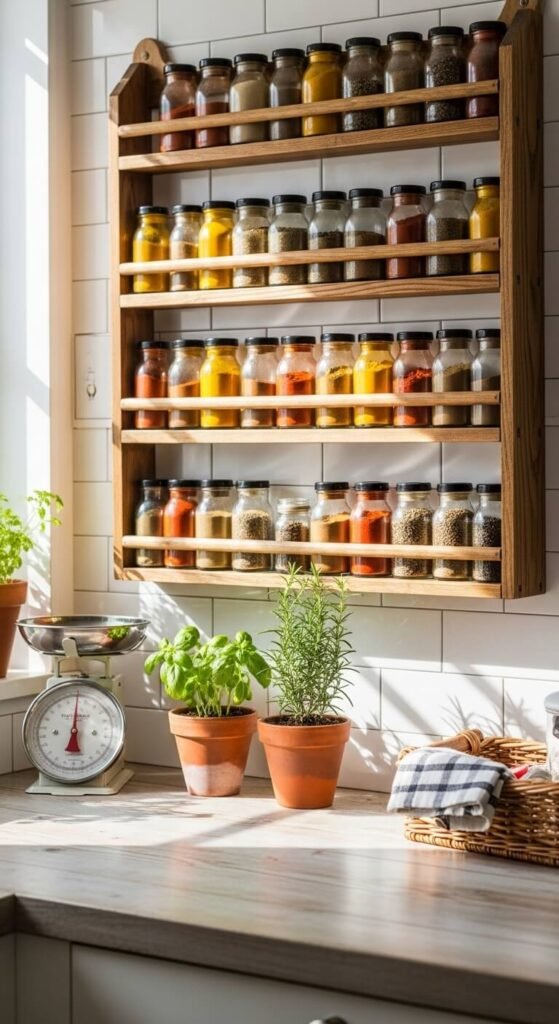
Tired of rummaging through cluttered cabinets for that one spice? A DIY spice rack transforms your kitchen into an organized cooking haven without draining your wallet. Whether you’re working with a tiny apartment kitchen or a spacious culinary workspace, these handmade storage solutions keep your favorite seasonings visible and accessible. From repurposed materials to simple weekend builds, you’ll discover designs that match your style and skill level. Most projects cost under $30 and take just a few hours to complete. Get ready to cook with confidence when every jar has its perfect spot.
Magnetic Mason Jar Wall Display
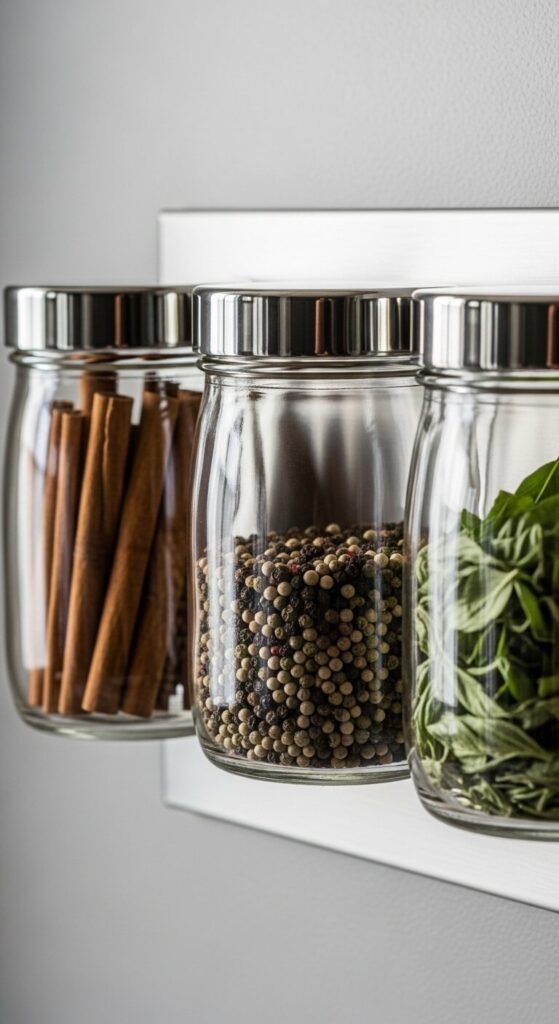
Attach magnetic strips to mason jar lids and mount them on a metal sheet. This design puts your spices at eye level while freeing up counter space.
Grab a steel cookie sheet from the dollar store for $3. Use strong adhesive magnets on jar lids—they cost about $8 for a pack of 20. Mount the sheet with command strips if you’re renting.
Label each jar with chalk markers for easy identification. The clear glass lets you monitor spice levels at a glance. Refill when jars look half-empty to maintain freshness.
Tiered Wooden Shelf Organizer
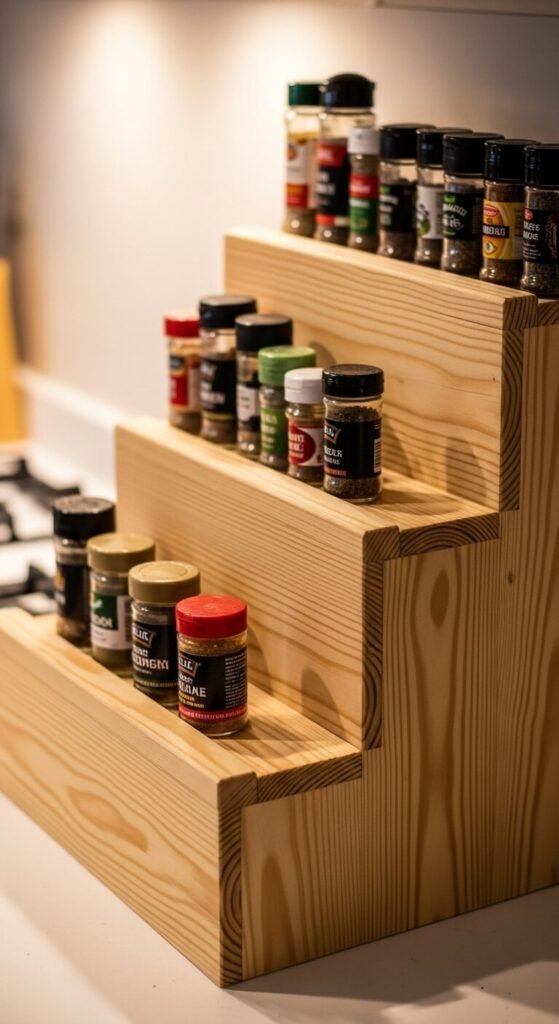
Build a stepped shelf using scrap wood planks. Each tier holds different sized containers while keeping labels visible.
Cut three boards at 12, 10, and 8 inches. Stack and secure them with wood glue and finishing nails. Sand edges smooth to prevent splinters.
Place your most-used spices on the front tier for quick grabbing while cooking. This design works inside cabinets or on countertops. Stain or paint to match your kitchen décor. Total material cost runs about $12 if purchasing new lumber.
Hanging Test Tube Spice Station
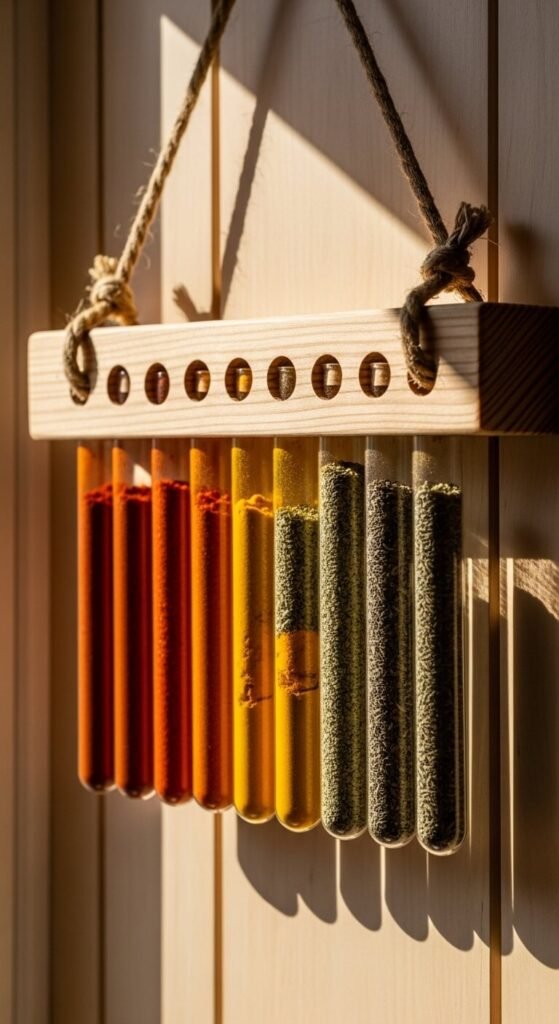
Drill holes in a wooden board to hold test tubes filled with ground spices. Suspend the rack with rope for a laboratory-chic look.
Purchase plastic test tubes with cork stoppers online for around $15 per dozen. A 1-inch thick board needs holes slightly smaller than tube diameter for snug fitting.
This space-saving design holds small quantities perfect for apartments. Tubes keep spices airtight and visible. Hang near your prep area for convenient seasoning while chopping vegetables. Replace corks every six months to maintain freshness.
Repurposed Drawer Insert
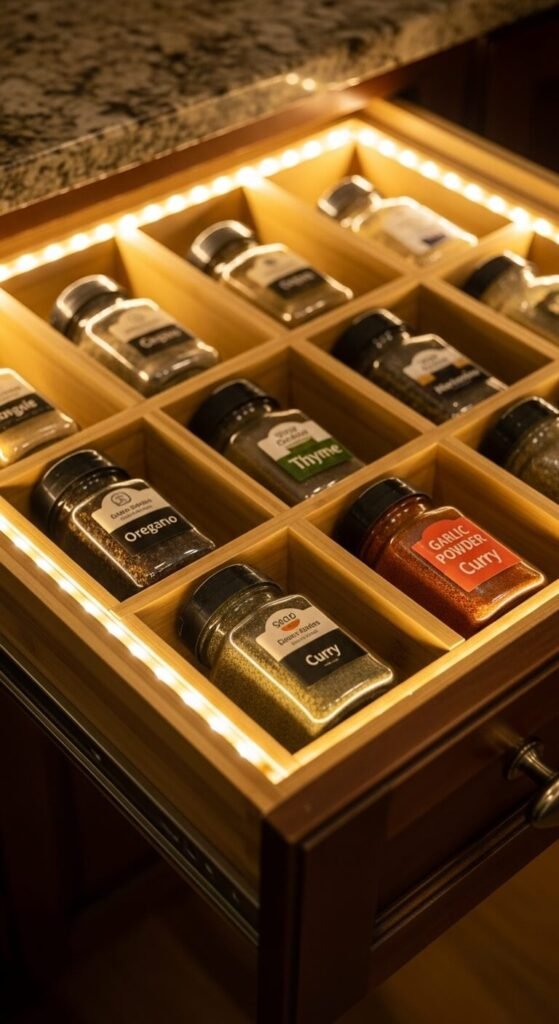
Convert a shallow drawer into spice storage using bamboo drawer dividers. Lay jars flat so labels face upward.
Measure your drawer dimensions and cut dividers to create 2-inch wide sections. Bamboo organizers cost about $10 at home stores.
This horizontal storage prevents spice avalanches when opening drawers. You’ll see every jar without lifting or moving others. Works perfectly in kitchens lacking wall space. Add non-slip shelf liner at the bottom to prevent jars from sliding around.
Pegboard Wall Panel System
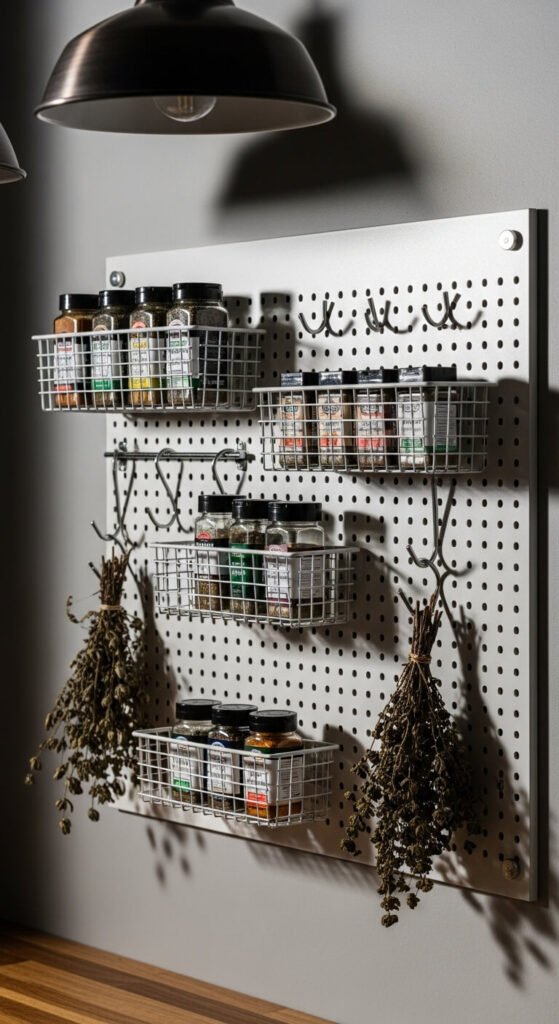
Install pegboard and use wire baskets plus hooks for customizable spice storage. Rearrange baskets as your collection grows.
A 2×4 foot pegboard costs around $15. Add wire baskets for $2 each and metal hooks for pennies.
Paint the pegboard any color before mounting. Position frequently-used spices at arm’s reach and backup supplies higher up. This modular system adapts when you buy new spices or eliminate ones you never use. Leave gaps for adding kitchen tools like measuring spoons.
Copper Pipe Shelf Brackets
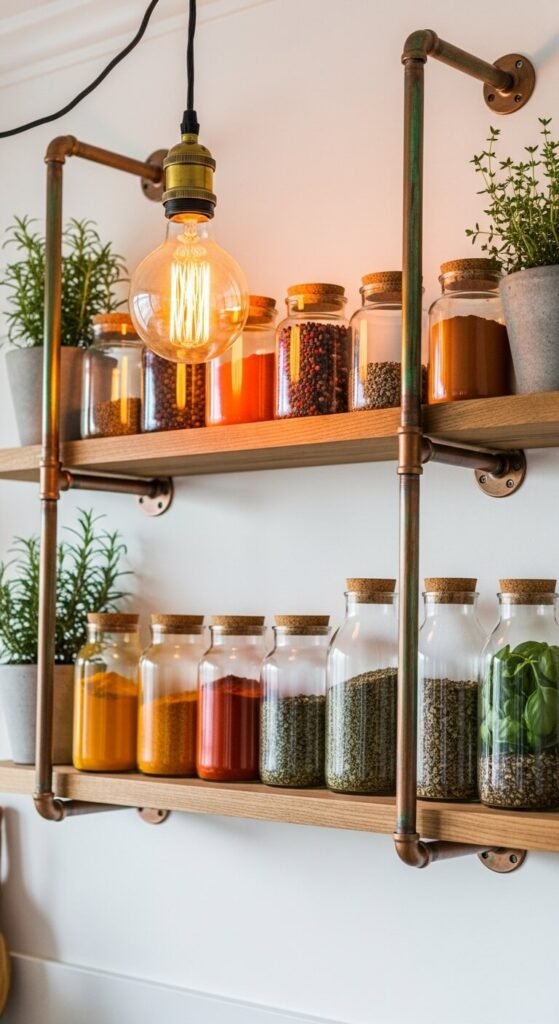
Create floating shelves using copper pipes as brackets. The industrial aesthetic adds character while displaying spices.
Purchase ½-inch copper pipes and elbow joints at hardware stores—about $20 for materials. Cut pipes to desired lengths with a pipe cutter.
Assemble L-shaped brackets and secure to wall studs. Place wooden boards on top for shelving. The open design keeps spices accessible from both sides. Copper develops an attractive patina over time, adding vintage charm. Works beautifully in modern or farmhouse kitchens.
Lazy Susan Cabinet Solution
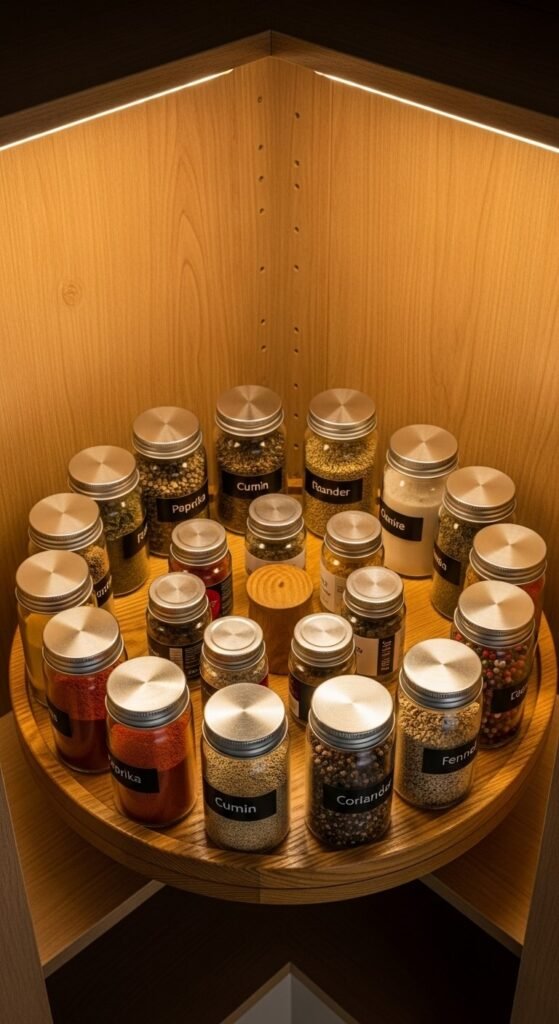
Mount a lazy susan inside a corner cabinet to maximize awkward storage space. Spin to access any spice instantly.
Buy a pre-made turntable for $12 or build one using a ball bearing swivel and round wood piece.
Group spices by cuisine type—Italian, Mexican, Asian—on different sections. This prevents the black hole effect in deep corner cabinets. Label jar tops for easy identification when spinning. Holds 30+ jars depending on turntable diameter.
Window Box Herb and Spice Garden
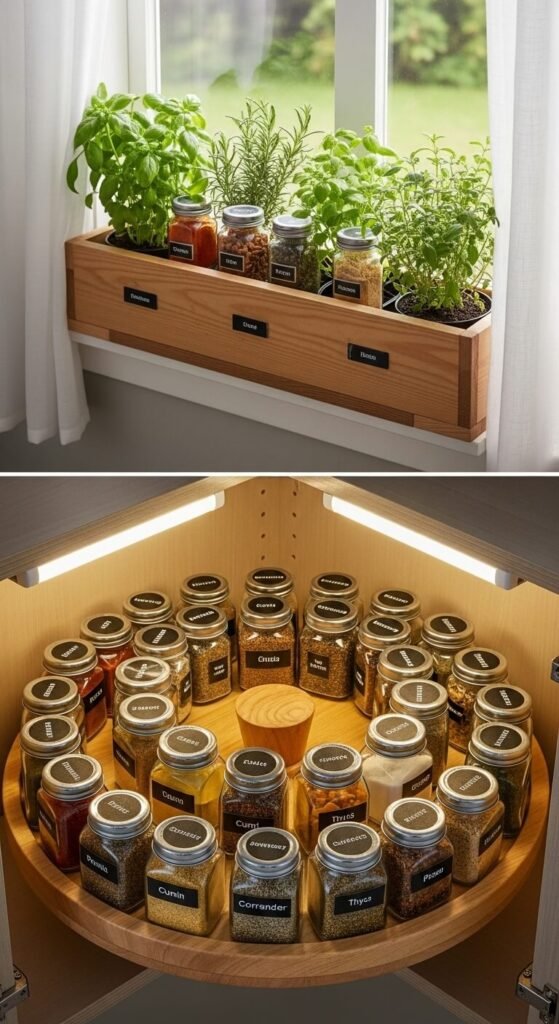
Combine fresh herbs with dried spices in a window box planter. Natural light reaches your cooking station.
Use a cedar window box or build one from fence pickets for under $10. Line with plastic to protect wood from moisture.
Plant common herbs you use fresh. Store dried spice jars between pots. Water herbs twice weekly and trim as needed for cooking. This dual-purpose design brings life to your kitchen while keeping seasonings within reach.
Vintage Spice Tin Collection
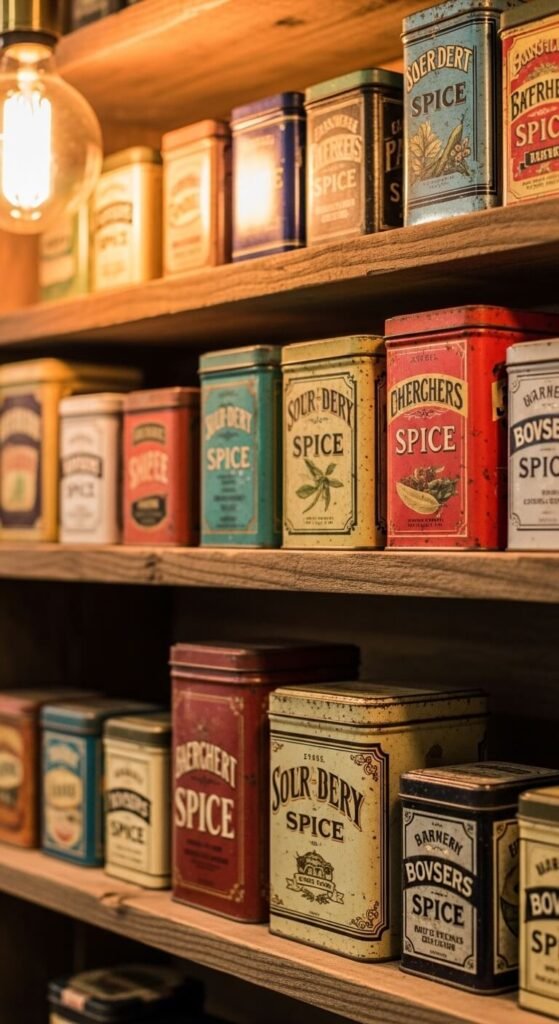
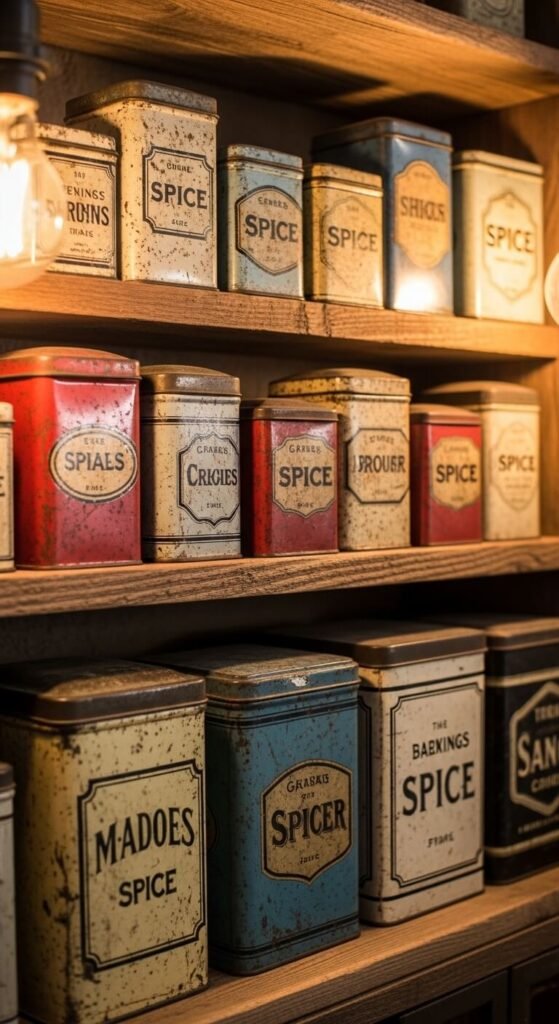
Hunt thrift stores for old spice tins and display them on open shelving. Character-filled storage that tells a story.
Vintage tins cost $1-5 each at flea markets. Clean thoroughly before adding fresh spices.
Mix authentic antiques with reproduction tins for an eclectic collection. The metal keeps contents dry and protected from light. Arrange by color or size for visual appeal. This works especially well in cottagecore or vintage-themed kitchens. Replace rubber seals if originals have deteriorated.
Under-Cabinet Pull-Down Rack
Install a pull-down rack that hides under cabinets and extends when needed. Save counter space while keeping spices nearby.
Purchase ready-made systems online for $25-40. Mount to cabinet bottom using included hardware.
This design suits kitchens with limited wall area. Pull down while cooking, then tuck away for clean countertops. Holds bottles securely even when extended. Perfect for renters since it doesn’t require wall mounting. Choose models with soft-close mechanisms to prevent slamming.
Chalkboard Label Canister Set
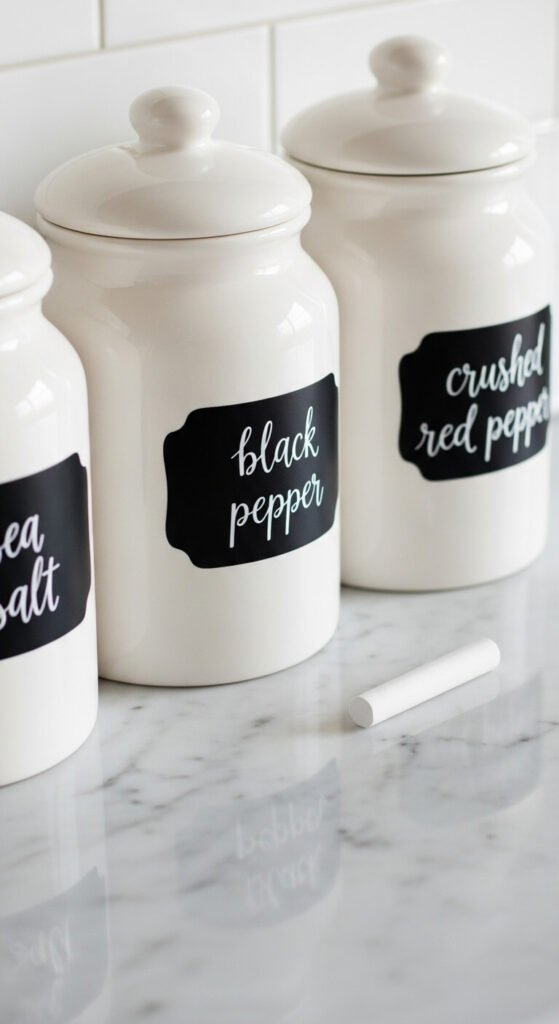
Use uniform canisters with chalkboard labels for a cohesive look. Erase and relabel as your spice collection changes.
Buy generic ceramic or glass containers at discount stores—6 for $12. Apply chalkboard contact paper or paint to lids.
This flexible system adapts when you switch spices seasonally. Write clearly with chalk markers rather than regular chalk for longer-lasting labels. Store canisters in drawers or on counters. White containers create a clean, minimalist appearance that matches any kitchen style.
Slanted Wooden Crate Display
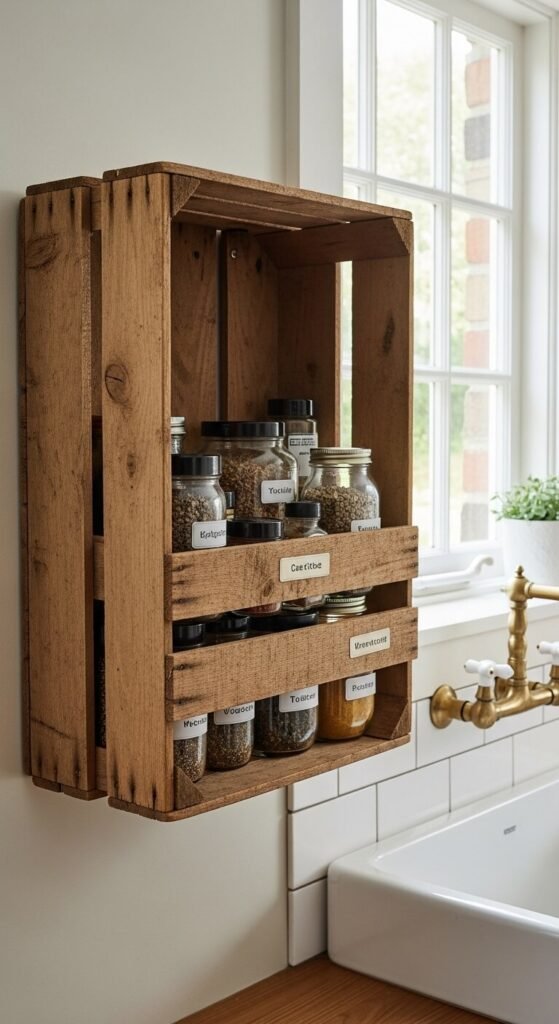
Angle a wooden crate on the wall so jars lean back but remain visible. Rustic charm meets practical storage.
Find free crates at grocery stores or buy reproductions for $8. Secure to wall at 30-45 degree angle using L-brackets.
The slant prevents jars from falling while displaying labels. Sand rough edges and stain if desired. This works for kitchens with farmhouse, industrial, or eclectic styles. Add decorative twine or stenciled designs for personalization. Holds 15-20 standard spice jars.
Behind-the-Door Wire Rack
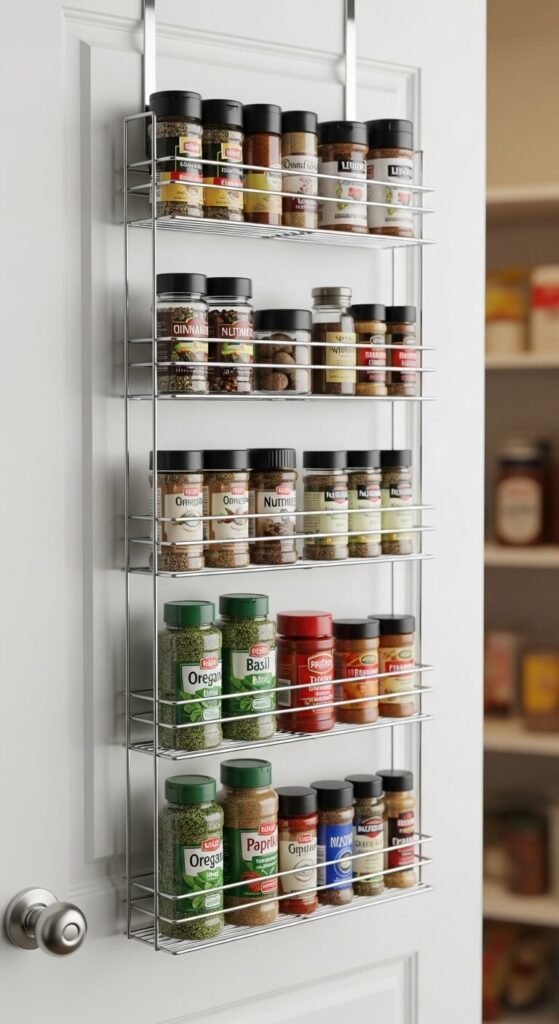
Hang an over-the-door wire rack inside pantry or cabinet doors. Hidden storage that maximizes vertical space.
Purchase racks designed for shoes or accessories—they work perfectly for spices. Cost ranges $15-25.
No drilling required makes this renter-friendly. Measure door clearance before buying to ensure proper fit. Organize by cooking frequency rather than alphabetically. Place everyday spices at eye level and special occasion varieties higher. Remove rack easily when moving.
Reclaimed Pallet Shelf
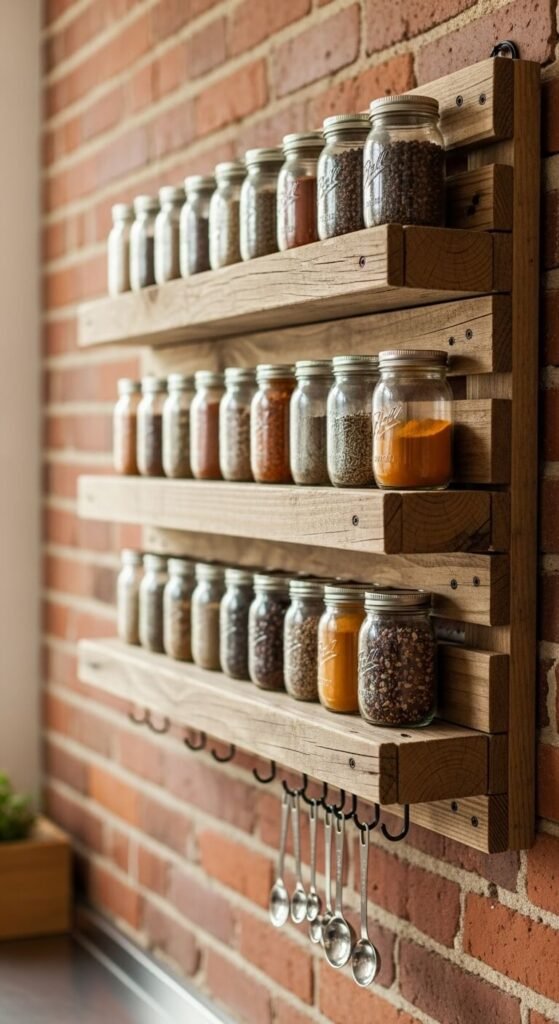
Break down a shipping pallet and reassemble pieces into tiered shelving. Free materials create farmhouse character.
Find pallets behind stores or on community free pages. Disassemble carefully and sand thoroughly to remove splinters.
Heat-treat pallets marked “HT” are safe for kitchen use. Avoid those marked “MB” which contain chemicals. Attach horizontal slats at varying heights using wood screws. Seal with food-safe finish. This zero-cost project delivers maximum style impact. Customize dimensions to fit your wall space.
Magnetic Spice Tins on Refrigerator
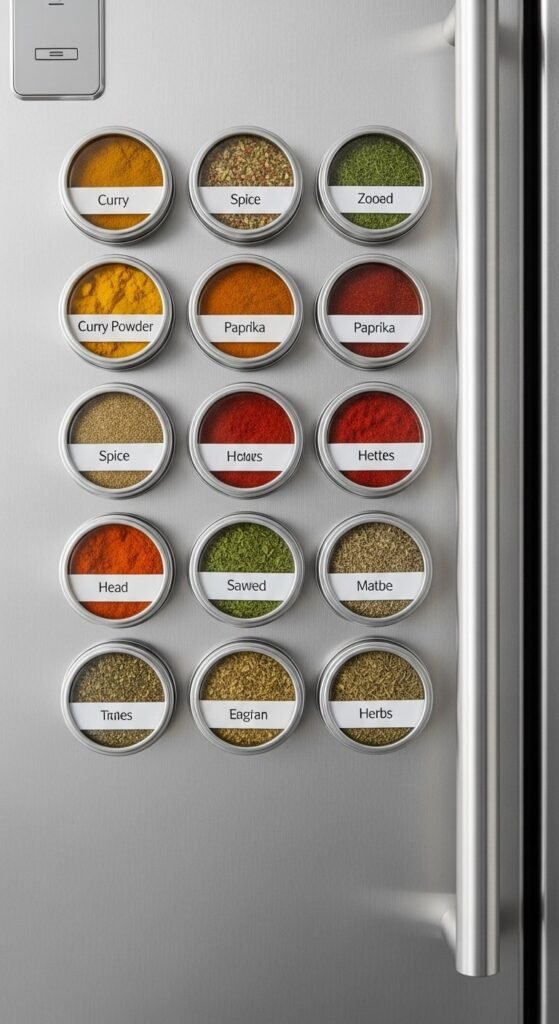
Fill magnetic tins with spices and stick them directly to your refrigerator. Utilize overlooked vertical space.
Buy magnetic tins with clear lids online—24-pack costs about $18. Print custom labels using free templates.
This solution works perfectly in kitchens lacking cabinet space. Tins hold smaller quantities, encouraging you to use spices while they’re fresh. Arrange in rainbow order or group by cuisine. Remove easily for refilling. The magnetic seal keeps contents dry despite refrigerator condensation.
Bamboo Expandable Drawer Organizer
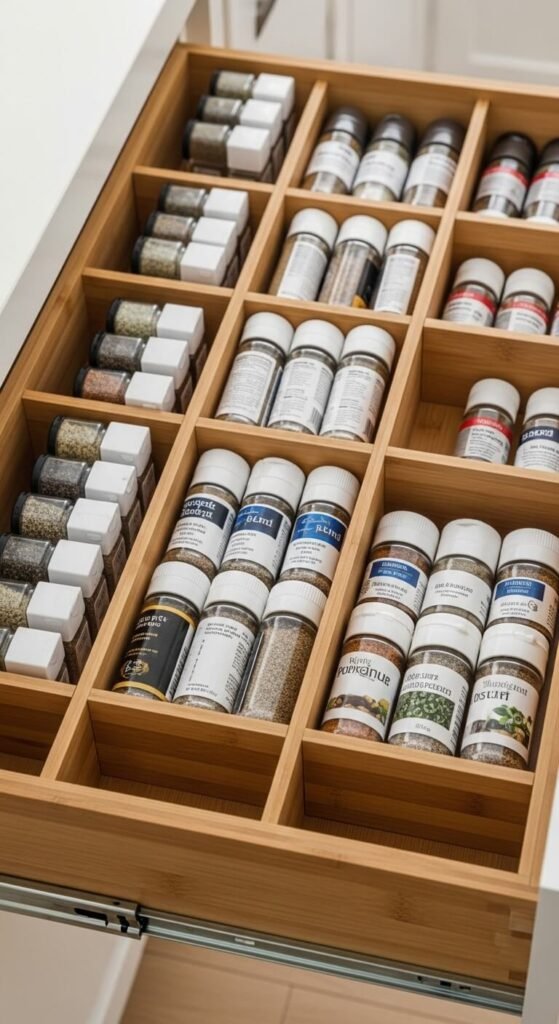
Use expandable bamboo organizers to create custom sections in existing drawers. Adjust width as needed.
Purchase adjustable organizers for $10-15 at home stores. Spring-loaded sides fit drawers 12-20 inches wide.
Bamboo naturally resists moisture better than plastic organizers. Create sections sized for your specific jar collection. Stand bottles upright for compact storage. This low-profile solution keeps counters clear while maintaining accessibility. Wash organizer monthly with warm soapy water to prevent residue buildup.
Hanging Glass Jar Display
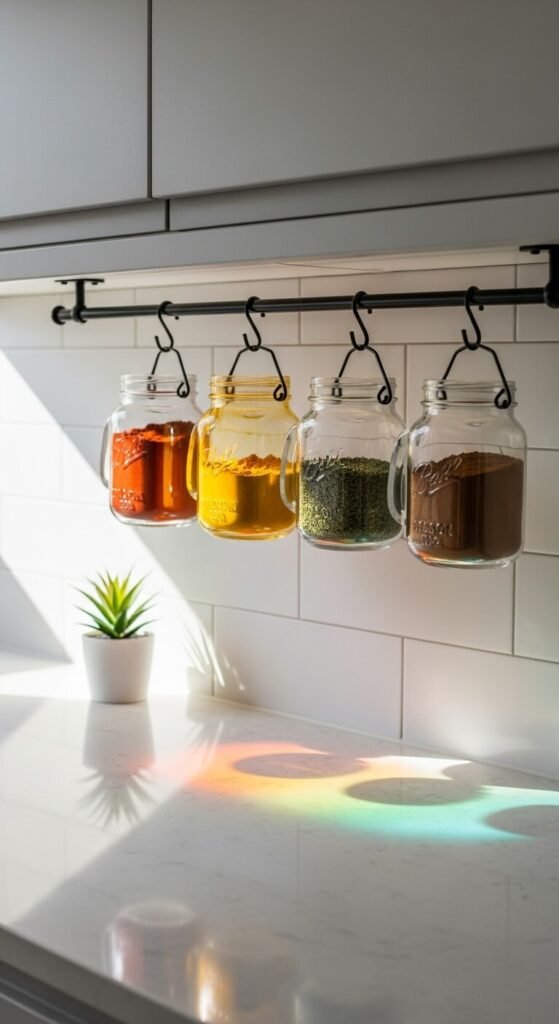
Suspend jars from a mounted rod using their handles or wire. Creates an eye-catching display above counters.
Install a towel rod or curtain rod under cabinets for $8. Use jars with built-in handles or attach wire wraps.
This airborne storage frees up cabinet and counter space completely. Reach up and grab jars while cooking without opening drawers. Works best for frequently-used spices. Limit to 8-10 jars to avoid cluttered appearance. Ensure rod mounts to studs for weight support.
Labeled Glass Test Tubes in Rack
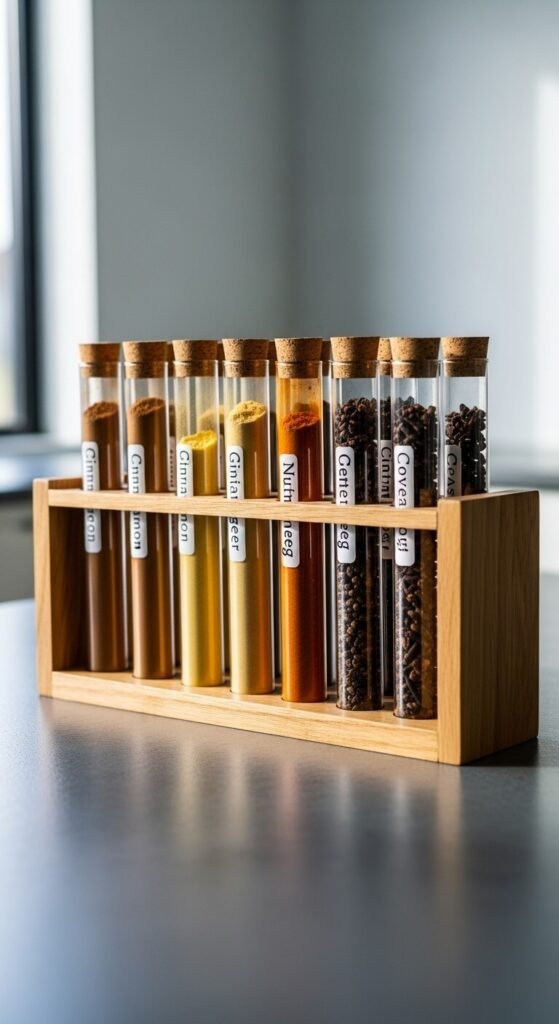
Store ground spices in corked test tubes arranged in a wooden holder. Laboratory style meets kitchen function.
Buy chemistry test tube sets online for $12-15. Use permanent markers or label tape for identification.
Small tube capacity prevents spices from going stale before you use them. The airtight cork seal maintains freshness. This compact design suits small kitchens or minimalist spaces. Refill tubes from bulk spice purchases to save money. Arrange alphabetically or by color gradient.
Built-In Narrow Cabinet Pull-Out
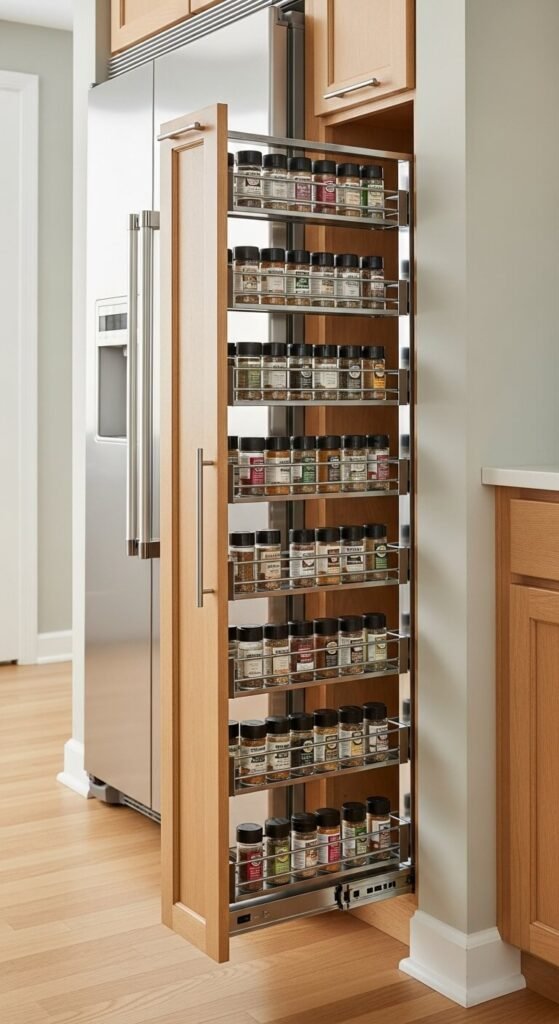
Install a pull-out cabinet in the narrow gap beside your refrigerator. Transform dead space into prime storage.
Purchase slim rolling cabinet kits for $40-60 or build using plywood and drawer slides.
These vertical organizers typically measure 6-8 inches wide but hold 40+ bottles. Mount shelves at varying heights for different bottle sizes. The rolling mechanism brings everything within reach. Perfect for galley kitchens or tight layouts. Add a handle that matches existing cabinet hardware.
Wooden Box Shelf Collection
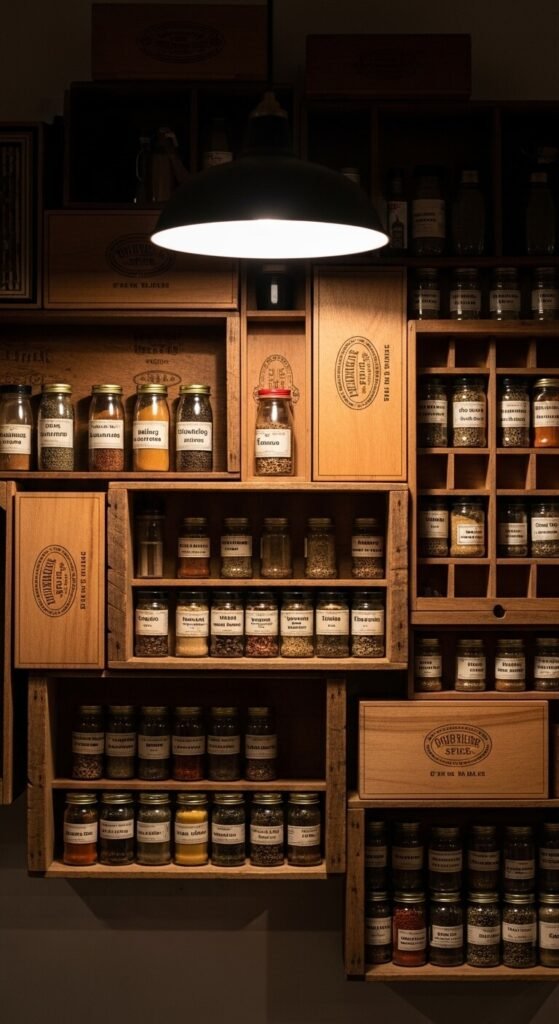
Stack and mount small wooden boxes or crates as modular shelving. Mix sizes for visual interest.
Collect boxes from craft stores, thrift shops, or wine stores—often free or under $5 each.
Arrange boxes in geometric patterns before securing to wall. Group spices by cooking style within each box. The three-dimensional design adds architectural interest while functioning as storage. Paint interiors different colors or leave natural. Add small battery-powered LED lights inside for dramatic effect.
Spice Drawer with Angled Inserts
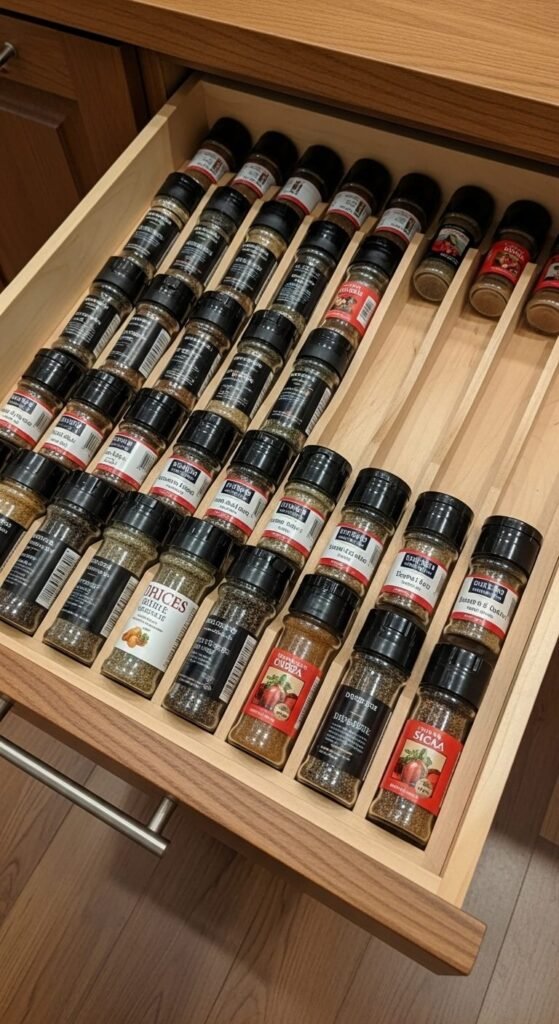
Build angled dividers inside a drawer so bottles tilt back with labels facing up. See everything at once.
Cut wood strips at matching angles and glue them into drawer at regular intervals. Materials cost under $8.
This angle prevents bottles from rolling while displaying labels clearly. No more lifting jars to read what’s underneath. Measure your most common jar size before building. Works in drawers 3-4 inches deep. Apply polyurethane to wood inserts for easy cleaning.
Conclusion
You’ve just explored 22 practical spice rack designs that fit any budget and skill level. From magnetic mason jars to repurposed pallets, these projects turn cluttered spice collections into organized cooking assets. Pick one that matches your available space and available time this weekend. Start with materials you already own or visit a thrift store for affordable supplies. Your kitchen will function better when you can grab the right spice in seconds instead of searching through chaos. Choose a project, gather your materials, and build a storage solution that makes cooking more enjoyable. Your future self will thank you every time you cook.