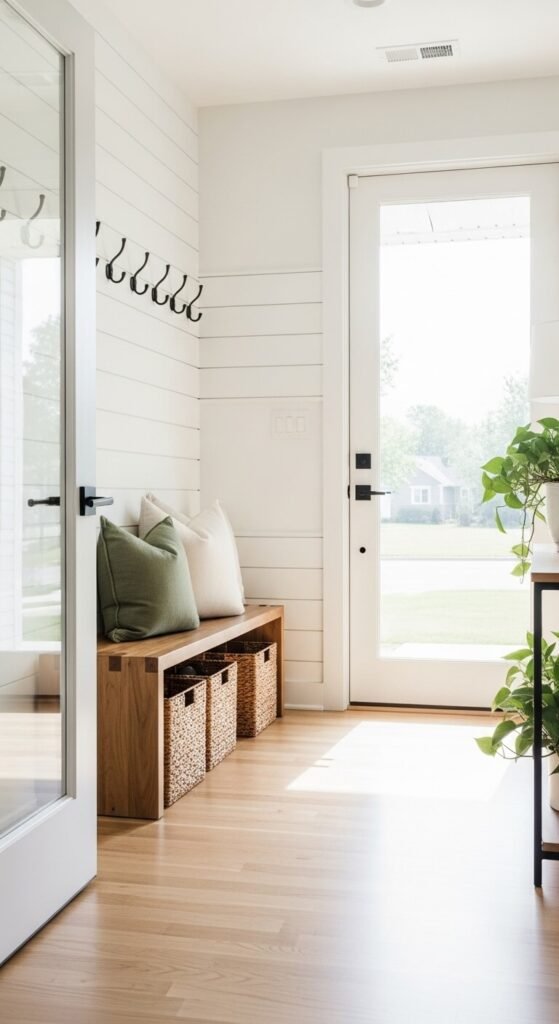
Walking through the door shouldn’t mean tripping over shoes or hunting for keys. A well-organized entryway sets the tone for your entire home and makes daily routines smoother. Whether you have a spacious foyer or a cramped corner by the door, the right systems keep clutter at bay and help everyone know where things belong. From budget-friendly hooks to clever storage benches, these 23 ideas work for real life, real spaces, and real budgets. Get ready to transform that chaotic landing zone into a functional space that actually works.
Wall-Mounted Coat Rack with Individual Hooks
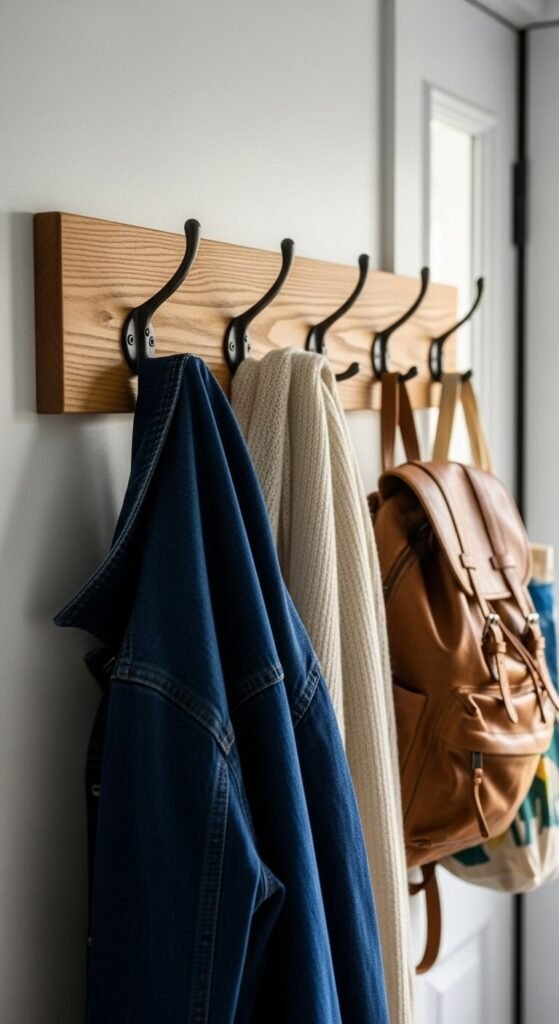
Mount individual hooks at different heights so everyone can reach their own spot. Kids get lower hooks, adults get higher ones. This simple setup costs under $20 at any hardware store.
Install four to six hooks spaced 6 inches apart. Use heavy-duty anchors if you’re going into drywall. Each hook should hold at least 10 pounds.
Paint wooden pegs to match your walls or leave them natural. Add labels underneath for younger children. This keeps coats off furniture and floors without taking up precious floor space.
Shoe Cubby Cabinet with Closed Doors
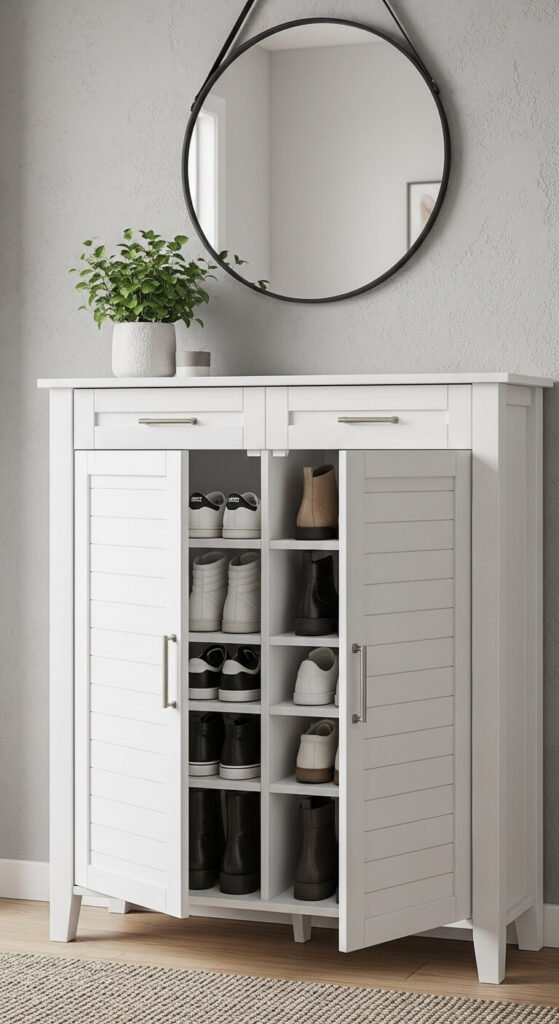
Hide shoe clutter behind cabinet doors while keeping everything accessible. Look for units with adjustable shelves that fit boots and sneakers.
Measure your doorway first. Most families do well with 12 to 18 pair capacity. Shop secondhand stores or check IKEA for affordable options under $100.
Add a shallow basket on top for sunglasses and dog leashes. Closed storage keeps dust off shoes and makes your entryway look cleaner instantly. Wipe down shelves monthly to prevent odor buildup.
Floating Shelf Above the Door
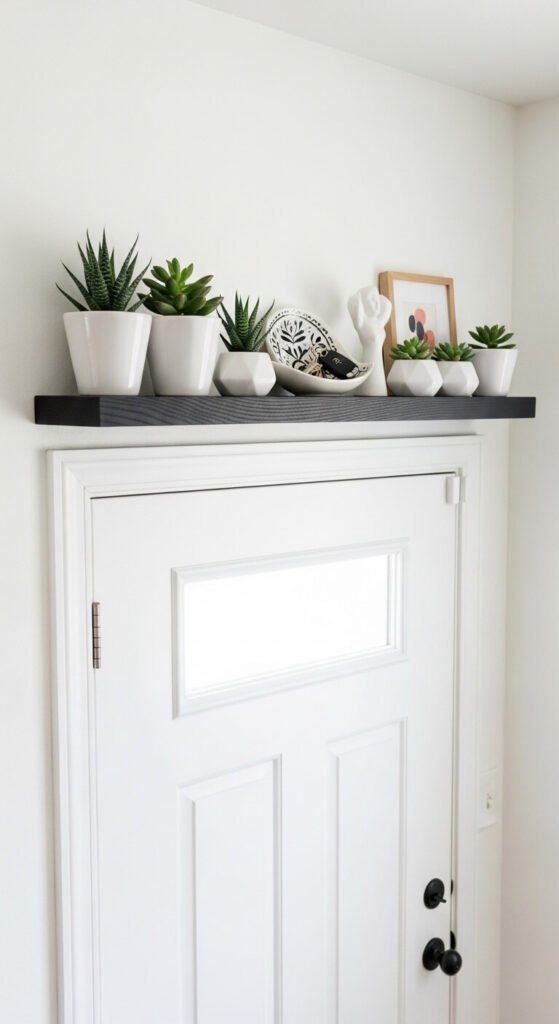
That space above your door goes to waste in most homes. Install a shallow floating shelf for items you grab on the way out.
Keep a bowl for loose change, a small plant, or seasonal decorations. The shelf should be 6 to 8 inches deep and match your door frame width.
Use this spot for things that don’t belong in pockets. Sunscreen, hand sanitizer, and reusable shopping bags fit perfectly here. Mount with sturdy brackets since you’ll reach up regularly. This costs about $15 in materials.
Bench with Built-In Shoe Storage
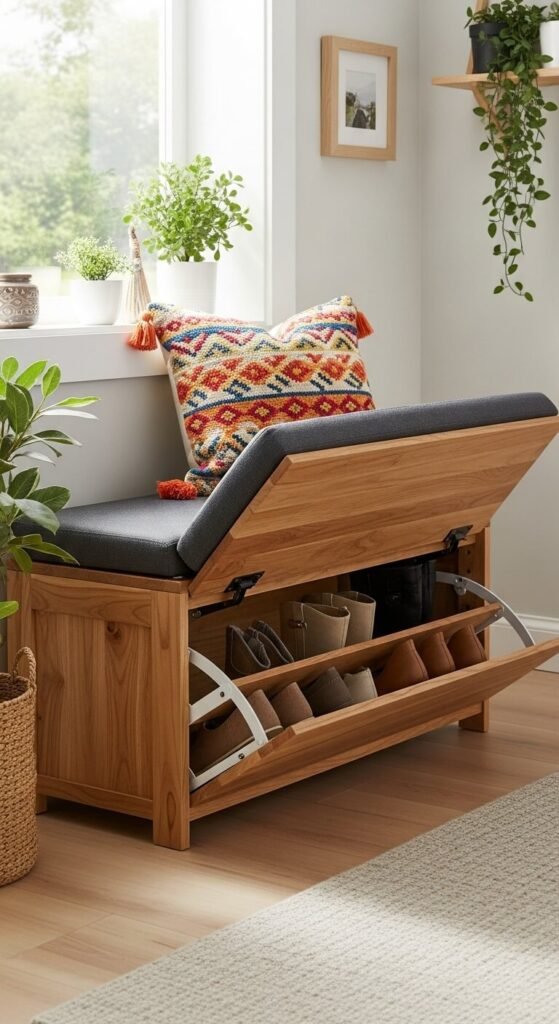
Sit down to tie shoes while storing them in the same piece of furniture. Benches with flip-top seats or pull-out drawers work best for daily use.
Choose a size that fits your wall without blocking the door swing. Most benches seat two adults comfortably at 42 to 48 inches wide.
Add washable cushions on top for comfort. Store off-season shoes inside and keep daily pairs underneath in a separate tray. Check garage sales for solid wood benches you can refinish yourself. Sand and stain for under $40 total.
Mail Sorting Station with Labeled Bins
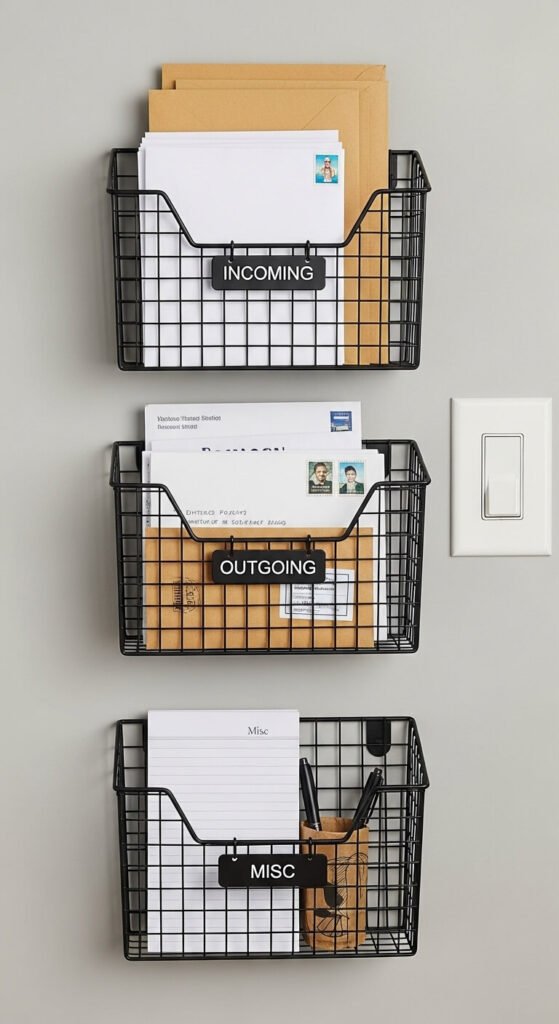
Stop the paper pile-up before it starts. Create zones for incoming mail, outgoing bills, and recycling right where you enter.
Use wire baskets, hanging file folders, or repurposed magazine holders. Mount them at eye level so you actually use them.
Process mail immediately when you walk in. Junk goes straight to recycling. Bills go in their designated spot. School papers get their own section. This habit takes 30 seconds and prevents counter chaos. Dollar stores sell suitable bins for $3 each.
Over-the-Door Hanging Organizer
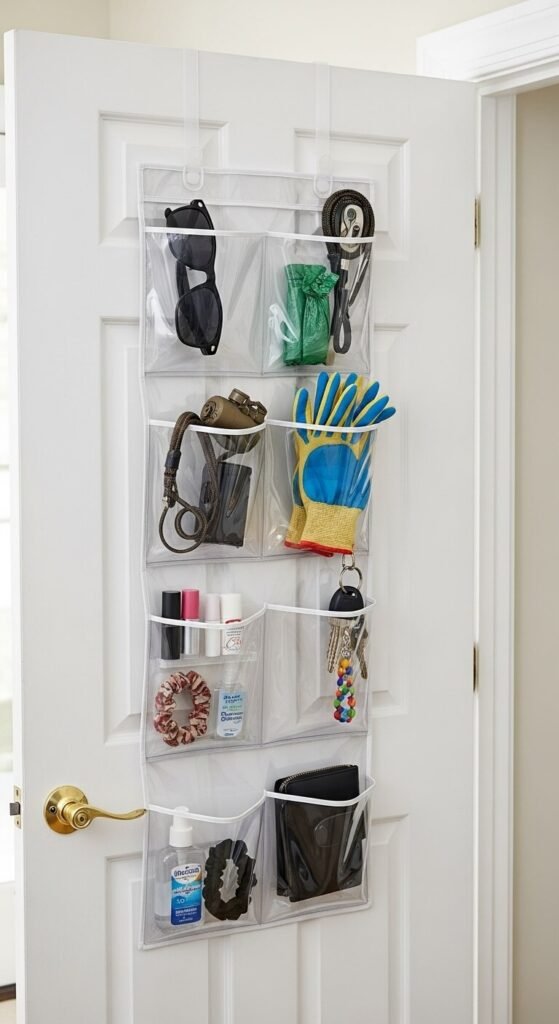
Renters and apartment dwellers love this option. No drilling required, and it comes with you when you move.
Look for organizers with 12 to 20 pockets. Store gloves, hats, scarves, and small accessories in clear pockets so you can see everything.
Heavier items go in bottom pockets to prevent sagging. Pet supplies like leashes and waste bags fit perfectly here too. Shake out the organizer monthly to remove dust. These run $10 to $25 depending on size.
Key Hook Board with Shelf
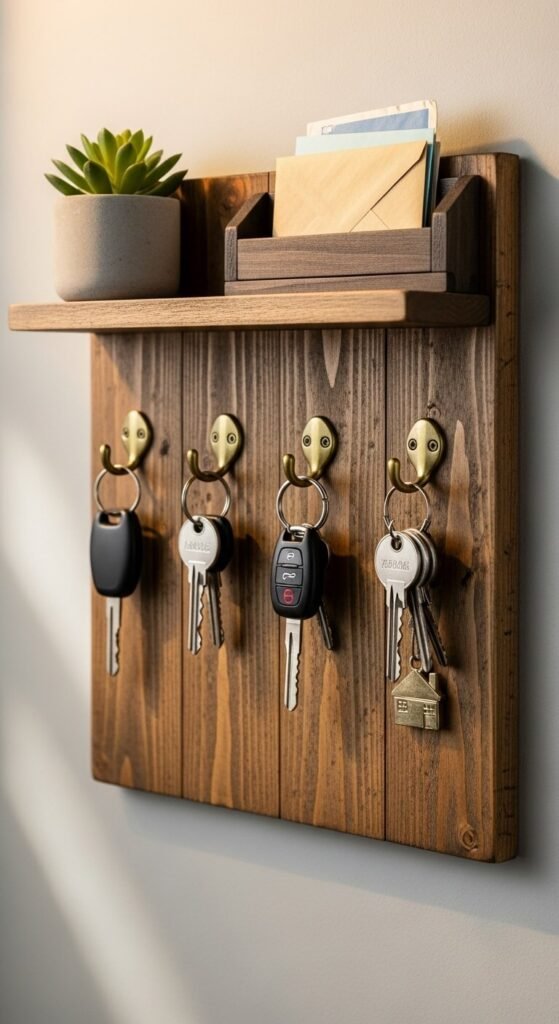
Never hunt for keys again when they always hang in the same spot. A dedicated key station trains everyone in the household.
Buy a pre-made unit or DIY one with a small wood plank and cup hooks. Mount it directly inside the door at shoulder height.
Label each hook with family member names or key types (car, house, garage). Add a small shelf above for wallets and phones. Use chalkboard paint on the board to leave quick notes. Total DIY cost is around $12.
Slim Console Table with Drawer
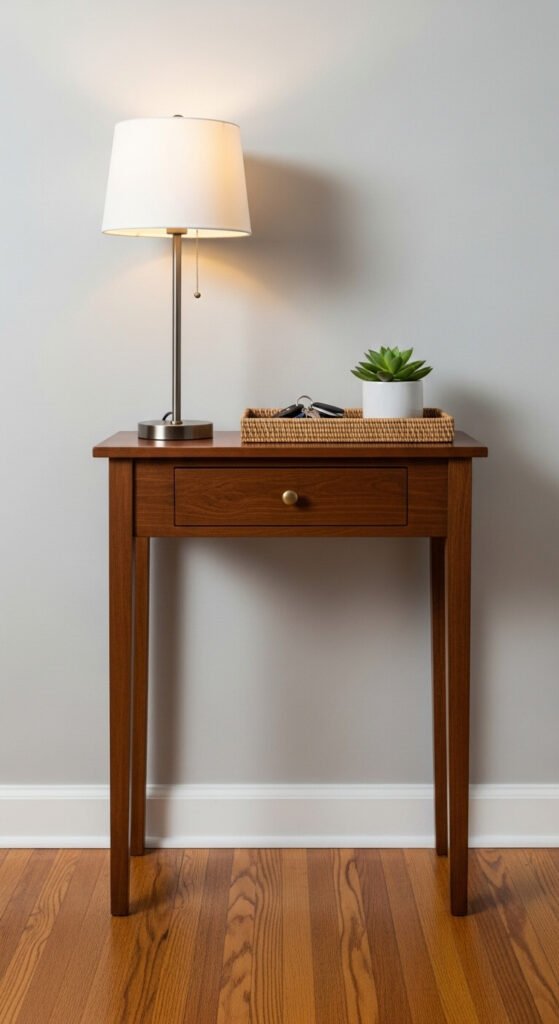
Tight entryways need furniture that doesn’t intrude on walkways. Console tables 10 to 12 inches deep provide surface space without bulk.
The drawer hides mail, pens, and other small items. The top holds a catch-all tray for pocket contents.
Measure your doorway clearance before buying. You should have at least 36 inches of walking space remaining. Thrift stores often have console tables for $30 to $60. Paint or refinish to match your style. Add a mirror above to check yourself before leaving.
Pegboard Wall for Maximum Flexibility
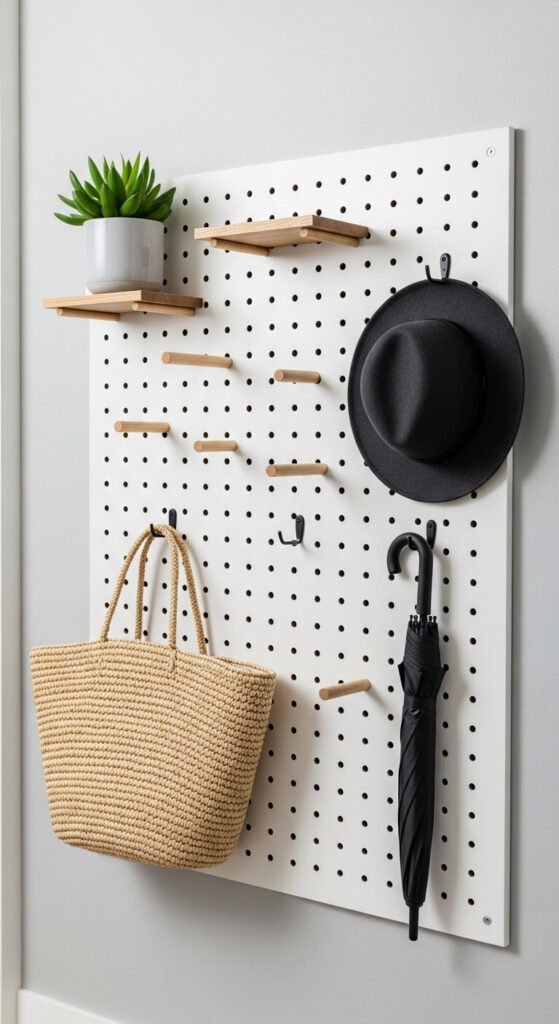
Pegboard lets you rearrange hooks and shelves as your storage requirements change. Move things around without new holes in your walls.
Paint pegboard to match your entryway or leave it natural. Add hooks for bags, small shelves for phones, and baskets for accessories.
Swap configurations seasonally. Winter gear gets more hooks, summer gear gets fewer. Hardware stores cut pegboard to size for free. A 2×4 foot section with accessories costs about $25. Mount it directly to wall studs for strength.
Rolling Cart for Seasonal Items
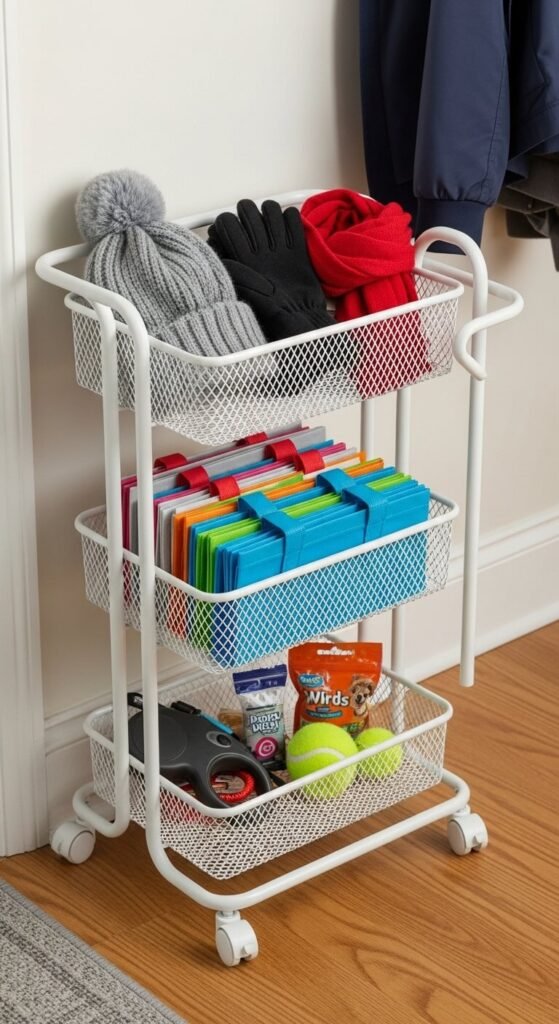
Keep a small rolling cart in your entry closet or beside the door. Swap out seasonal items without permanent installation.
Winter months get hats and gloves. Summer gets sunscreen and beach bags. The cart rolls away when you don’t use it.
Three tiers work best for sorting by family member or item type. IKEA and Target sell these for $20 to $40. Keep the top tier for items you grab most often. Bottom tier holds backup supplies.
Umbrella Stand with Drip Tray
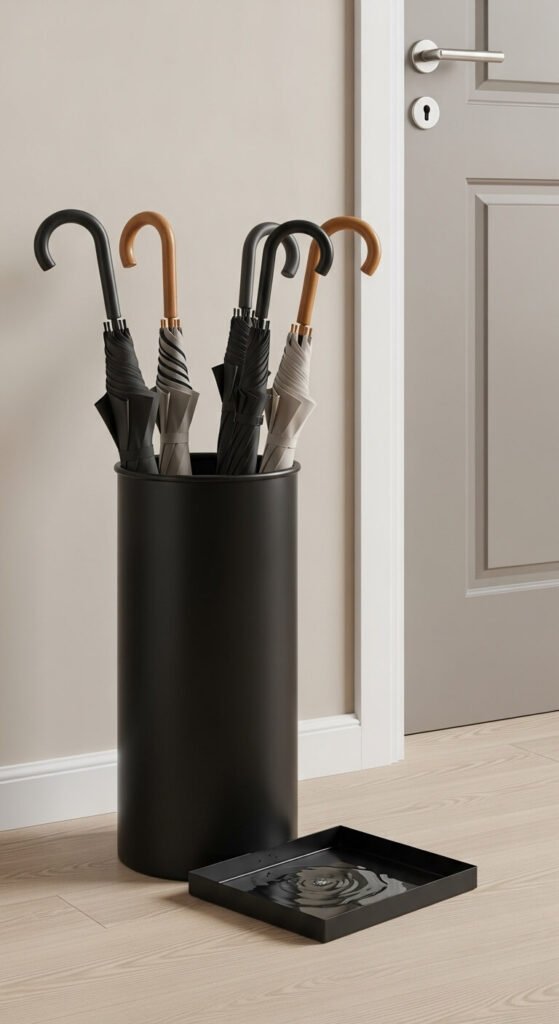
Wet umbrellas drip everywhere when you prop them against walls. A proper stand contains the mess and keeps umbrellas accessible.
Look for stands with removable drip trays you can empty easily. Metal or ceramic options outlast plastic.
Place it directly beside the door so no one has to walk through your house dripping. Tall stands hold four to six umbrellas. Short ones work for apartments. Thrift stores often have these for under $10. Line the tray with small pebbles for better drainage.
Basket Tower for Family Members
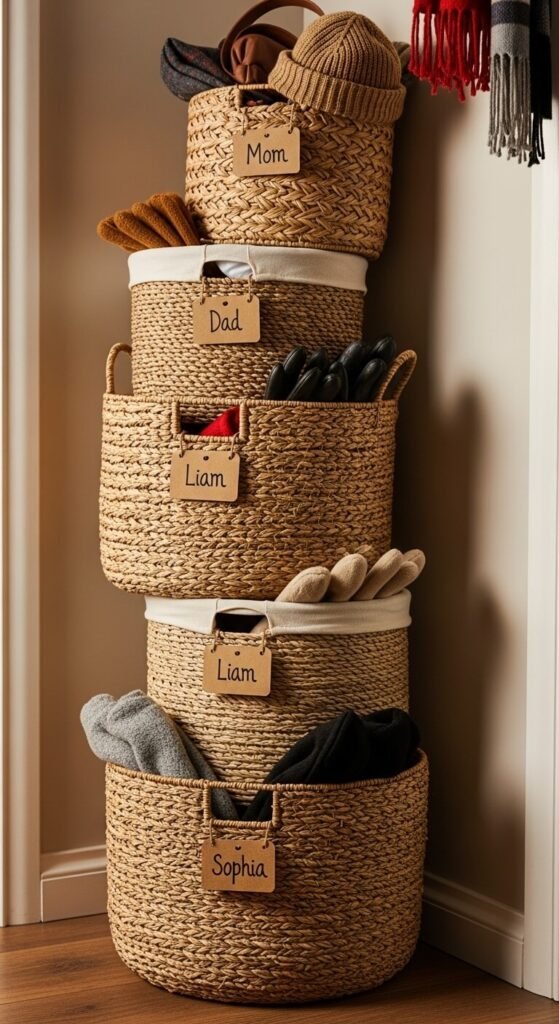
Give each person their own basket for items that migrate through the house. Baskets corral the chaos without looking cluttered.
Stack them on a small shelf unit or buy a tower designed for baskets. Each family member gets one basket for their stuff.
Kids load their own baskets with library books, sports gear, or school projects. Adults use them for work bags or hobby supplies. This prevents the “I can’t find my…” conversations. Label baskets with names or colors. Woven baskets cost $5 to $15 each at discount stores.
Wall-Mounted Charging Station
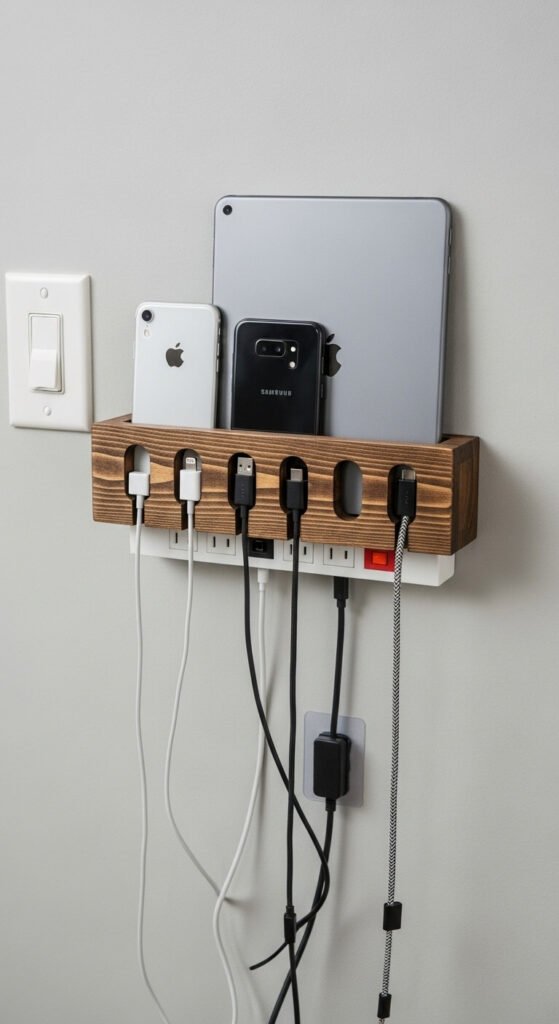
Phone batteries die at the worst times. Create a dedicated charging zone where everyone plugs in when they get home.
Mount a small shelf with a power strip. Use cable organizers to prevent tangled cords. Each person gets their own charging cable.
Charge devices overnight in the entryway instead of bedrooms. This reduces screen time before bed too. Keep the power strip surge-protected. Add small dividers to prevent phones from sliding. Build this for $20 with a basic shelf and adhesive cable clips.
Hooks Inside Closet Door
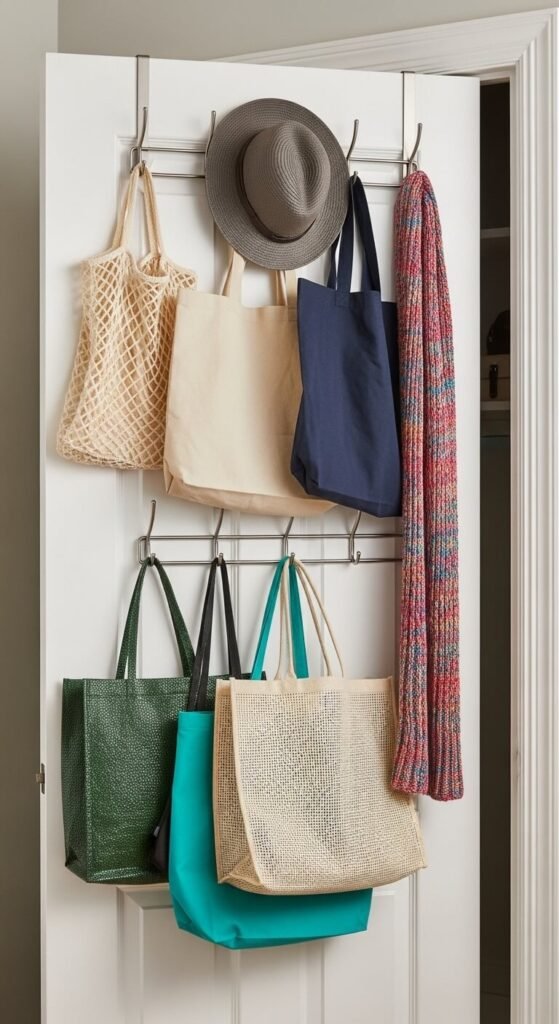
If you have an entry closet, use every surface. The inside of the door becomes prime real estate for lightweight items.
Install command hooks or permanent hooks based on weight capacity. Hang reusable bags, lightweight jackets, or scarves.
This frees up rod space for bulkier coats. Items on the door are visible when you open it but hidden when closed. Space hooks 4 to 6 inches apart. Command hooks hold up to 3 pounds each and won’t damage rental doors.
Tray for Pocket Items
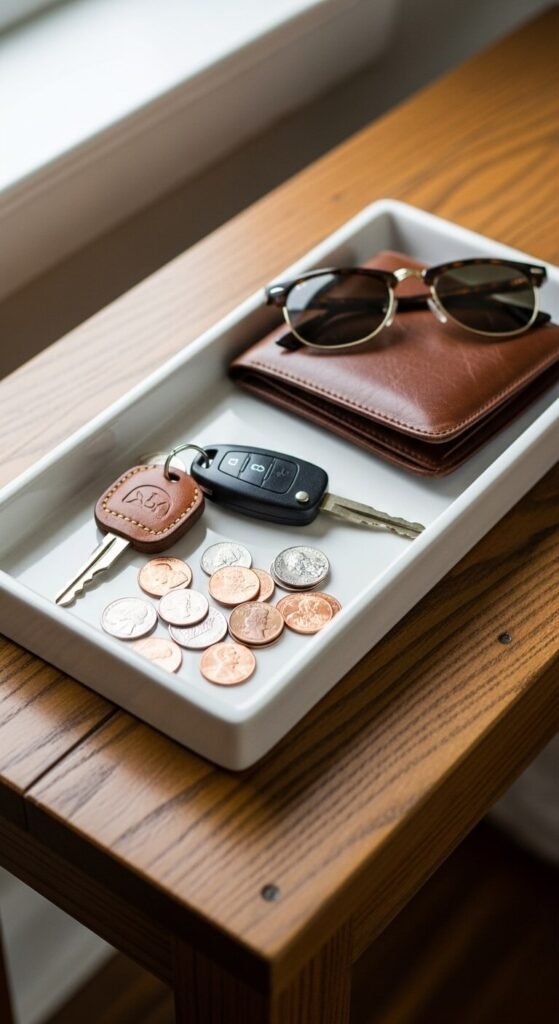
Empty pockets in the same spot every day. A simple tray prevents keys, change, and receipts from scattering.
Any shallow dish works. Thrift a vintage tray or use a small cutting board. Place it on your console table or shelf.
Add sections for different people using smaller dishes inside a larger tray. This keeps items from mixing. Men’s wallets, women’s keys, kids’ library cards all get their own zone. Wash the tray monthly to remove pocket lint and dust.
Magnetic Strip for Small Metal Items
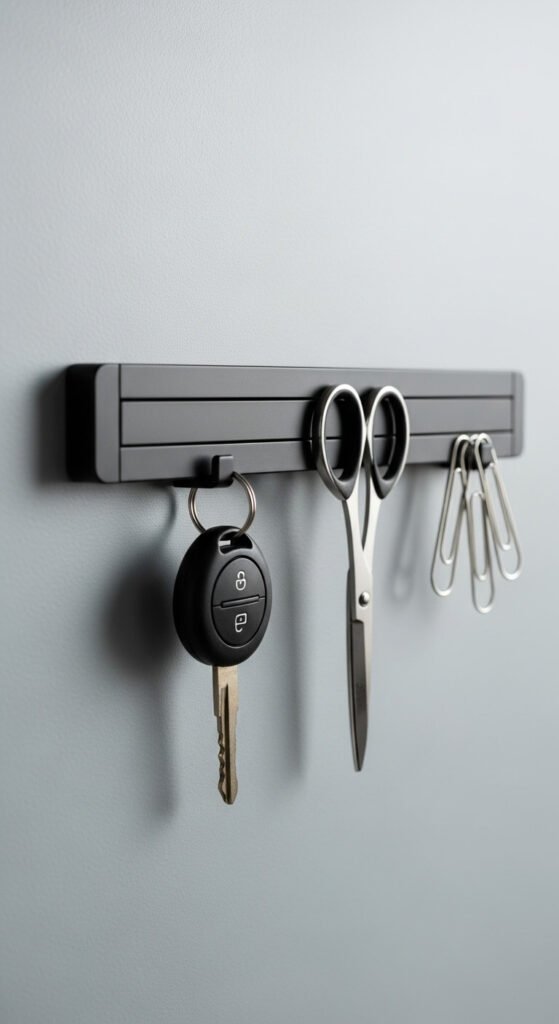
Magnetic strips aren’t just for kitchens. Mount one in your entryway for keys, nail clippers, or small tools.
The strip keeps metal items visible and accessible. Keys won’t fall behind furniture or get buried in drawers.
Install it out of reach of small children who might grab sharp items. These cost $8 to $15 at kitchen supply stores. Mounting takes 5 minutes with included hardware. Works great for people who lose their keys constantly.
Bench Cushion with Storage Pockets
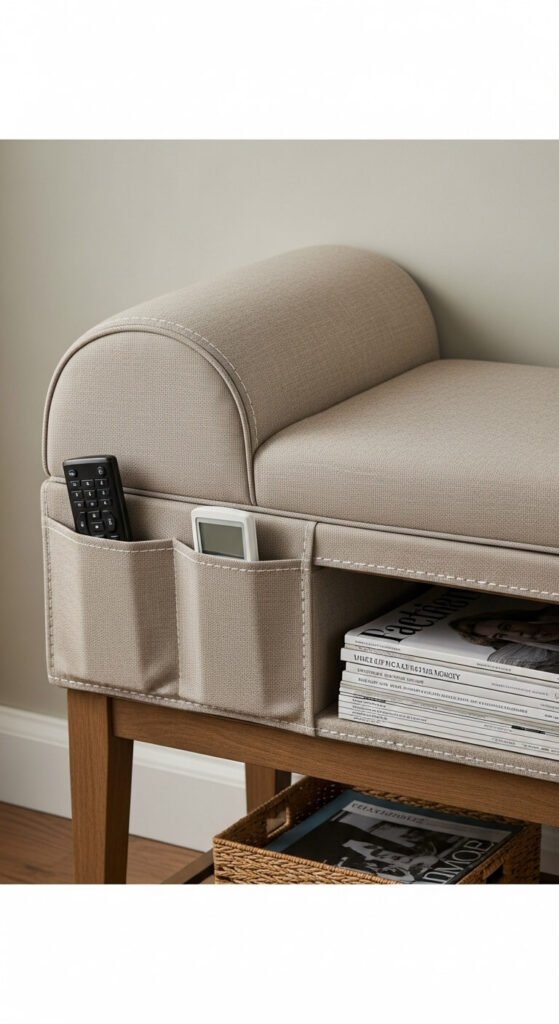
Add pockets to your bench cushion for magazines, dog leashes, or small toys. This works even on benches without built-in storage.
Buy a cushion with attached pockets or sew pockets onto an existing cushion. Use sturdy fabric like canvas.
Store items you grab on the way out. Pet owners keep leashes and waste bags here. Parents store sunscreen and wipes. Flip the cushion over to hide the pockets when guests visit. DIY this by sewing pockets to a $15 cushion cover.
Labeled Bins on Lower Shelves
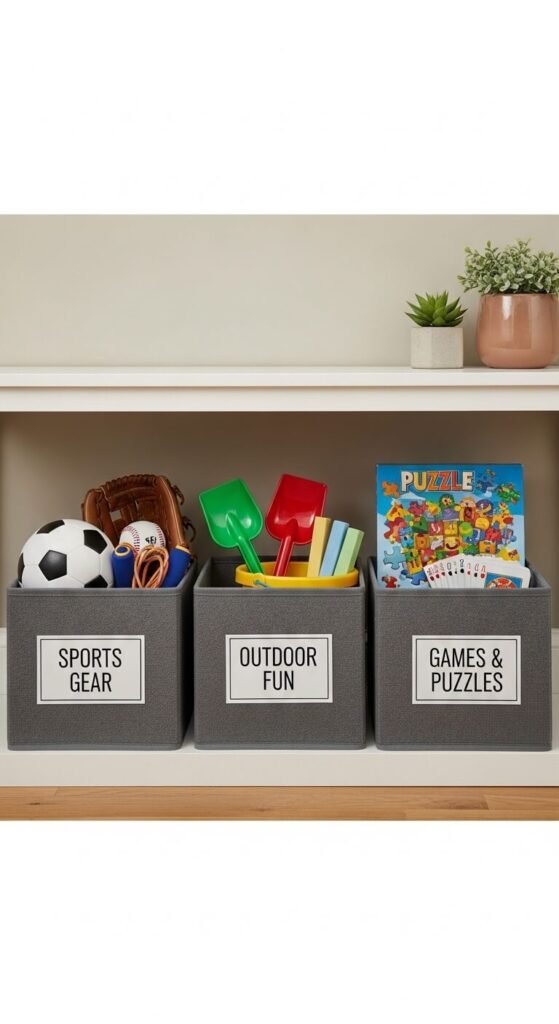
Kids can clean up independently when everything has a labeled home. Use pictures for non-readers, words for older children.
Fabric bins on lower shelves hold toys that migrate to the door. Balls, sidewalk chalk, and bubbles stay contained.
Rotate bins seasonally. Winter bins hold sleds and snow toys. Summer bins hold beach gear. This teaches kids to put things away correctly. Dollar store bins work fine for $3 each. Print labels for free at home.
Corner Shelf Tower
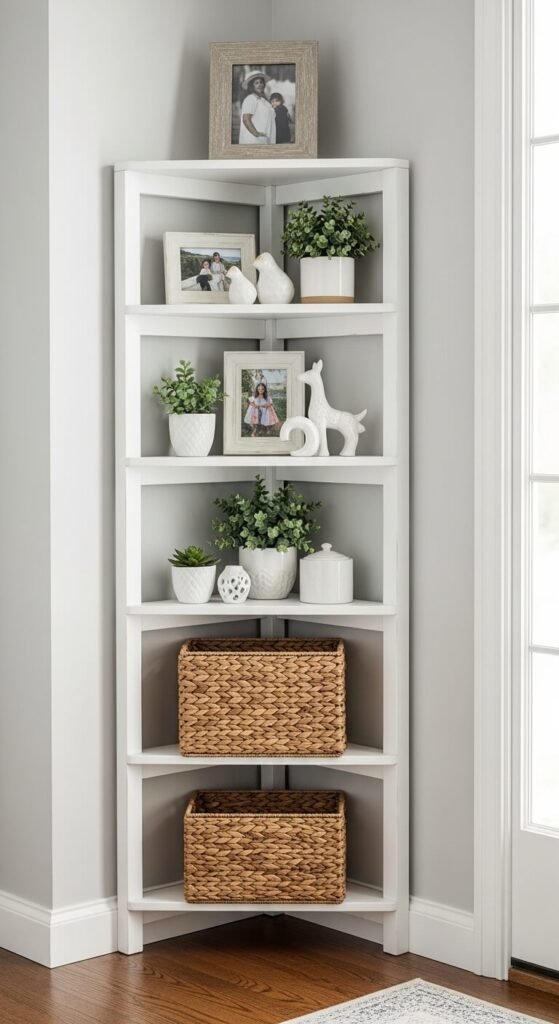
Corners go unused in most entryways. A corner shelf tower captures that wasted space without blocking traffic flow.
Ladder-style shelves work well. Lower shelves hold functional items, upper shelves hold decor to draw the eye up.
Keep daily items on middle shelves at arm height. Store less-used items up high. These shelves come in wood, metal, or plastic for $30 to $80. Anchor top-heavy units to the wall for safety.
Mirror with Built-In Hooks
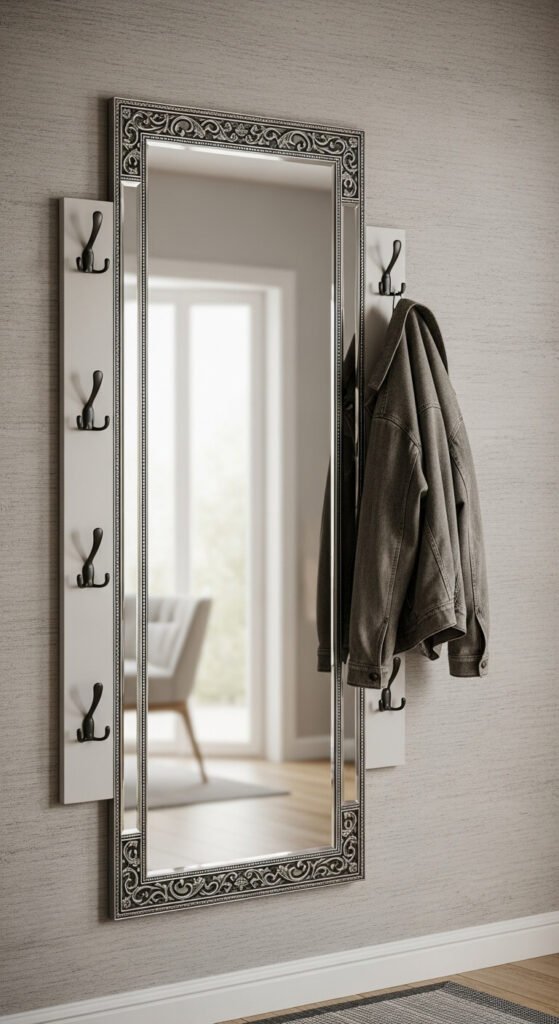
Check your appearance and hang your coat in one piece of furniture. Mirrors with attached hooks save wall space.
Full-length mirrors work best for outfit checks before leaving. Hooks along the sides or bottom hold coats and bags.
Position the mirror to reflect natural light and make your entryway feel larger. These combo units cost $50 to $120. Look for hooks rated for heavy winter coats. Mount securely to studs since mirrors are heavy.
Open Shoe Rack with Bootray
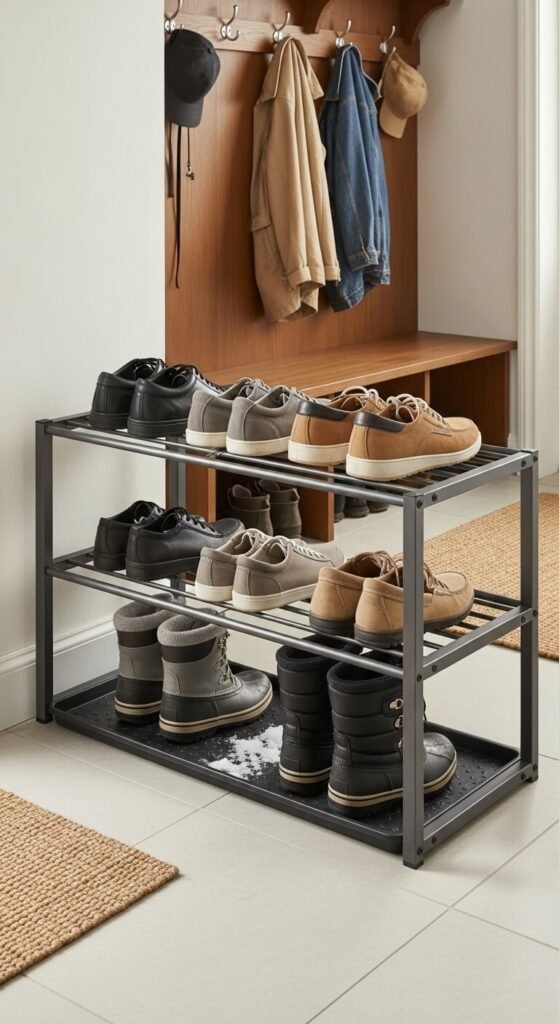
Open racks let wet shoes dry properly. Enclosed storage can trap moisture and create odors.
Choose racks with slatted shelves so air circulates. Add a boot tray on the bottom tier for snow boots or rain shoes.
Clean the boot tray weekly to prevent mildew. Metal racks last longer than plastic and hold more weight. These cost $15 to $35 depending on size. Stack two racks if you have a large family.
Wall Calendar with Command Center
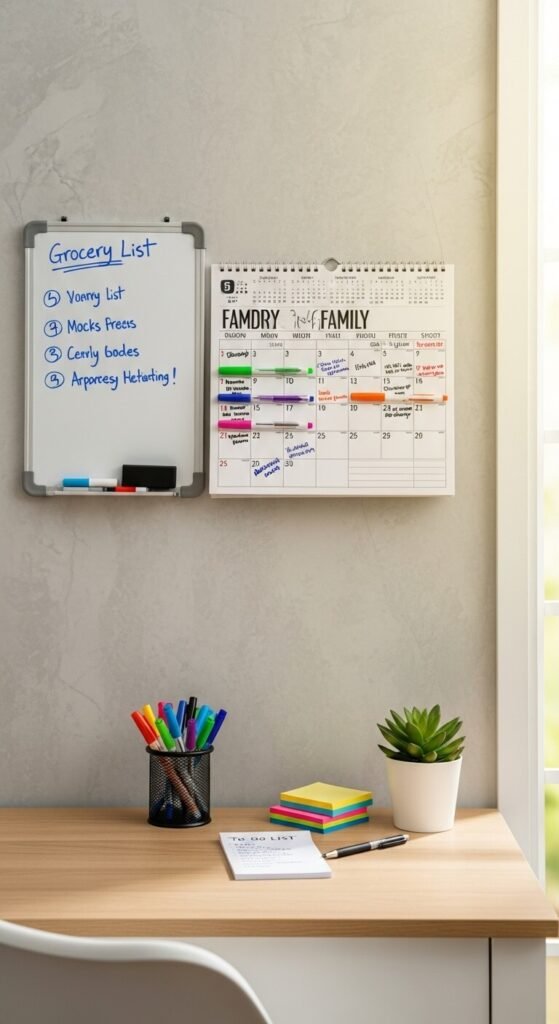
Track everyone’s schedule where you see it coming and going. A wall calendar prevents missed appointments and double-booking.
Add a small dry-erase board for grocery lists and quick notes. Keep pens in a cup that’s attached or weighted so they don’t walk away.
Update the calendar weekly during family meetings. Color-code each person’s activities. This costs under $20 for calendar, board, and pens. Mount everything at eye level so kids can check their own schedules.
Conclusion
Your entryway works harder than almost any room in your home. With the right organization systems, it becomes a launching pad instead of a dumping ground. Start with the items causing the most chaos—usually shoes, coats, or keys—and build from there. Mix and match these ideas based on your space and budget. Most solutions cost less than a take-out dinner and take under an hour to set up. The result is a welcoming space that makes everyone’s daily routine just a little bit easier. Pick one or two systems this weekend and watch how quickly your entryway transforms.