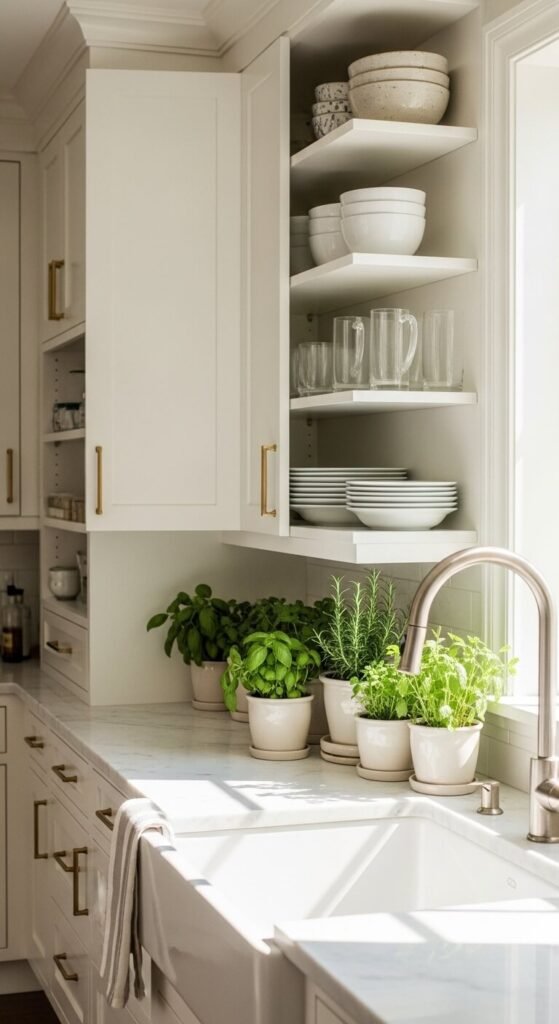
Your kitchen cabinets hold more potential than you think. Most of us open those doors daily, only to face chaos—stacks of mismatched containers, expired spices hiding in corners, and lids that never match their bases. The good news? Small changes make a huge difference. You don’t need expensive organizers or a complete renovation. Simple tricks like using tension rods, lazy Susans, and drawer dividers transform cluttered spaces into functional zones. These 26 strategies help you save time, reduce stress, and actually enjoy cooking again. Let’s turn those cabinets into organized, efficient spaces that work for your real life.
Use Tension Rods to Create Vertical Dividers
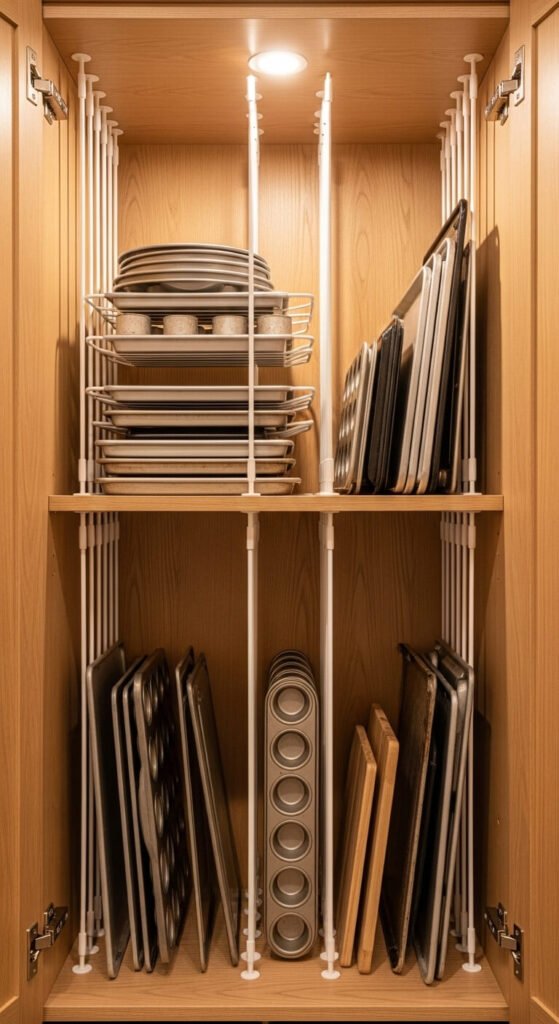
Tension rods cost less than $10 and work magic inside cabinets. Install them vertically to create slots for baking sheets, cutting boards, and serving platters. No drilling required—just twist and secure.
This keeps flat items upright instead of stacked. You’ll grab what you need without toppling the entire pile. Position rods about 2 inches apart for most items. Adjust spacing based on what you store.
Perfect for renters since they leave no marks. Try this in lower cabinets where you keep bulky pans and trays.
Stack Canned Goods on Tiered Shelves
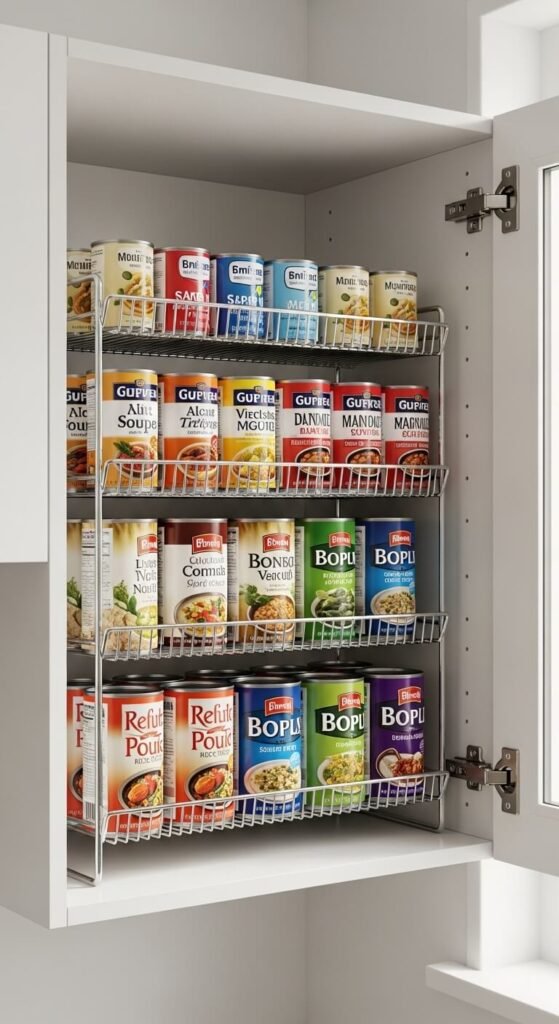
Tiered shelf risers let you see every can at once. No more digging through rows to find tomato paste. These plastic or metal steps cost $8-15 and instantly double your visible storage.
Place taller cans in back, shorter ones up front. Group by category—soups together, beans together, sauces together. Label expiration dates on top with a marker for quick checks.
Works in pantries too. The slanted design means you’ll actually use what you have instead of buying duplicates. Check dollar stores for budget-friendly options that work just as well as fancy versions.
Attach Command Hooks for Measuring Cups
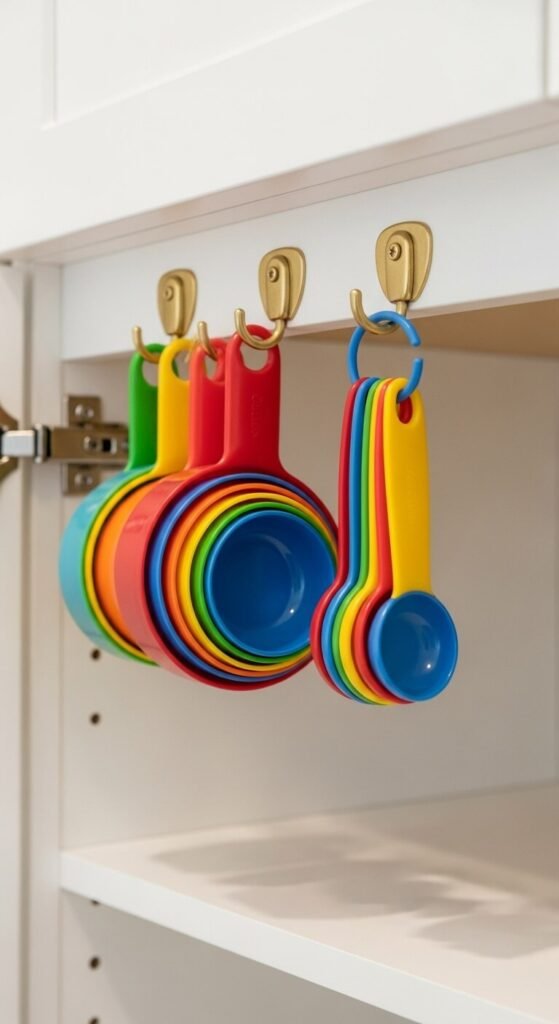
Cabinet doors offer hidden storage space. Stick Command hooks on the inside and hang measuring cups, spoons, or pot holders. They stay out of sight but within easy reach.
This frees up drawer space for other tools. Use small hooks for lightweight items to prevent them from falling. Remove cups before closing the door to avoid damage.
Position hooks near where you bake or cook. You’ll save seconds every time you measure ingredients. Those seconds add up to minutes saved each week. Hooks cost about $1 each and hold up well to daily use.
Install Pull-Out Drawers in Deep Cabinets
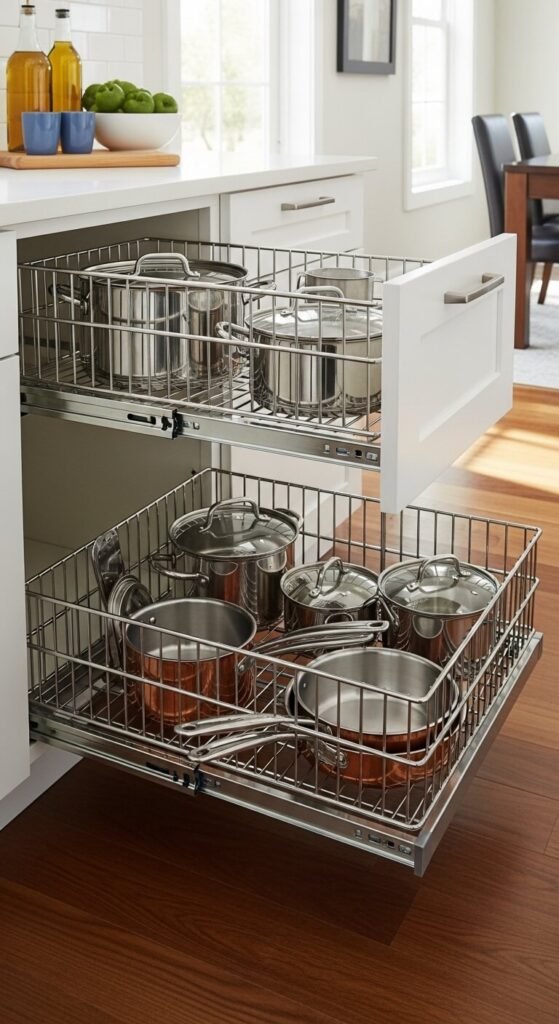
Deep lower cabinets become black holes without organization. Pull-out wire baskets or wooden drawers bring everything forward. You’ll stop crawling inside to reach items in back.
Hardware stores sell DIY kits for $20-40. Install them yourself with basic tools in under an hour. Measure your cabinet depth first to buy the right size.
Store heavy pots and appliances in these drawers. The gliding action makes access smooth and prevents back strain. Even budget-friendly plastic versions work well if you’re watching costs. Your knees will thank you.
Group Similar Items in Clear Bins
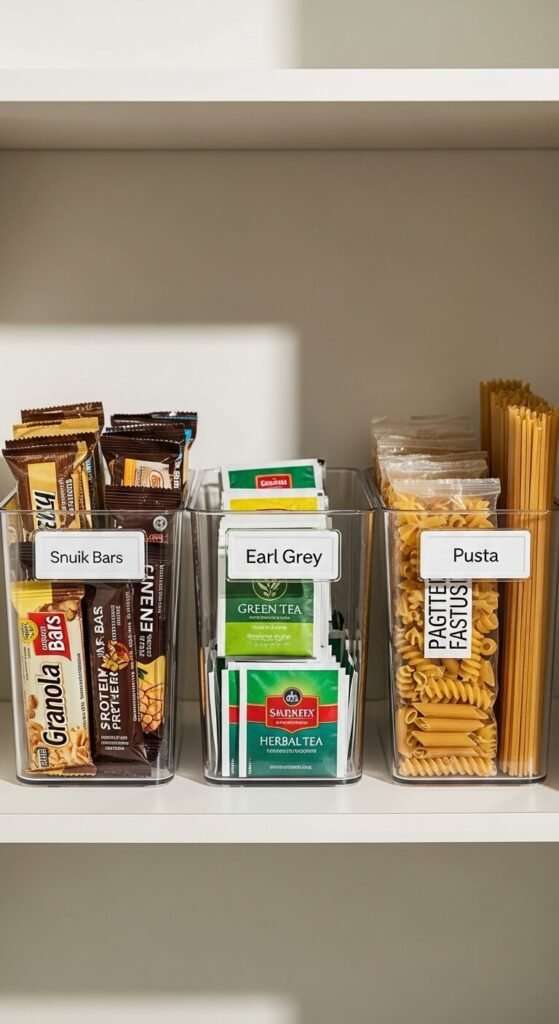
Clear plastic bins corral small items that get lost. Group snacks, tea bags, baking supplies, or breakfast items together. See everything without opening containers.
Dollar stores sell bins for $1-3 each. Choose stackable versions to maximize vertical space. Label bins with a marker or printed tags so family members know where things go.
This system prevents items from migrating around cabinets. Pull out the whole bin instead of moving five things to reach one item. Bins contain spills too—if honey leaks, it stays in one container instead of spreading everywhere.
Hang Wire Baskets Under Shelves
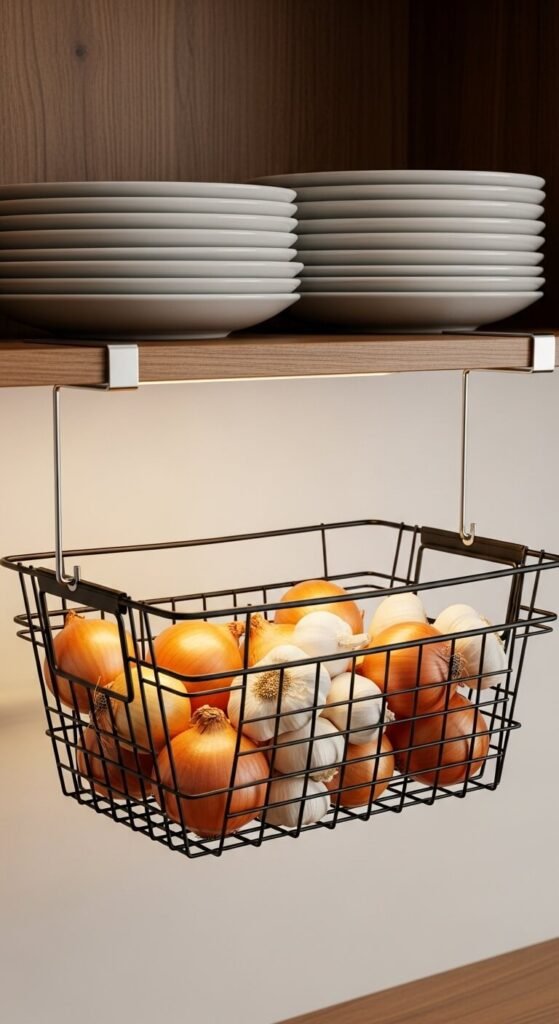
The space between shelves often goes unused. Under-shelf wire baskets slide onto existing shelves and create extra storage below. No tools required for most models.
Store lightweight items like snack bags, napkins, or kitchen towels. These baskets cost $8-12 and come in various sizes. Measure shelf thickness before buying to get proper fit.
Perfect for cabinets with tall shelf spacing. You’ll gain storage without sacrificing what’s already on the shelf above. Choose baskets with rounded edges to prevent snagging items as you pull them out.
Use Lazy Susans for Corner Cabinets
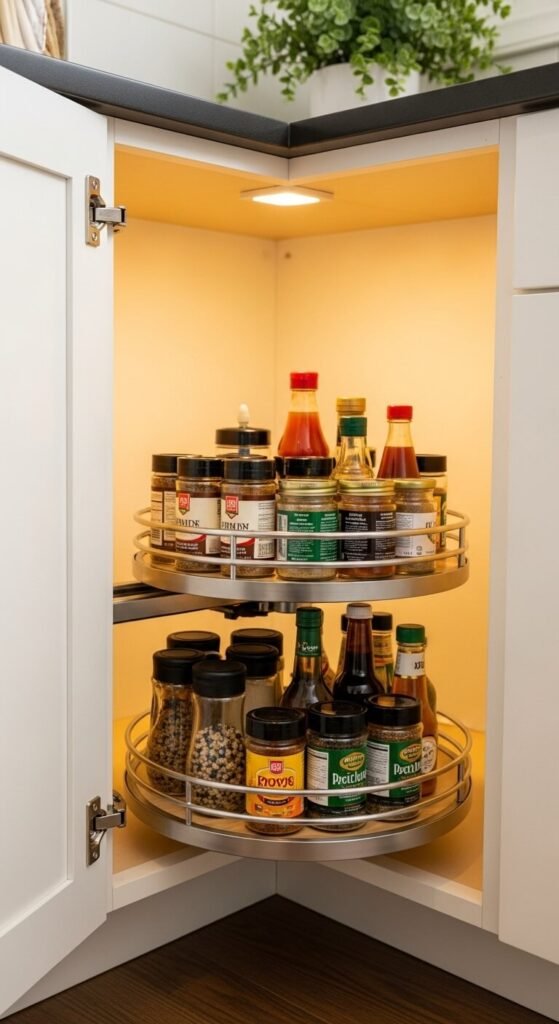
Corner cabinets trap items in hard-to-reach spots. Lazy Susans spin to bring everything within reach. No more losing bottles and jars in dark corners.
Buy turntables for $10-15 at home stores. Two-tier versions maximize vertical space in taller cabinets. Use them for oils, vinegars, spices, or condiments.
Wipe the turntable clean monthly to keep it spinning smoothly. Place taller items toward the center so they don’t hit the cabinet door when rotating. This simple tool saves countless minutes of searching and frustration.
Store Lids Separately in Magazine Holders
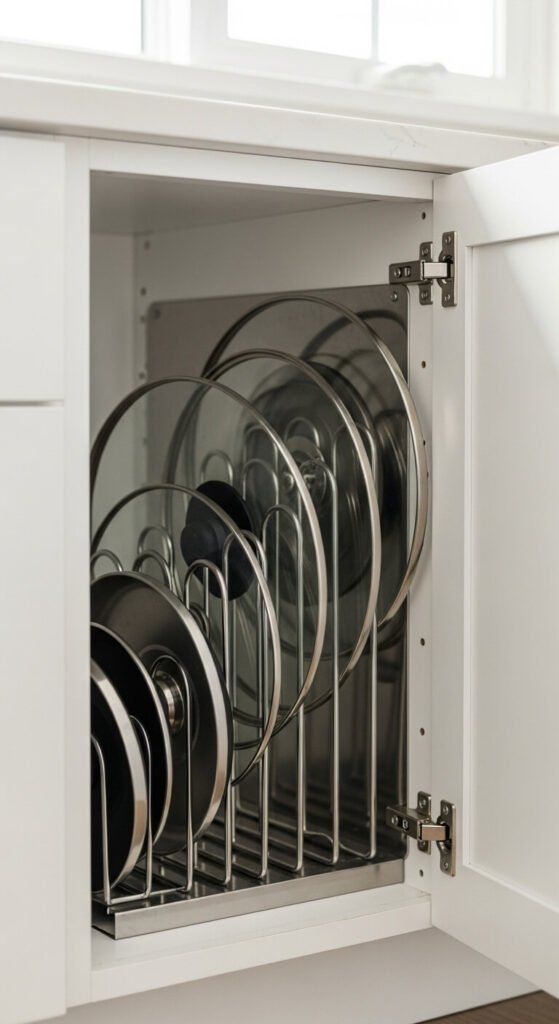
Container lids multiply and disappear simultaneously. Magazine holders or file organizers keep them sorted vertically. Match lids to containers faster when everything’s visible.
Find holders at dollar stores for $1-2. Store lids by size in separate sections. Place holders on their side for easier browsing.
This works for pot lids too. Keep them near the pots they fit. You’ll end up with fewer mismatched sets cluttering your space. Metal or plastic holders both work fine—choose based on your budget and style preference.
Add Adhesive LED Strip Lights
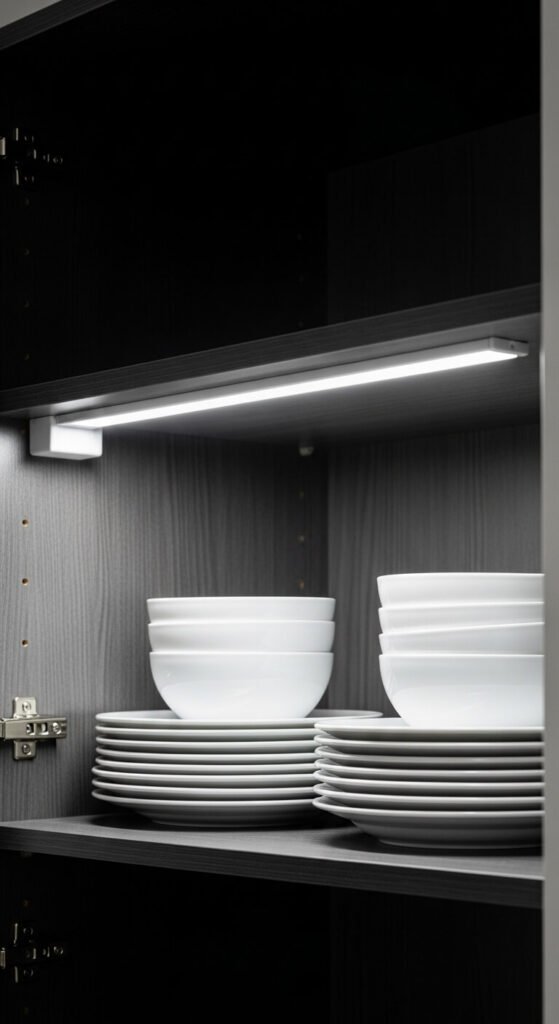
Dark cabinets make finding things hard. Battery-operated LED strips stick under shelves and brighten every corner. Motion-activated versions light up when you open doors.
These cost $12-20 and last months on batteries. Install them in upper cabinets where overhead lights don’t reach. No electrician needed.
See expiration dates and read labels without squinting. Rechargeable versions save money over time. The small investment pays off in convenience every single day. Your eyes strain less, and you’ll actually use what you can see.
Create Zones for Different Meal Types
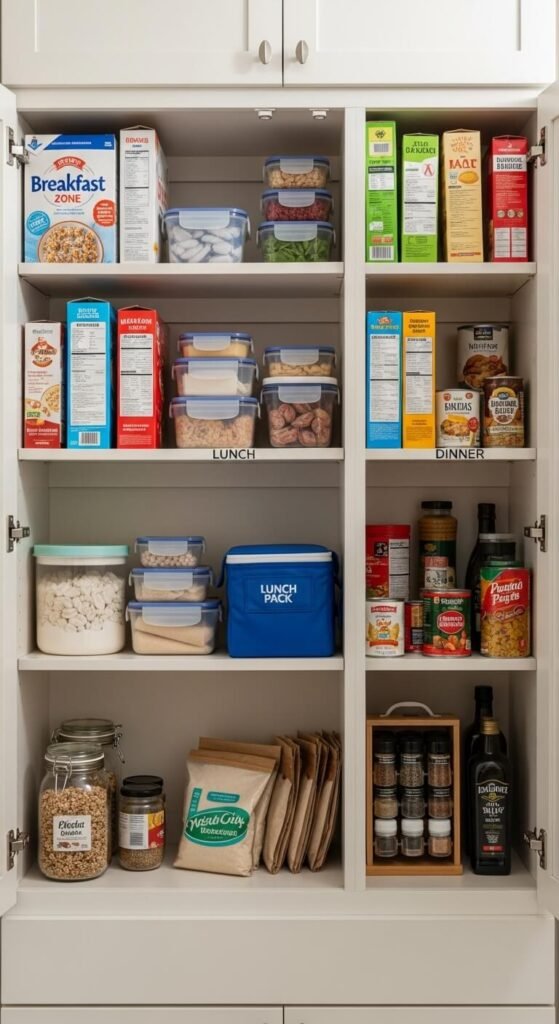
Assign cabinet sections to specific meals. Breakfast items together, lunch supplies together, dinner ingredients together. Your brain processes organized zones faster than random placement.
Place breakfast items at eye level if that’s your busiest meal. Store rarely used dinner party supplies up high. Keep lunch-packing materials near the fridge.
This system helps everyone in the family find what they need independently. Kids can grab cereal without asking where it is. Meal prep becomes faster when ingredients live in predictable spots. Rearrange zones based on how your household actually eats.
Use Drawer Dividers for Utensil Organization
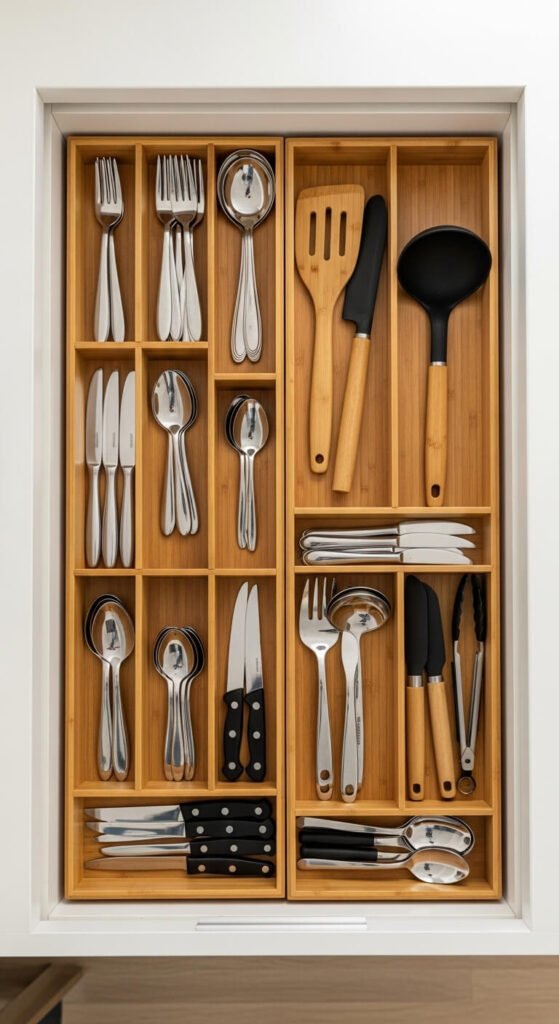
Junk drawers slow you down. Expandable dividers create compartments for spatulas, whisks, and serving spoons. Everything gets its own home.
Bamboo dividers cost $10-15 and look nice. Adjust sections to fit your tools instead of forcing tools into fixed spaces. Wash dividers occasionally to prevent sticky buildup.
This keeps drawers from becoming chaotic pits. You’ll find the potato masher immediately instead of pawing through tangled utensils. Even basic plastic dividers from dollar stores work perfectly fine for budget-conscious organizers.
Stack Plates Vertically with Rack Dividers
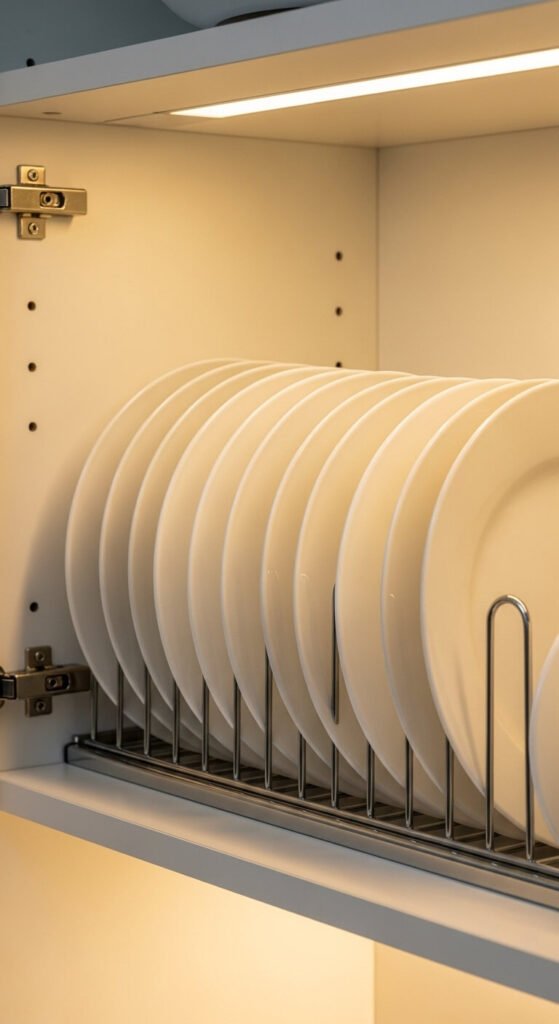
Stacking plates horizontally wastes space and risks chips. Vertical plate racks let you slide out one plate without moving others. They protect dishes better too.
Find these racks for $15-25 online or at home stores. Measure your plates before buying to ensure proper spacing. Wood or coated wire versions both work well.
Store everyday plates in easy-reach spots. Keep fancy china higher up since you use it less often. This system prevents the dreaded plate avalanche when you grab the bottom one from a stack.
Repurpose Shoe Organizers for Cleaning Supplies
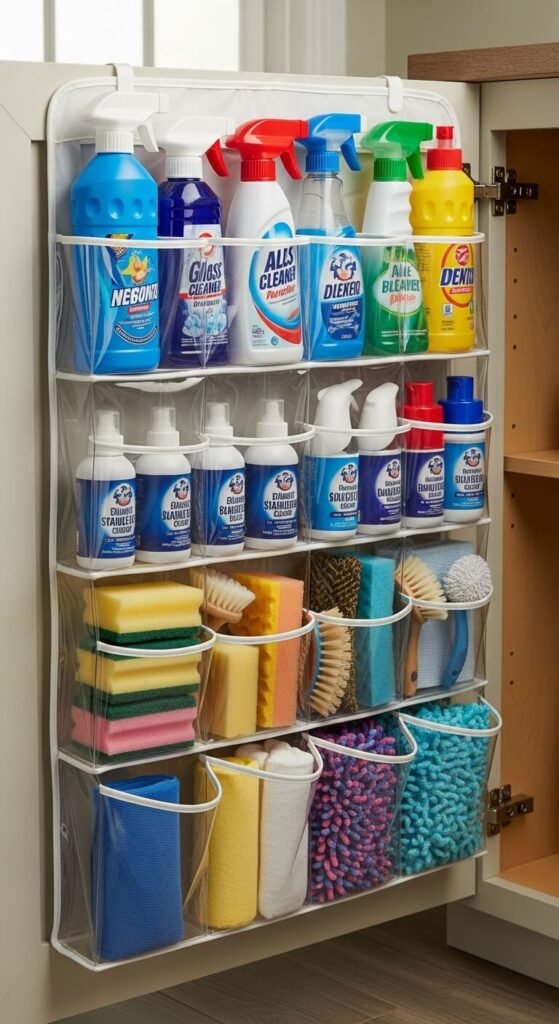
Over-door shoe organizers aren’t just for closets. Hang them inside cabinet doors to store cleaning products, garbage bags, or sponges. Clear pockets let you see what you have.
These cost $5-10 and install with hooks. Use under the sink to keep supplies contained and visible. Prevents bottles from tipping and leaking.
Remove a few pockets if they’re too tight for spray bottles. This keeps toxic cleaners away from food storage areas. The vertical design maximizes awkward under-sink spaces that usually go underutilized.
Install Pegboard on Cabinet Backs
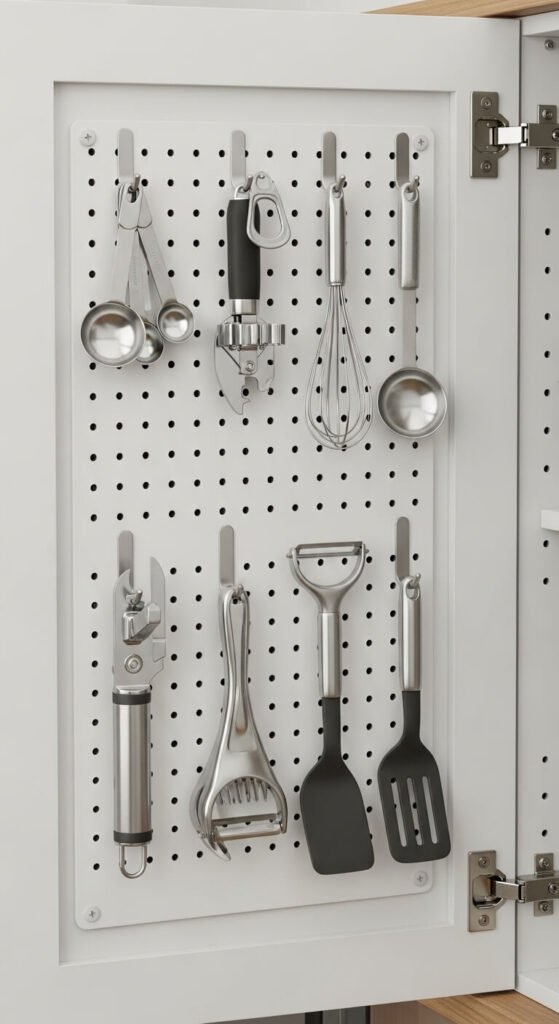
Pegboard transforms cabinet backs into customizable storage. Add hooks anywhere to hang small gadgets, pot holders, or kitchen scissors. Rearrange hooks as your needs change.
Buy pegboard sheets for $8-12 at hardware stores. Paint it to match your cabinets for a cohesive look. Use small hooks designed for pegboard weight limits.
This works well in shallow cabinets where depth is limited. Tools hang flat against the back, leaving shelf space open for other items. Cut pegboard to size with a handsaw for a perfect fit.
Store Baking Sheets Behind Cabinet Doors
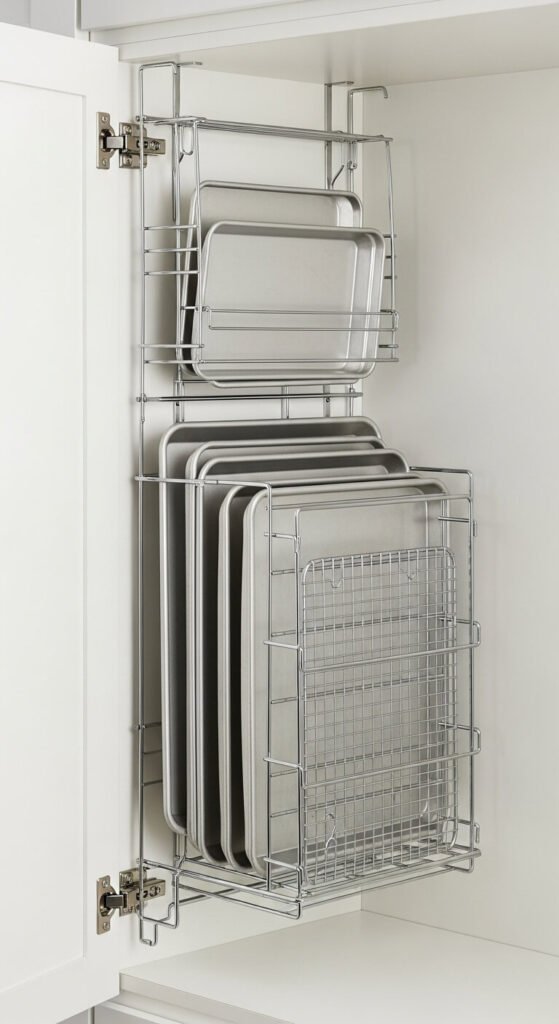
Cabinet doors offer vertical real estate. Mount shallow racks on door backs to hold baking sheets, cooling racks, or cutting boards. They stay accessible without taking shelf space.
Hardware stores sell door-mount racks for $12-18. Check door clearance before installing to avoid hitting shelves when closing. Use screws, not adhesive, for heavy items.
This frees up cabinet interiors for items that don’t store well vertically. Your baking sheets stay organized instead of sliding around loose. Plus you’ll actually remember you own that cooling rack.
Label Everything with a Label Maker
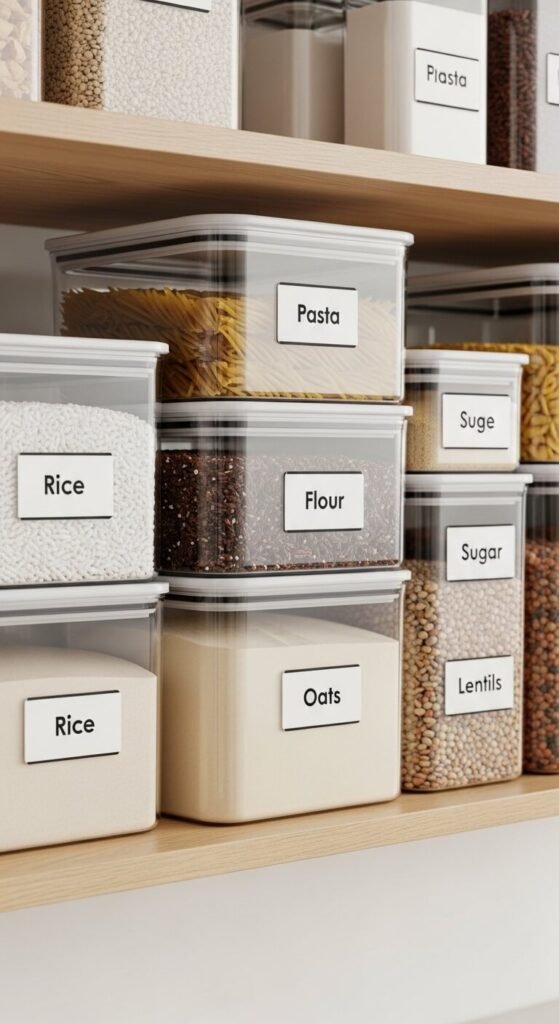
Labels eliminate guessing games. Mark bins, shelves, and containers so everyone knows where things belong. Family members can help put groceries away correctly.
Basic label makers cost $15-25 and last years. Use clear tape for a professional look or chalkboard labels for frequently changing contents. Handwritten labels on masking tape work too.
This system maintains organization over time. When you can see where pasta belongs, you’ll put it there instead of shoving it wherever. Labels create accountability and make kitchens more user-friendly for guests helping out.
Nest Mixing Bowls and Measuring Cups
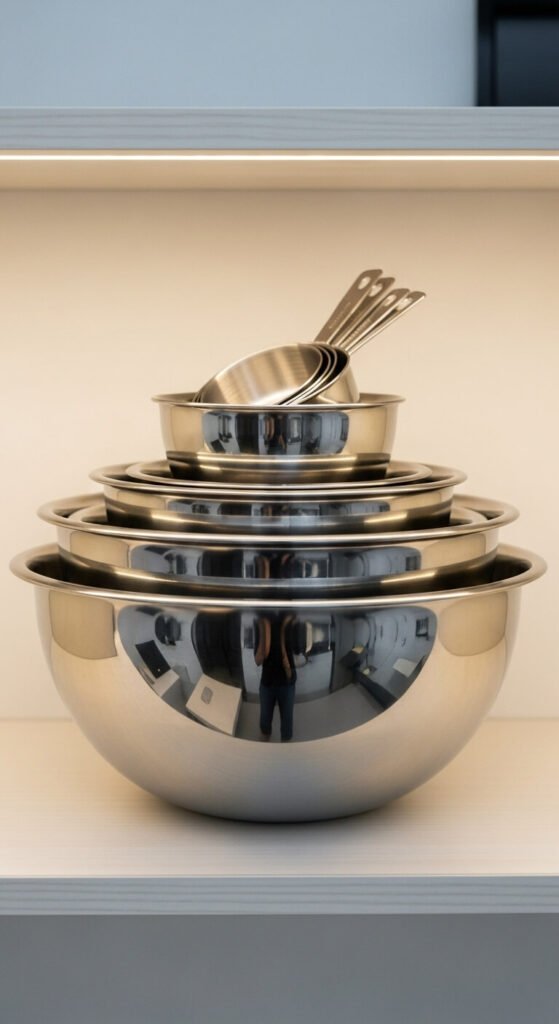
Nesting saves dramatic amounts of space. Store measuring cups inside mixing bowls, and nest those bowls by size. One compact stack replaces scattered items.
Keep sets together so you don’t hunt for matching pieces. This works for food storage containers too—nest bases together and stack lids separately nearby.
Takes seconds to set up but saves minutes every time you cook. You’ll find the right size bowl immediately instead of pulling out four wrong ones first. This method costs nothing and works in any cabinet.
Use Risers for Spice Jar Visibility
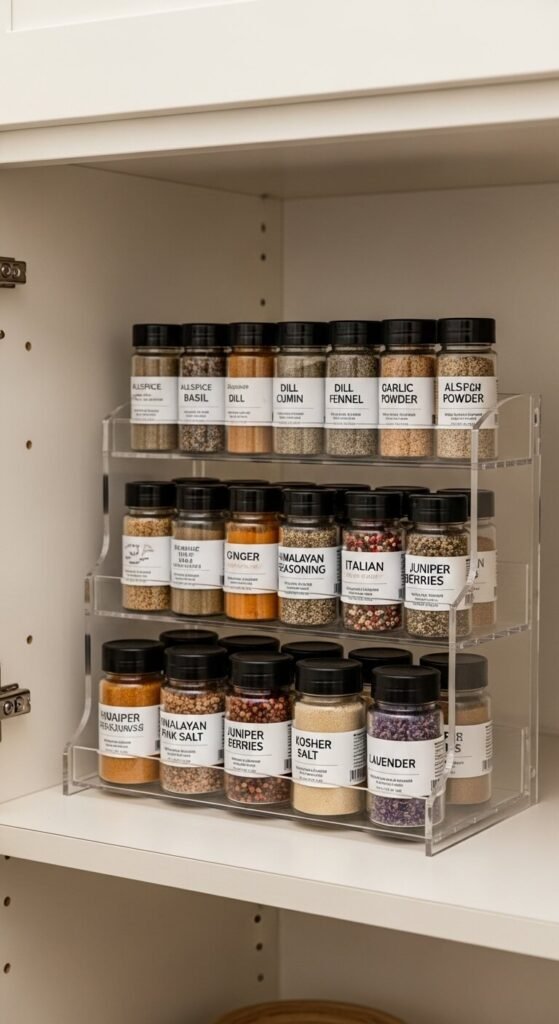
Spice jars hide behind each other in cabinets. Stepped risers bring back rows forward so you see every label. No more buying duplicates of spices you already own.
Acrylic risers cost $10-20 and wipe clean easily. Arrange spices alphabetically or by frequency of use. Turn all labels face-forward.
This transforms spice chaos into a system. You’ll cook more creatively when you can see your options. Risers work in pantries too for canned goods or small bottles. Clear materials look cleaner than opaque versions.
Hang S-Hooks for Mugs and Cups
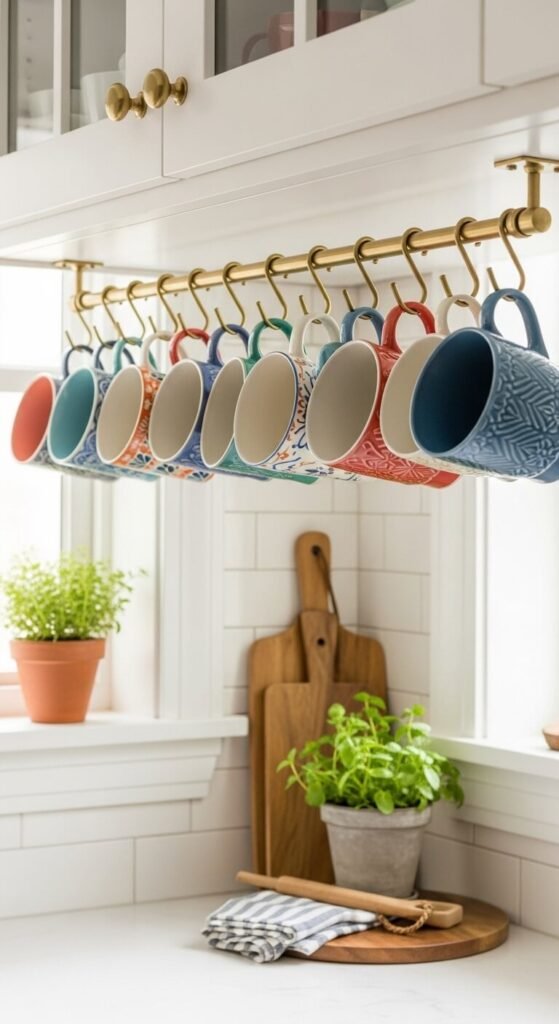
Mugs take up valuable shelf space. Install a rod under cabinets or on exposed shelves and hang mugs with S-hooks. They become display pieces while staying accessible.
Tension rods work without drilling. Hang your most-used mugs for easy morning coffee prep. This also prevents mug handle chips from stacking.
Hooks cost pennies each. Choose a rod that supports the weight of full ceramic mugs. This frees up cabinet space for bowls and plates that don’t hang well.
Store Pan Lids on Cabinet Doors
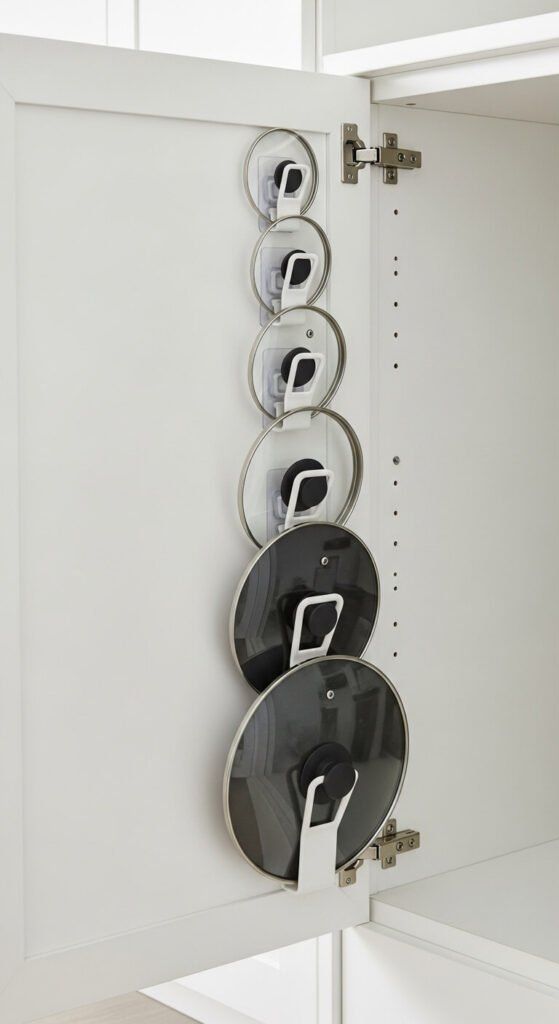
Pan lids wobble around cabinets and never stay put. Adhesive lid holders stick to cabinet doors and grip lids securely. Pull the lid you need without the others falling.
These holders cost $8-12 for a set. Mount them at different heights for various lid sizes. Position them low enough that they don’t interfere with shelves.
This keeps lids separated from pans, which actually makes sense since you use them at different times. Cabinet doors close smoothly without lids shifting around inside. Simple physics, better organization.
Create a Snack Station for Kids
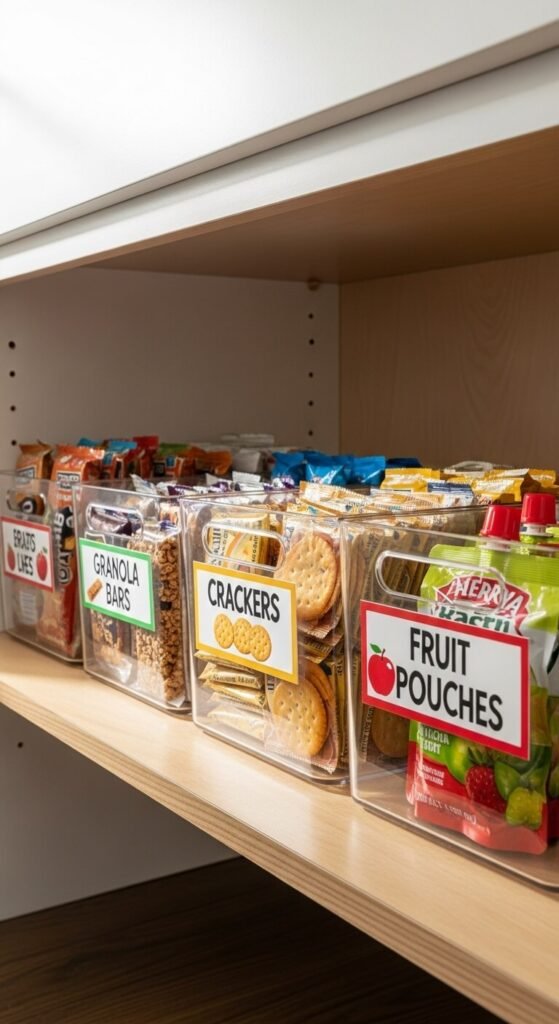
Kids ask for snacks constantly. Dedicate one lower cabinet to grab-and-go options they can reach independently. Use bins sorted by snack type.
Add picture labels for kids who don’t read yet. Stock items you approve of so they make good choices. This reduces “Mom, I’m hungry” interruptions.
Refill the station weekly during grocery prep. Kids learn responsibility and you gain peace of mind. Even a single cabinet shelf works if you’re short on space. The goal is independence, not perfection.
Attach Small Baskets to Shelf Edges
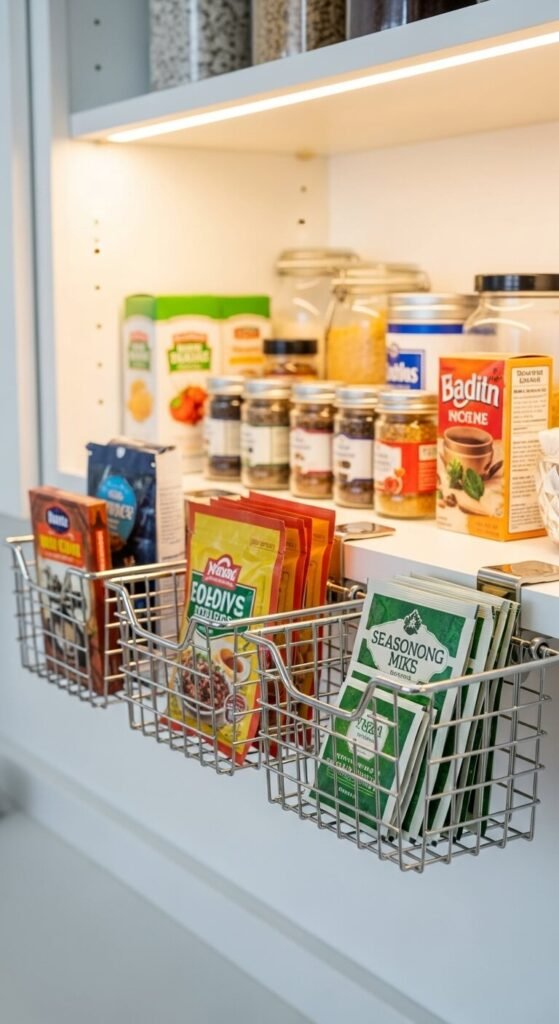
Clip-on baskets attach to shelf fronts and hold small packets, tea bags, or seasoning mixes. They use otherwise wasted space at shelf edges.
Find these for $5-8 at organizing stores. Clip them to shelves you can reach easily so you don’t knock your head. Keep lightweight items in them to prevent baskets from sagging.
This adds storage without adding furniture. Perfect for items you use often but that are too small to deserve their own shelf space. Baskets stay put and look intentional, not cluttered.
Roll Dish Towels Instead of Folding
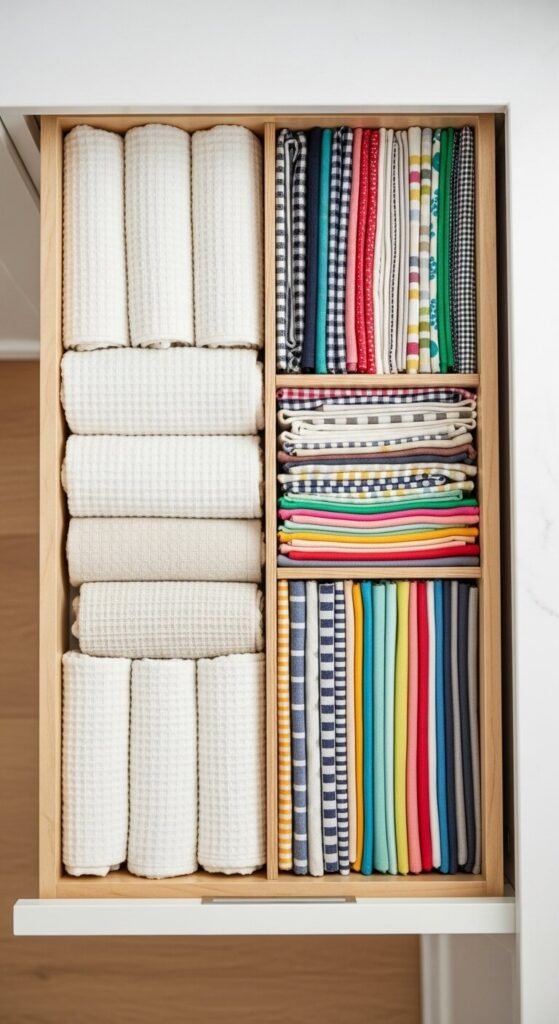
Folded towels topple over. Rolled towels stand upright in drawers or bins, making each one visible. You’ll use different towels instead of always grabbing the top one.
This file folding method also works for washcloths and cloth napkins. Roll tightly and stand them on end. Color-code by purpose if you like.
Takes the same time as folding but keeps drawers neater. You’ll fit more towels in the same space too. Plus rolled towels look satisfying when you open the drawer—small win, big mood boost.
Use Expandable Drawer Organizers
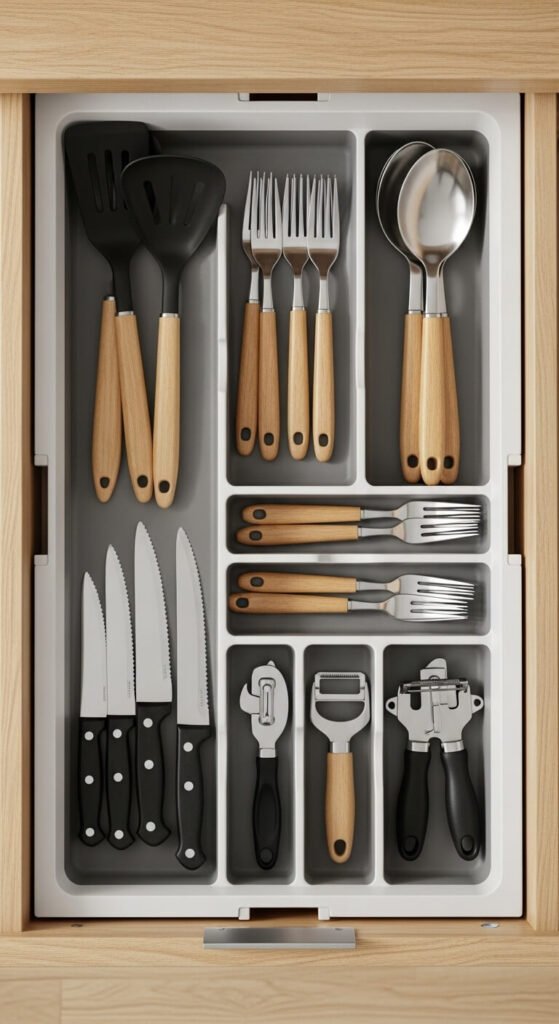
Fixed organizers waste space in oddly sized drawers. Expandable versions adjust to fit your exact drawer dimensions. Customize compartments based on what you actually own.
These cost $12-18 and work in any drawer. Start with your messiest drawer for immediate impact. Adjust dividers as your tool collection changes over time.
Stop fighting with organizers that don’t quite fit. This flexibility means you’ll maintain the system instead of abandoning it when you buy new tools. Works for junk drawers, utensil drawers, and gadget drawers equally well.
Dedicate One Cabinet to Food Storage Containers
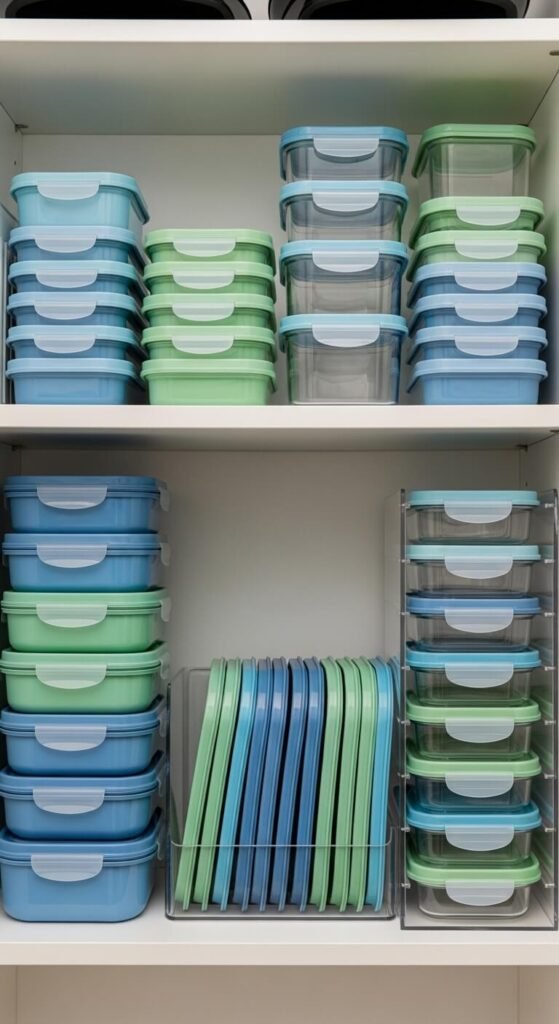
Containers migrate all over the kitchen. Assign them one cabinet near the dishwasher for easy unloading. Match every base to a lid before storing to prevent orphans.
Stack same-size containers together. Store lids in a separate holder so they don’t scatter. Get rid of stained or warped containers that you never use.
This centralized system means you always know where to find containers for leftovers. You’ll pack lunches faster and put away food promptly instead of hunting for the right size container first.
Install Pull-Down Shelves in Upper Cabinets
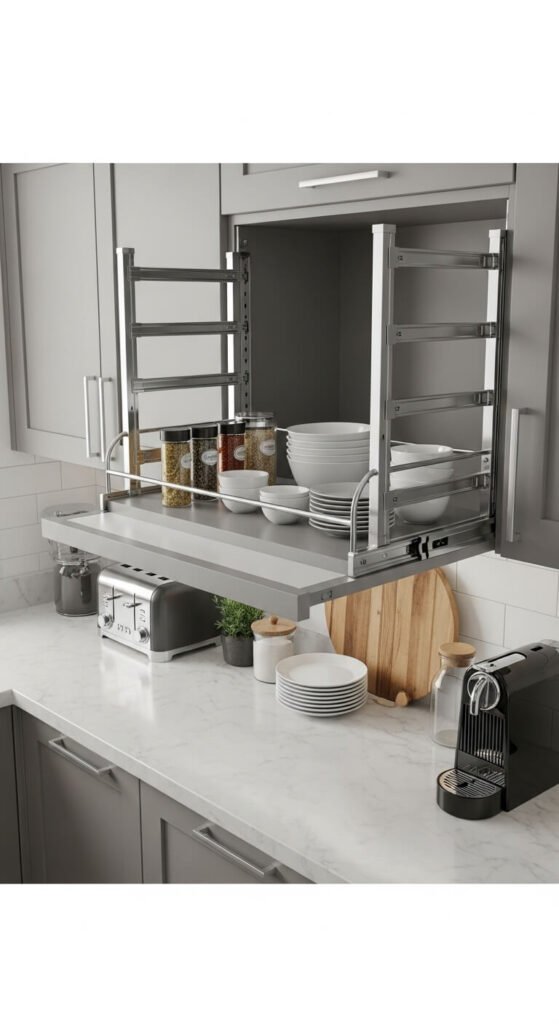
Upper cabinets store items out of reach. Pull-down shelf mechanisms bring contents to counter level with one motion. No step stool required.
These systems cost $40-100 depending on quality. Install them in cabinets above the fridge or other high spots. Professional installation helps if you’re not handy.
Worth the investment if you’re short or have mobility concerns. You’ll actually use those high cabinets instead of letting them collect dust. Stores holiday dishes, serving pieces, or bulk items you access less frequently.
Keep a Donation Box Under the Sink
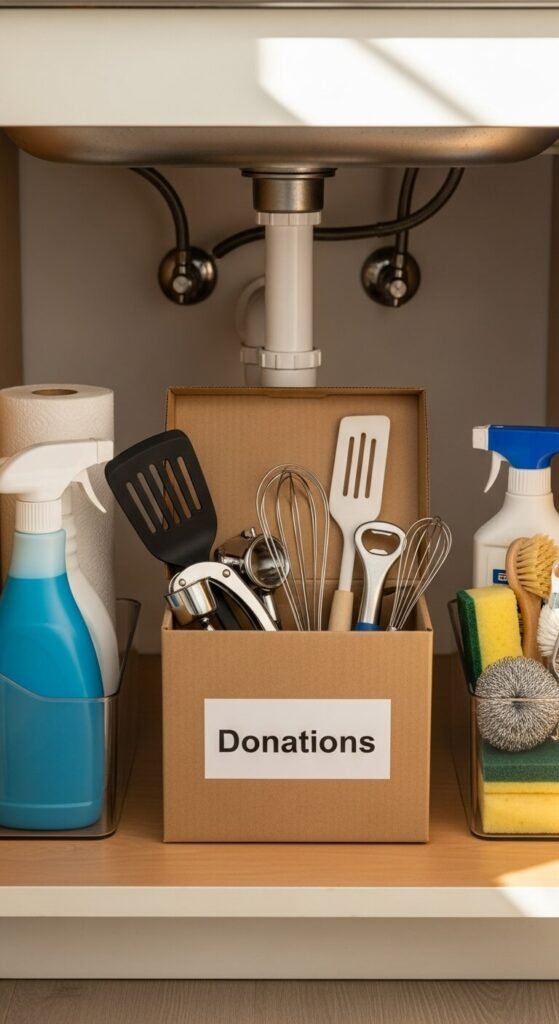
Clutter creeps back slowly. Keep a small box under the sink for items you realize you don’t use. When it fills, donate the contents.
This one-touch decluttering prevents cabinet overflow. See three whisks when you only need one? Toss the extras in the box immediately. Don’t debate or delay.
Empties every month or two depending on your household. Making decluttering effortless means you’ll maintain your organized cabinets long-term. The easier the system, the more likely you’ll stick with it.
Conclusion
Organized cabinets save you time every single day. These 26 tricks work because they’re affordable, simple, and fit into real kitchens with real budgets. You don’t need to buy everything at once. Start with the one tip that solves your biggest frustration—maybe it’s lost lids or cluttered spice jars. Implement that first, then add another trick next month. Small improvements compound into major changes. Your morning routine gets smoother when you find coffee mugs instantly. Dinner prep takes less time when ingredients are visible and accessible. Take action on just one idea today. Your future self will thank you every time you open those cabinet doors.