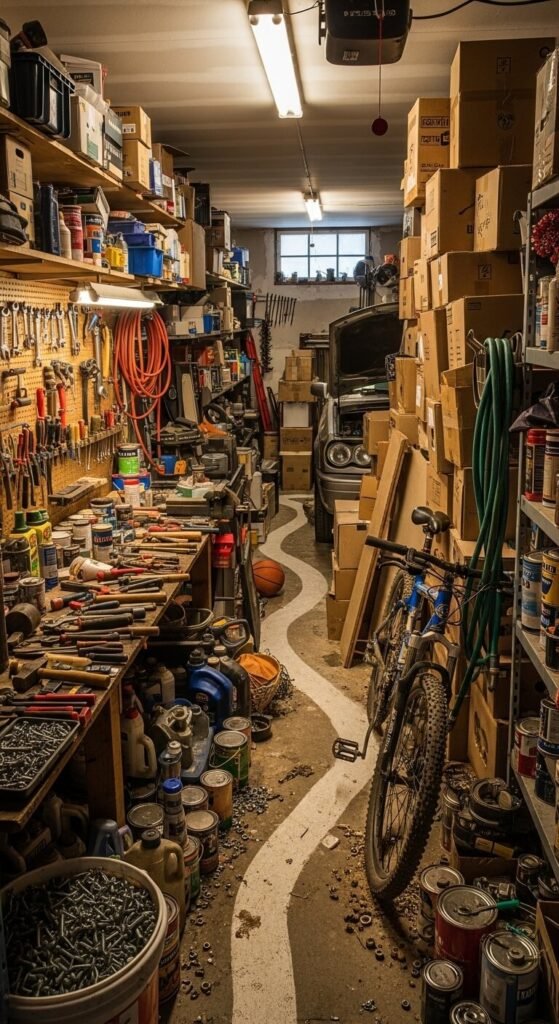
Let’s be honest—your garage has become the black hole of your home. Bikes leaning against holiday decorations, tools buried under camping gear, and that mysterious box you haven’t opened since 2019. You can barely squeeze your car in anymore, and finding anything takes an archaeological dig.
But here’s the good news: transforming your garage from chaotic storage dump to organized, functional space is totally doable. You don’t need a complete renovation or expensive systems—just a solid plan and one determined weekend.
Step 1: Empty Everything Out (Yes, Everything)
This is the hardest part, but it’s absolutely essential. You need to see what you’re working with.
Pick a day with good weather and pull everything out onto your driveway. This serves three purposes: you’ll finally see exactly how much stuff you have, you can give the garage a deep clean, and there’s no turning back once it’s all outside.
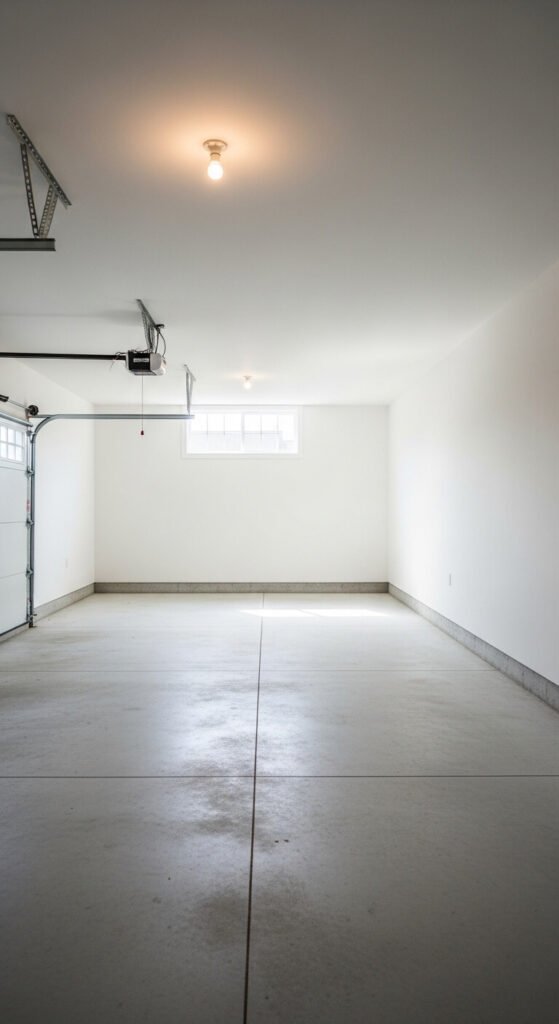
While everything’s out, sweep or vacuum the entire garage, wipe down shelves, and check for any maintenance issues like water damage or pests.
Step 2: Sort Everything Into Categories
Now comes the decision-making. Create four piles:
- Keep and use regularly – Tools you actually use, sporting equipment in rotation, seasonal items you need
- Keep but store elsewhere – Family heirlooms, important documents (these shouldn’t live in a garage anyway)
- Donate or sell – That treadmill you haven’t touched in three years, duplicate tools, outgrown kids’ equipment
- Trash – Broken items, dried-up paint cans, rusty nails, mystery hardware
Be ruthless here. If you haven’t used something in two years and can’t imagine a specific scenario where you’ll need it, let it go.
Step 3: Create Zones Based on Function
Think of your garage like a well-organized store. Group similar items together and assign them specific zones:
Garden Zone – Lawn mower, rakes, fertilizer, pots, and gardening gloves all in one area
Sports Zone – Bikes, helmets, balls, camping gear clustered together
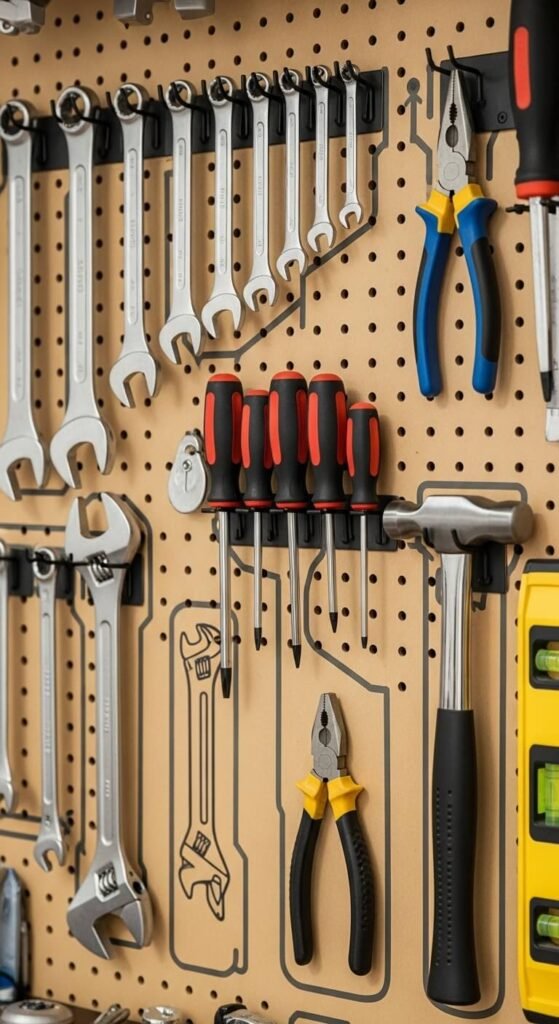
Tool Zone – Power tools, hand tools, and hardware organized by type
Seasonal Zone – Holiday decorations, winter gear, pool supplies
Workshop Area – If you do projects, dedicate a workbench space
This zoning system means you’ll always know where to find things and where to put them back.
Step 4: Use Vertical Space Like Your Life Depends on It
Most garages waste their most valuable real estate—the walls and ceiling. Going vertical is game-changing.
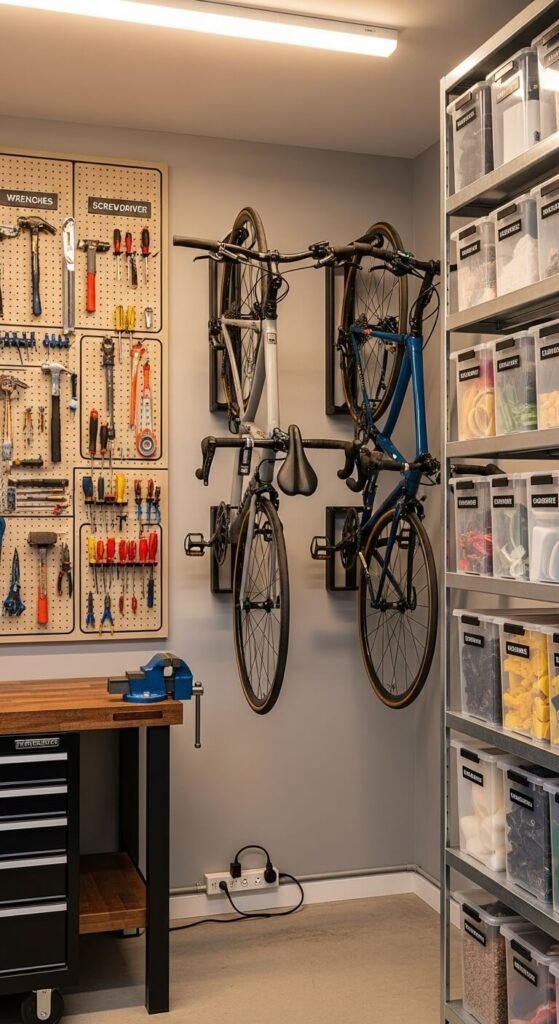
Install sturdy shelving units along walls for bins and boxes. Use pegboards for tools so you can see everything at a glance. Mount bikes on wall hooks to free up floor space. Install overhead racks for seasonal items you only access a few times a year.
The goal is to keep your floor as clear as possible. When everything has a home off the ground, cleaning is easier and you actually have space to park your car.
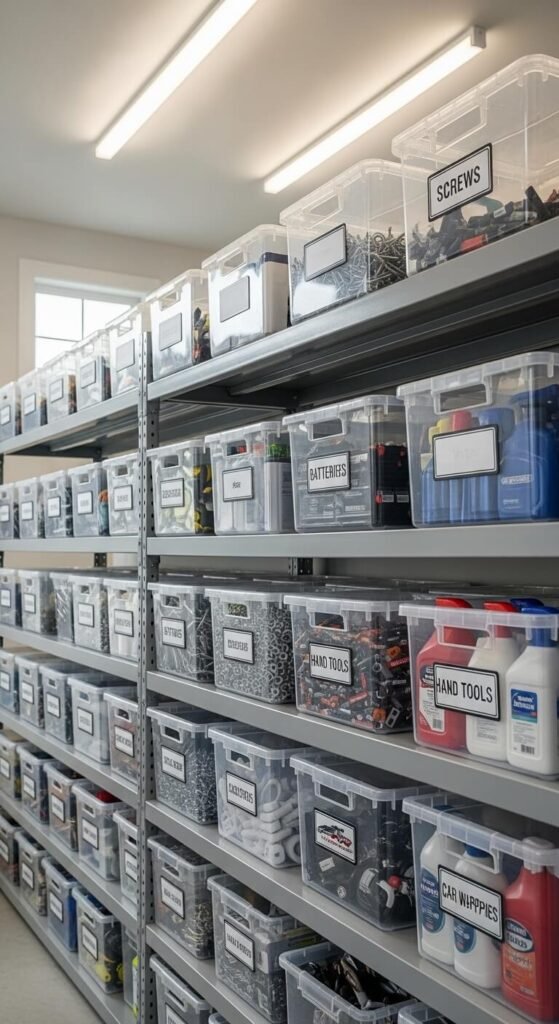
Step 5: Invest in Clear Storage Bins and Labels
Cardboard boxes are the enemy of garage organization. They collapse, attract moisture, and hide what’s inside.
Switch to clear plastic bins so you can see contents without opening them. Label everything clearly—not just “Holiday” but “Christmas Ornaments” or “Halloween Decorations.” Use uniform-sized bins that stack easily.
For small hardware items like screws and nails, use drawer organizers or small compartment boxes. Nothing’s more frustrating than hunting for the right size screw when you’re mid-project.
Step 6: Maintain Your System
Here’s the secret: organization isn’t a one-time event. It’s a habit.
Set a rule: everything you take out gets put back in its designated spot. Spend 15 minutes at the end of each season doing a quick reset. Don’t let new items become homeless—assign them a zone immediately.
Consider doing a mini-purge twice a year. Before holidays and before summer are natural transition points to reassess what’s working.
Your Garage, Transformed
Turning your garage from disaster zone to functional space isn’t magic—it’s just methodical decision-making and smart storage solutions. Start with the complete empty-out, sort ruthlessly, create zones, maximize vertical space, and commit to maintaining the system.
The best part? Once it’s done, you’ll actually want to spend time in your garage. That car might even find its way back inside.
Ready to reclaim your garage? Save this guide and tackle it this weekend—your future self will thank you!