You know that feeling when you’ve asked your kids to clean up their toys for the third time, and they’re just staring at the mess like they’ve never seen it before? Yeah, we’ve all been there. The truth is, kids aren’t being difficult—they’re often just overwhelmed by a chaotic toy situation that even adults would struggle to organize.
The secret to getting kids to actually clean up? Make it so easy they can’t mess it up. When toys have a clear home and the system is simple enough for little hands and minds to follow, cleanup becomes less of a battle and more of a habit.
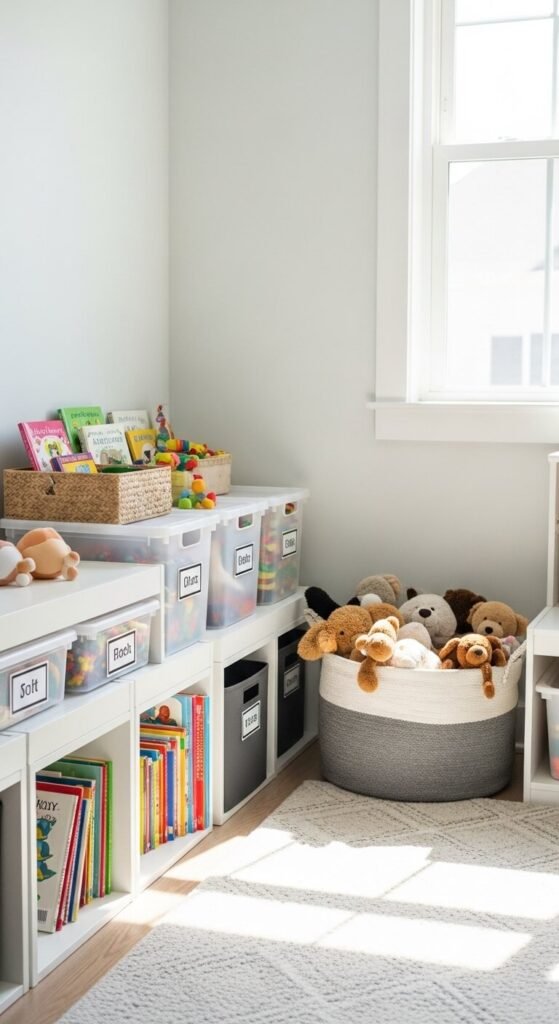
Start With a Major Declutter
Before you can organize anything, you need to be honest about how many toys are actually in rotation. Kids play with about 20% of their toys regularly, so let’s work with that reality.
Go through every toy and ask yourself:
- Has this been touched in the last month?
- Is it age-appropriate right now?
- Does it have all its pieces, or is it basically trash at this point?
Be ruthless. Broken toys, pieces from sets that are long gone, and that random plastic thing from a birthday party goodie bag—it all goes. Donate what’s in good condition, toss what’s not.
The fewer toys your kids have access to at once, the easier cleanup becomes. You can always rotate toys in and out to keep things fresh.
Use Clear Bins With Picture Labels
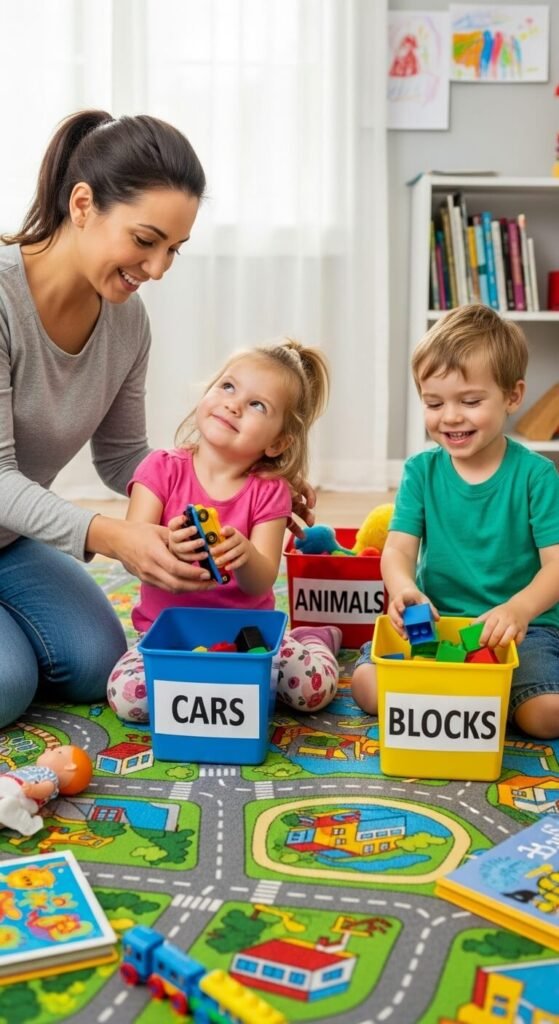
This is the game-changer, especially for kids who can’t read yet. Clear bins let kids see exactly what’s inside without dumping everything out, and picture labels tell them what belongs where.
Grab some clear plastic bins in various sizes and add labels with both words and pictures. You can print photos of the actual toys, use drawings, or even snap pictures with your phone and print them out.
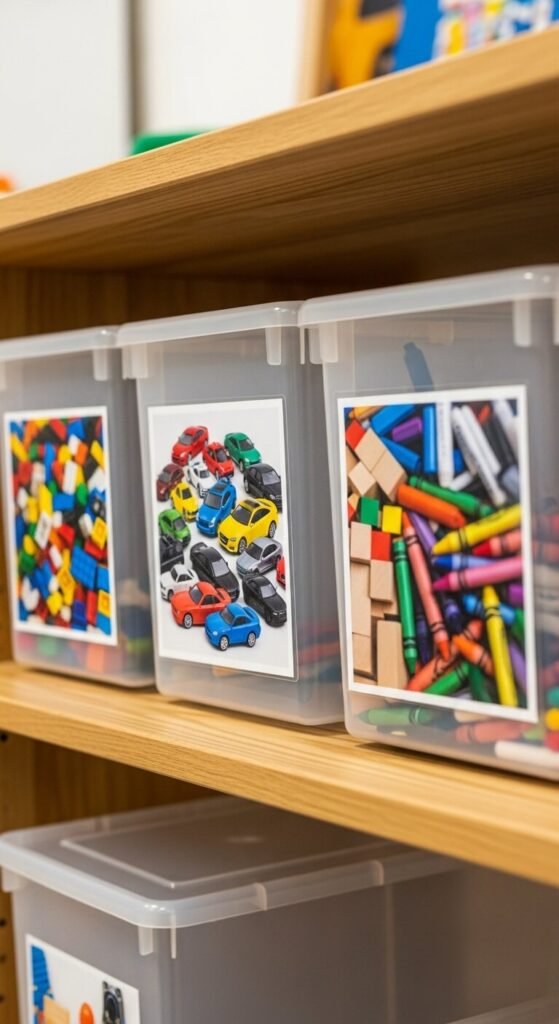
Category ideas that work great:
- Building toys (LEGO, blocks, magnetic tiles)
- Vehicles (cars, trains, trucks)
- Pretend play (play food, dolls, action figures)
- Art supplies (crayons, markers, coloring books)
- Puzzles (store each one in a separate ziplock bag inside the bin)
Keep bins on low shelves or in cubbies where kids can reach them independently. If they can’t access the storage, they definitely can’t clean up.
Create Zones for Different Play Types
Think about how your kids actually play, then organize the room around those activities. This isn’t about making your playroom Pinterest-perfect—it’s about creating a system that matches your child’s natural play patterns.
Set up distinct zones:
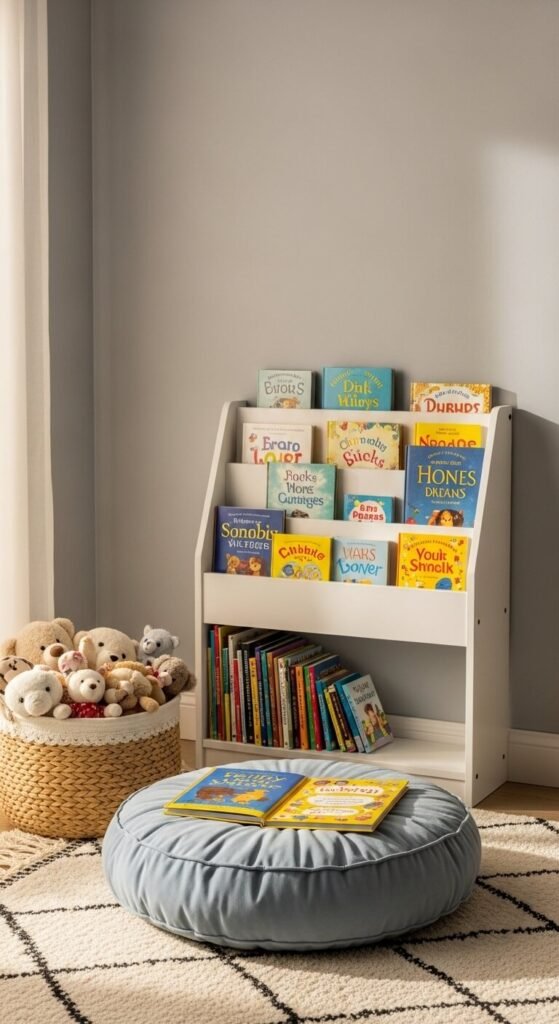
- Reading corner with a small bookshelf or book bin
- Building area with a play mat or table for construction toys
- Creative zone with art supplies and a kid-sized table
- Dress-up station with hooks at kid height for costumes
When everything has a place based on how it’s used, kids can more easily remember where things go. Plus, it contains the mess to specific areas.
Make It a One-Toy-Out Rule
Here’s a rule that will change your life: one toy out at a time. Or if that feels too strict, one bin or category out at a time.
This sounds simple, but it’s wildly effective. Before your child can get out the blocks, they need to put away the cars. Before the art supplies come out, the blocks go back.
Yes, there will be resistance at first. But once kids get used to the system, cleanup becomes automatic because they’re doing it throughout the day in small chunks instead of facing a overwhelming disaster at bedtime.
Use Baskets for Quick Cleanup Items
Not every toy needs a perfectly organized home. For stuffed animals, balls, dress-up clothes, and other bulky items, large baskets are your best friend.
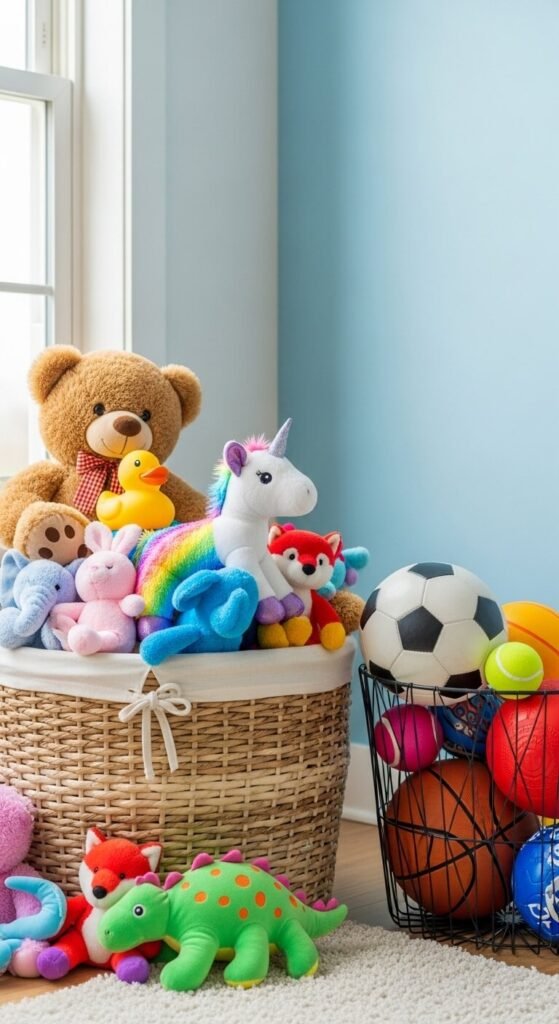
The “toss it in” method works great for:
- Stuffed animals
- Dress-up clothes and accessories
- Sports equipment and balls
- Baby toys that don’t have small pieces
Place these baskets in easy-to-reach spots. Even a two-year-old can throw a teddy bear into a basket.
Set Up a Cleanup Routine With a Timer
Kids thrive on routine, and a consistent cleanup time makes the task feel normal rather than like punishment.
Try this: Set a timer for 5-10 minutes before dinner or bedtime and make it a race. Can everyone work together to get all the toys put away before the timer goes off? Add upbeat music and suddenly cleanup is almost fun.
The key is consistency. Same time every day, every family member helping out. When it becomes part of the daily rhythm, kids stop fighting it.
Keep It Simple
The most important thing to remember? Your system needs to be simple enough for your youngest child to follow independently. If it’s too complicated, even you won’t keep up with it.
Label everything clearly, keep categories broad (not a separate bin for every tiny toy type), and make sure everything is accessible at kid height. The easier you make it, the more likely cleanup will actually happen.
Ready to transform your playroom chaos into an organized space where kids can actually clean up on their own? Start with one section today—just one shelf or one bin category. Small steps lead to big changes, and before you know it, you’ll be hearing “I cleaned up by myself!” instead of whining about the mess.
Save this article for later and tag a parent friend who needs this organizing system in their life!