Let’s be honest: the space under your kitchen or bathroom sink is probably a chaotic mess right now. Half-empty cleaning bottles shoved in sideways, mystery containers from 2019, and that one spray bottle that always falls over when you reach for something else. We’ve all been there, desperately digging through the clutter while whatever we’re cleaning sits there getting worse.
But here’s the good news: organizing under the sink doesn’t have to be a temporary fix that falls apart in two weeks. With the right systems and a few smart strategies, you can create a setup that actually stays organized. Let me show you how.
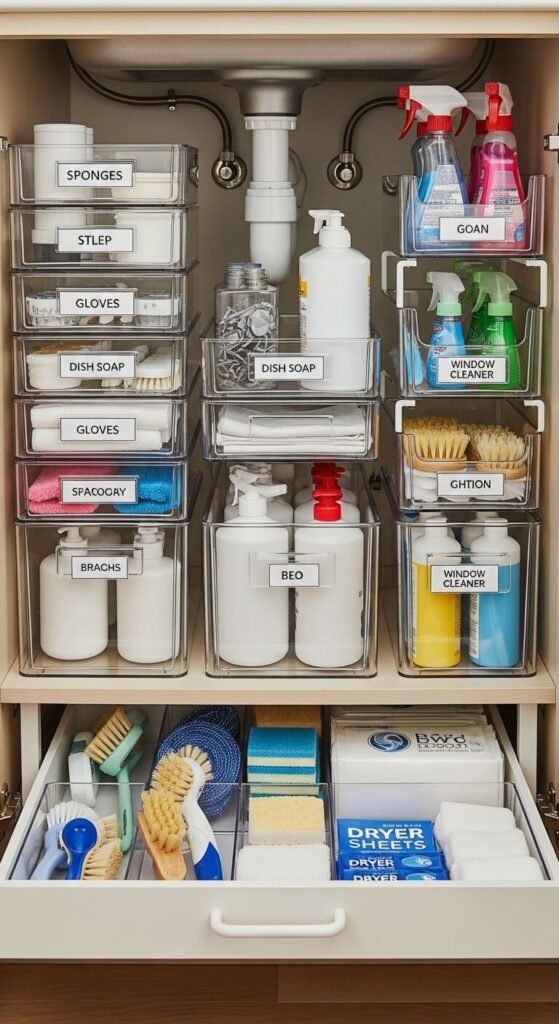
Start With a Complete Clean-Out
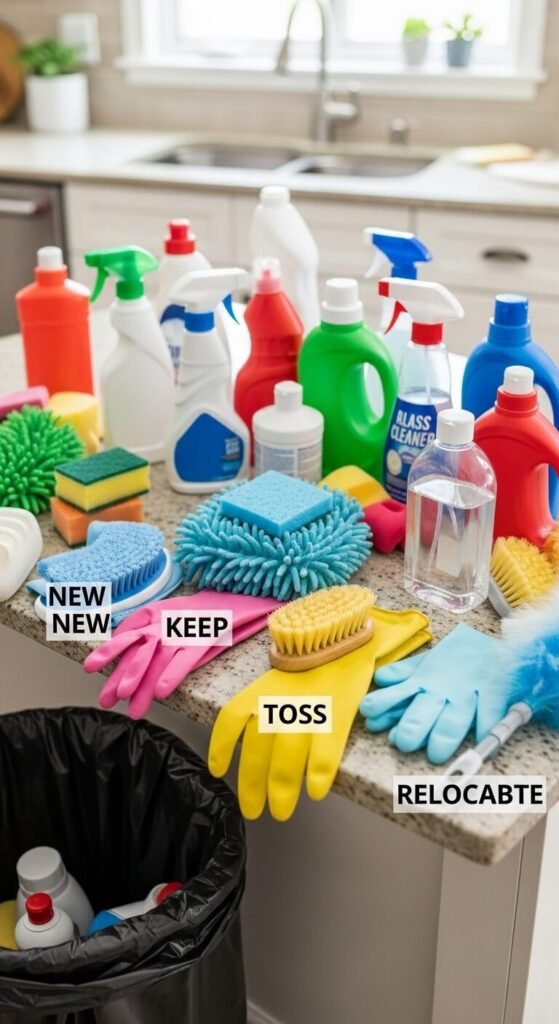
Before you buy a single organizer, you need to see what you’re actually working with. Pull everything out from under your sink and spread it across your counter or floor. Yes, everything.
As you go through each item, ask yourself:
- Is this expired or dried out?
- Have I used this in the past six months?
- Do I have three bottles of the same thing?
- Does this actually belong under the sink, or somewhere else?
Be ruthless. That window cleaner you bought for a project in 2022? If you haven’t touched it since, it’s time to let it go. Toss anything expired, consolidate duplicates, and relocate items that don’t belong.
Measure Your Space and Work Around the Pipes
This step is crucial and so many people skip it. Grab a measuring tape and note the height, width, and depth of your cabinet. More importantly, pay attention to where your pipes are located because they’ll dictate what kind of organizers you can use.
Some cabinets have pipes running down the middle, while others have them off to one side. Knowing this before you shop will save you from buying organizers that don’t fit and having to make a frustrated return trip to the store.
Choose the Right Organizers for Your Needs
Not all storage solutions are created equal, and what works under your bathroom sink might be totally wrong for the kitchen. Here’s what actually works:
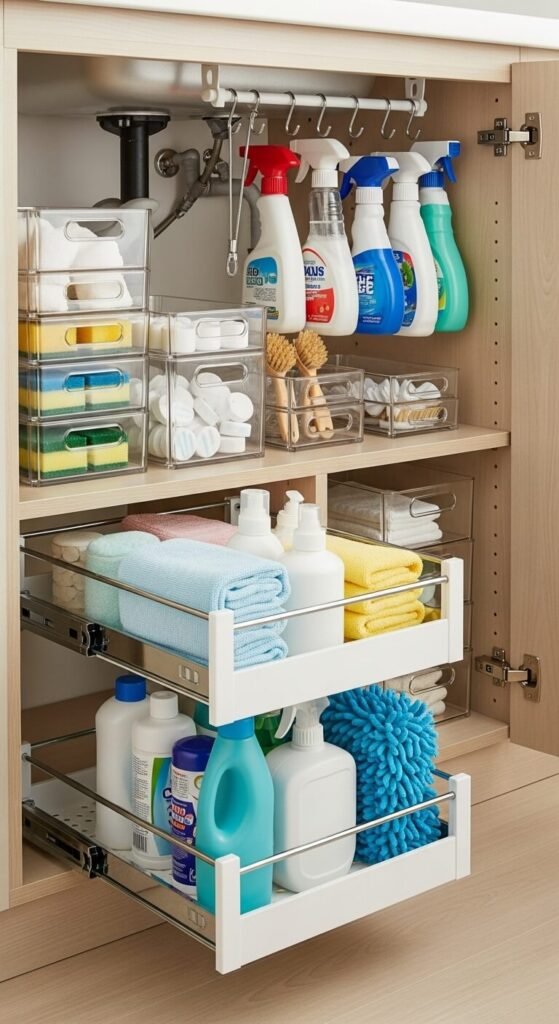
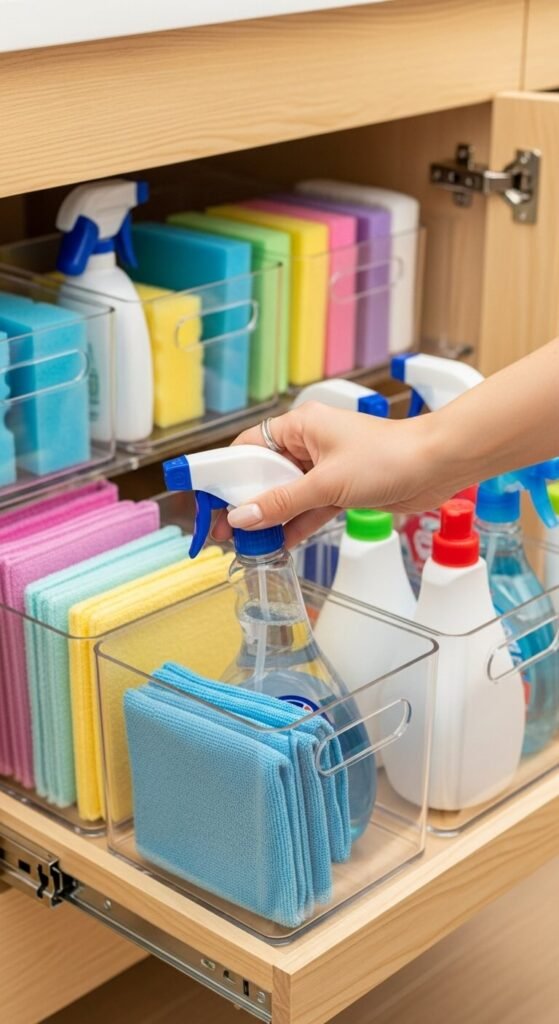
Pull-out drawers or sliding organizers are game-changers for deep cabinets. They let you access items in the back without creating an avalanche every time you need something.
Stackable bins or baskets maximize vertical space and keep similar items grouped together. Go for clear or open-top options so you can see what’s inside at a glance.
Over-the-door organizers or tension rods utilize space you didn’t even know you had. Hang spray bottles from a tension rod or use door-mounted racks for sponges and scrub brushes.
Lazy Susans work beautifully for corner cabinets or for storing smaller bottles that tend to get lost in the back.
Create Zones for Different Categories
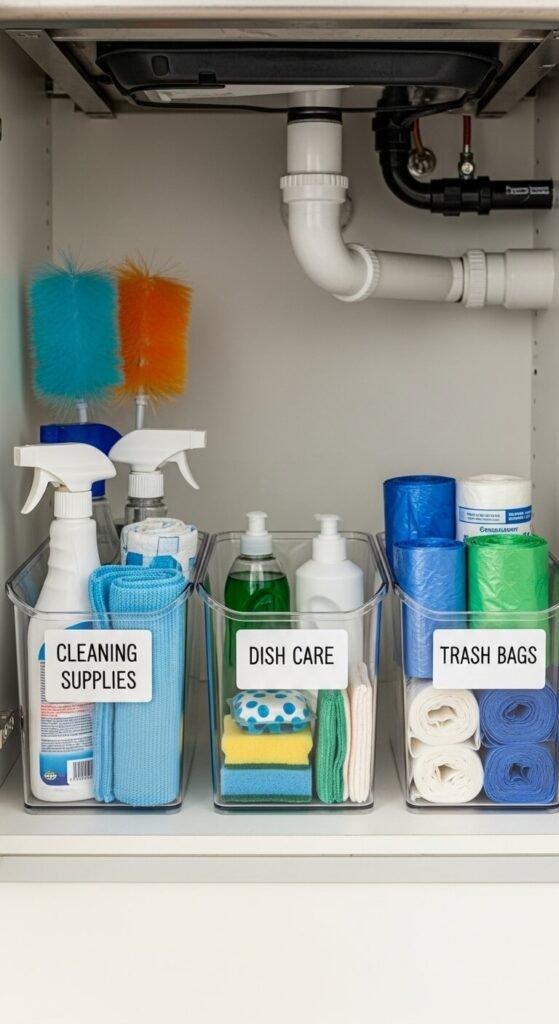
The secret to maintenance is knowing exactly where things belong. Designate specific zones for different types of products:
- Cleaning zone: All-purpose cleaners, glass cleaner, disinfectants
- Dish care zone: Dish soap, dishwasher pods, sponges
- Trash zone: Extra bags, small trash bins, recycling bags
- Extras zone: Backup supplies you’re storing for later
Keep your most-used items in the front and at eye level. Things you only need occasionally can go in the back or on higher shelves.
Label Everything (Seriously)
I know, I know. Labeling seems excessive when you’re the only one who uses this space. But labels aren’t just for you—they’re for future you, who’s tired and in a hurry and will absolutely shove things wherever they fit if there’s no clear system.
Use a label maker, printable labels, or even masking tape and a marker. Label bins, shelves, and zones. When everything has a designated home, it’s much easier to put things back where they belong.
Set Up Maintenance Habits That Stick
Here’s where most organization projects fall apart: you create the perfect system, but life gets busy and suddenly you’re back to chaos. Prevent this with these simple habits:
Do a quick tidy every week. Spend just two minutes putting things back in their zones. It’s way easier than doing a full reorganization every few months.
One in, one out rule. When you buy a new cleaning product, use up or toss an old one. This prevents overcrowding.
Keep a donation box nearby. When you realize you’re never going to use something, immediately put it in the box instead of shoving it back under the sink.
The Bottom Line
Organizing under the sink isn’t about creating a Pinterest-perfect space that you’re afraid to touch. It’s about building a system that works for your real life and actual habits. With the right organizers, clear zones, and simple maintenance routines, you can finally have an under-sink cabinet that stays functional and organized.
Ready to tackle that cabinet? Save this guide, grab your measuring tape, and get started. Your future self (frantically searching for the dish soap at 9 PM) will thank you.
Pin this for later and share it with someone who needs an under-sink intervention!