

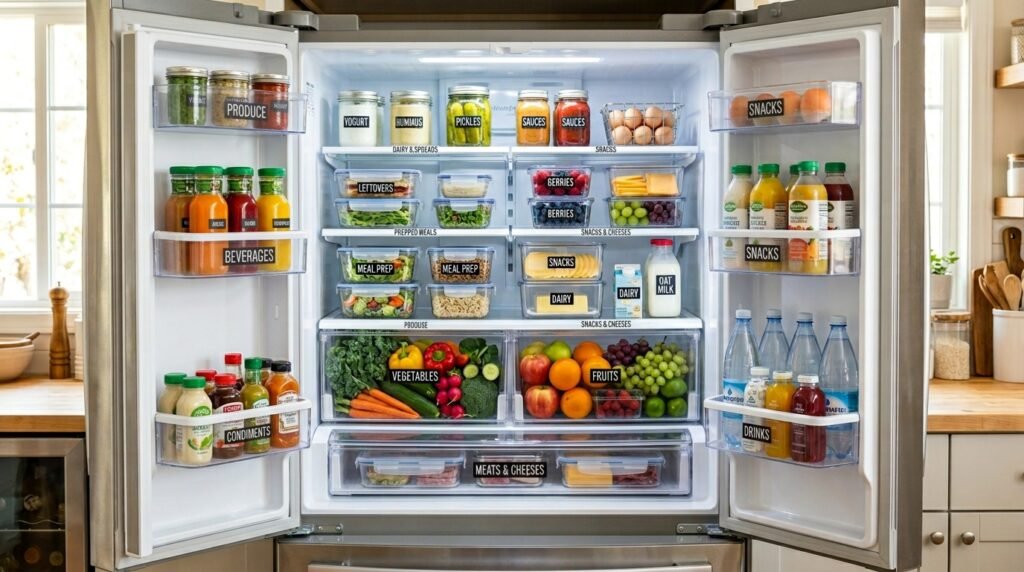
You open the fridge, stare blankly for 30 seconds, and close it — only to find a week-old bag of spinach turning to mush behind the leftovers you forgot existed. Sound familiar? A disorganized refrigerator isn’t just annoying; it’s quietly draining your wallet. The average household throws away hundreds of dollars in food every year, and most of it starts with a messy fridge. The good news? A simple reorganization can change everything.
Understand the Temperature Zones First
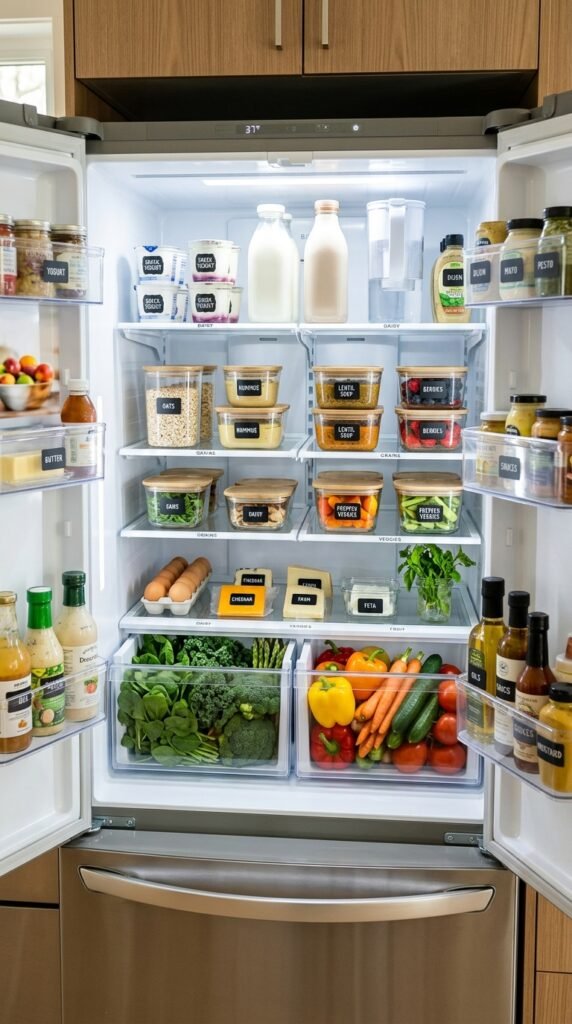
Before you move a single item, know this: your fridge isn’t the same temperature everywhere. Most fridges are coldest at the back and bottom, and warmest near the door.
- Top shelves: Consistent, moderate cold — ideal for leftovers, drinks, and ready-to-eat foods
- Middle shelves: Great for dairy products like yogurt, cheese, and eggs
- Bottom shelves: The coldest zone — store raw meat, poultry, and fish here (always on a plate to prevent drips)
- Crisper drawers: Designed specifically for produce — one for high-humidity items (leafy greens), one for low-humidity (fruits)
- Door shelves: The warmest spot — best for condiments, juices, and butter, NOT for milk or eggs
Storing food in the right zone keeps it fresher longer and cuts down on spoilage.
The “First In, First Out” Rule
This is the single most impactful habit you can build. When you bring groceries home, push older items to the front and place new ones at the back. This way, you always reach for what needs to be used first.
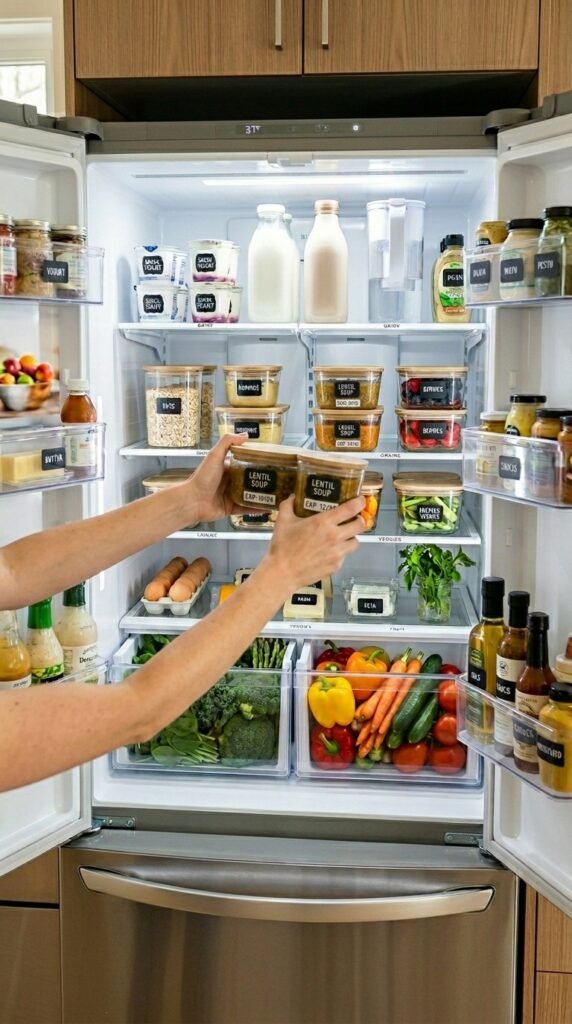
It sounds simple because it is — but it’s the strategy restaurants use to minimize waste, and it works just as well at home.
Use Clear Containers and Labels
Mystery containers are the enemy. If you can’t see what’s inside, it gets forgotten.
- Transfer leftovers into clear, airtight containers so contents are immediately visible
- Use masking tape and a marker to label containers with the date they were made
- Keep a “use it soon” bin — a visible designated spot (front and center on the middle shelf) for items approaching their expiry date
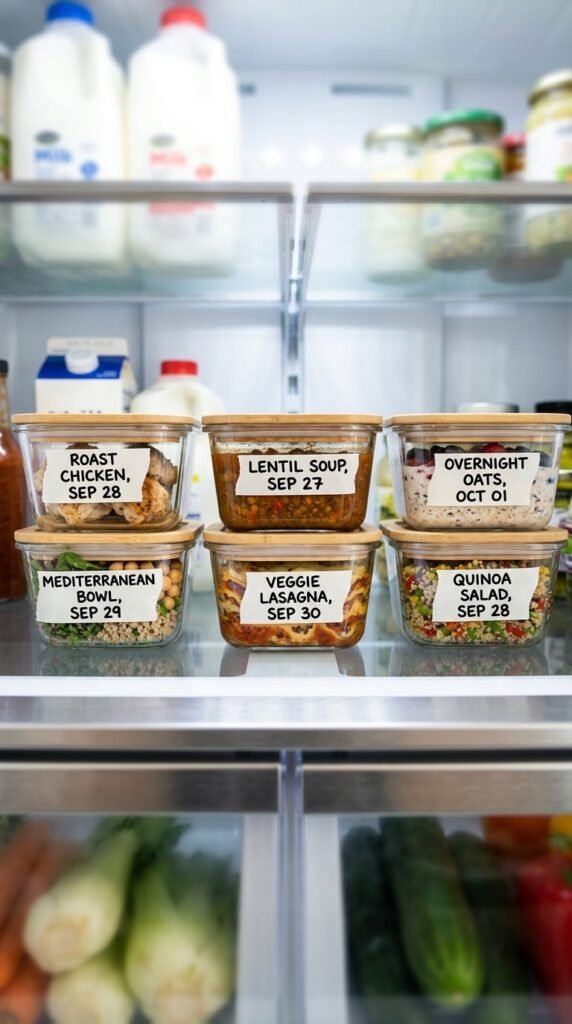
This habit alone can drastically cut food waste. When you can see it, you eat it.
Create Zones for Different Food Categories
Think of your fridge like a grocery store with sections. Grouping similar items together means less rummaging, fewer forgotten items, and faster meal prep.
Suggested zones:
- Snack zone: Eye-level, easy-access area with cut fruits, yogurts, and grab-and-go items (especially helpful if you have kids)
- Meal prep zone: A dedicated shelf for prepped ingredients, marinating proteins, or batch-cooked meals
- Drink zone: One consistent spot for beverages so the rest of the fridge stays organized
- Condiment zone: Door shelves, all in one place
When everything has a home, it’s easy to notice when something is missing — or running out.
Do a Weekly Fridge Audit
Set a reminder — ideally the night before your grocery run — to do a quick 5-minute fridge check.
- Pull everything out from the front
- Toss anything that’s gone bad
- Move items in the “use it soon” bin to the front
- Check what you actually have before writing your shopping list
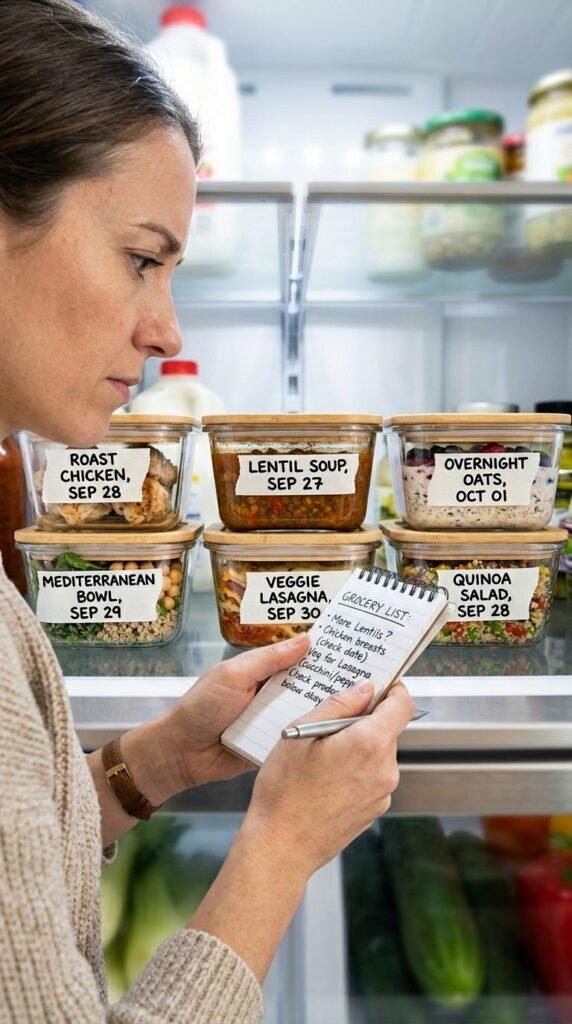
This prevents the classic mistake of buying more of something you already have buried in the back. It also means you shop with intention, which saves money every single week.
Keep Your Fridge at the Right Temperature
Even the best organization won’t help if your fridge is set wrong. The ideal refrigerator temperature is 35–38°F (1.6–3.3°C). Anything warmer speeds up bacterial growth and shortens food life. Use a simple fridge thermometer — they cost just a few dollars — to make sure you’re in the right range.
The Payoff: Less Waste, More Savings
A well-organized fridge is one of the easiest ways to take back control of your grocery budget. When food is visible, properly stored, and used in the right order, you’ll notice you’re throwing away far less — and actually cooking with everything you buy.
Start small: pick just one section of your fridge today and apply these tips. Once you see how much easier it makes your week, you’ll want to tackle the whole thing.
Save this article for later and share it with someone whose fridge could use a little love! 🧊✨