








Picture this: it’s 10 minutes before a big meeting and you can’t find a single working pen. The tape is missing, the sticky notes are gone, and you’re pretty sure someone walked off with your last stapler. Sound familiar? Scrambling for supplies you thought you had is one of the most avoidable frustrations in any workspace — home office or corporate. The good news? A simple organization system can put an end to the chaos for good.

Start with a Full Inventory Purge
Before you can organize, you need to know what you actually have. Pull everything out — every drawer, shelf, and supply cabinet — and lay it all out on a flat surface.
- Toss anything broken, dried out, or expired (yes, ink dries up)
- Group like items together: all pens in one pile, all paper clips in another
- Note what you’re dangerously low on versus what you have in excess
This step feels tedious, but it’s the foundation of everything else. You can’t create a system around supplies you don’t fully know you have.
Assign a Home for Every Category
The golden rule of organization: everything needs a designated spot. Once you know what you have, assign categories and give each one a permanent home.
Common office supply categories include:
- Writing tools — pens, pencils, markers, highlighters
- Paper goods — sticky notes, notebooks, printer paper, envelopes
- Fasteners — staples, paper clips, binder clips, rubber bands
- Tape & adhesives — scotch tape, packing tape, glue sticks
- Tech accessories — cables, batteries, USB drives
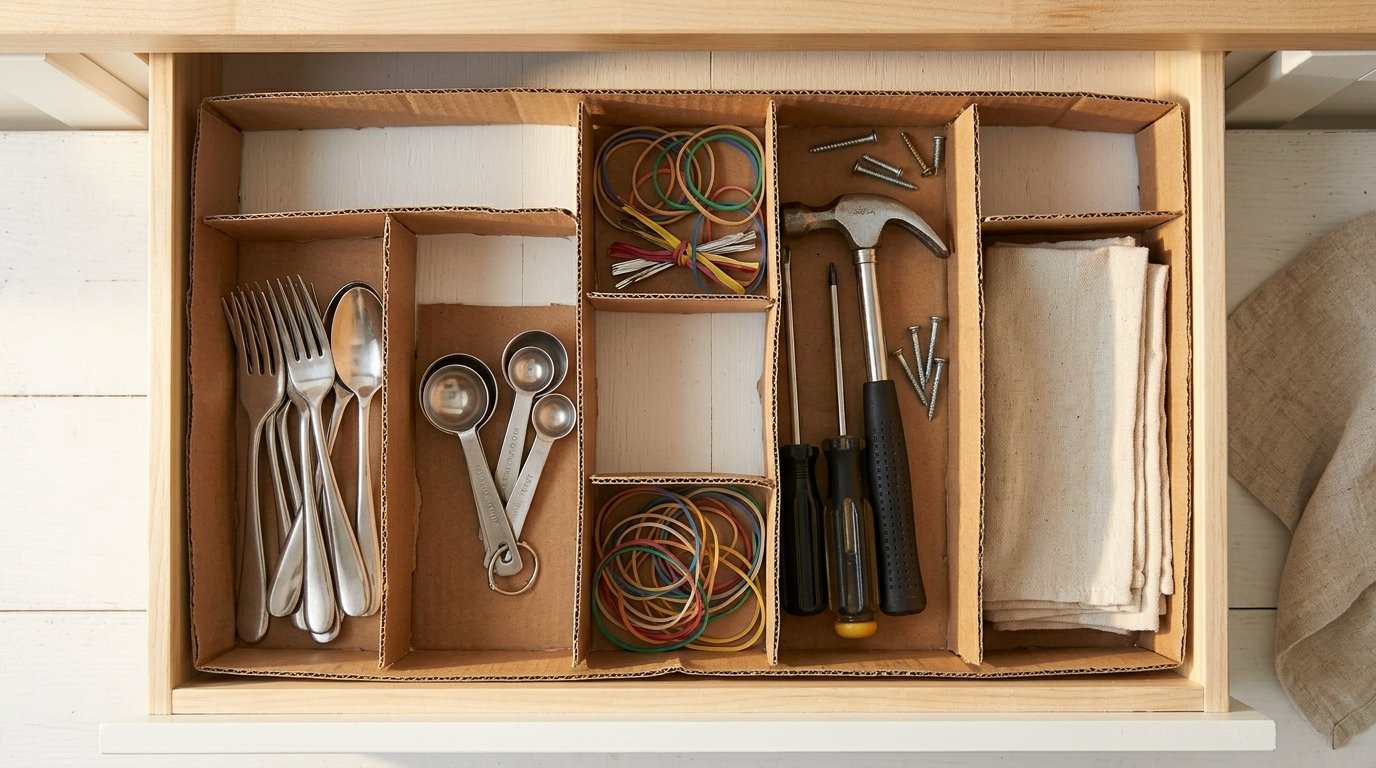
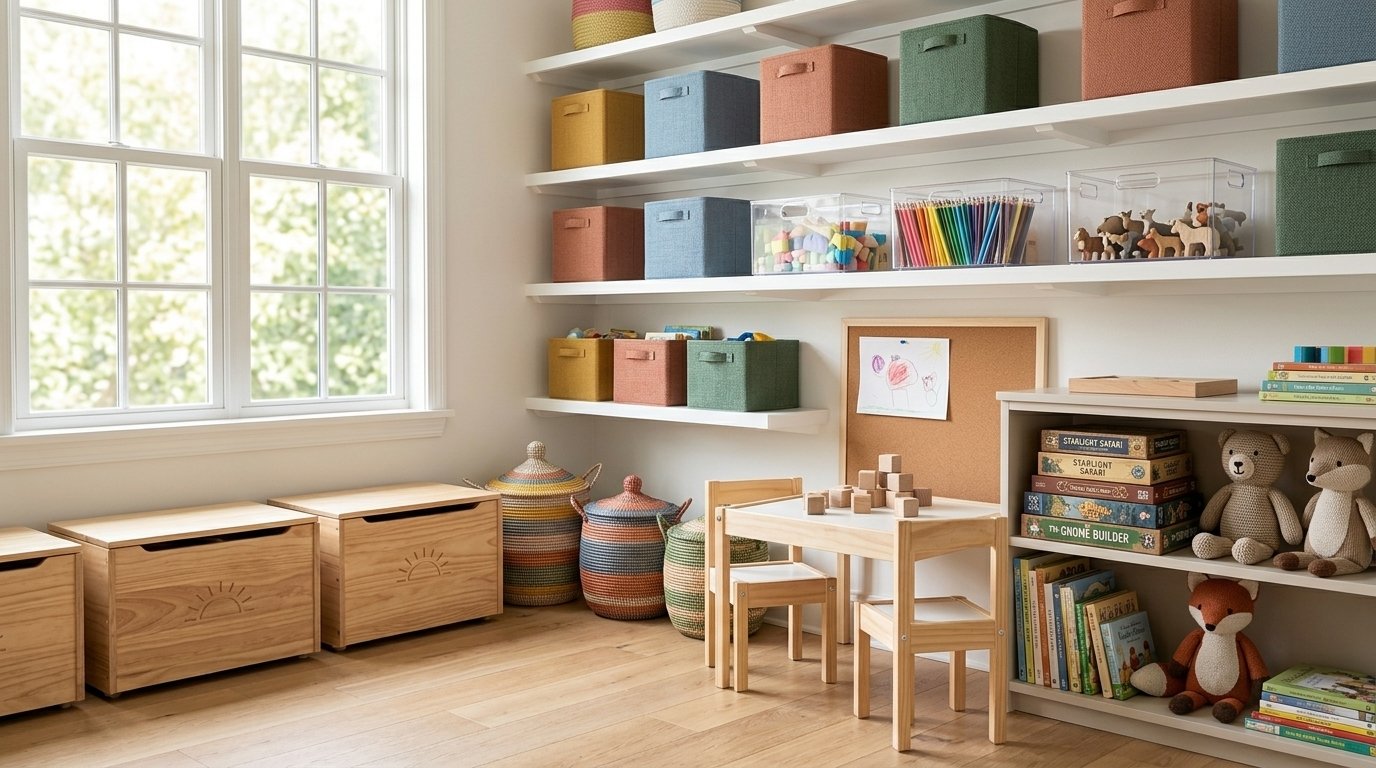
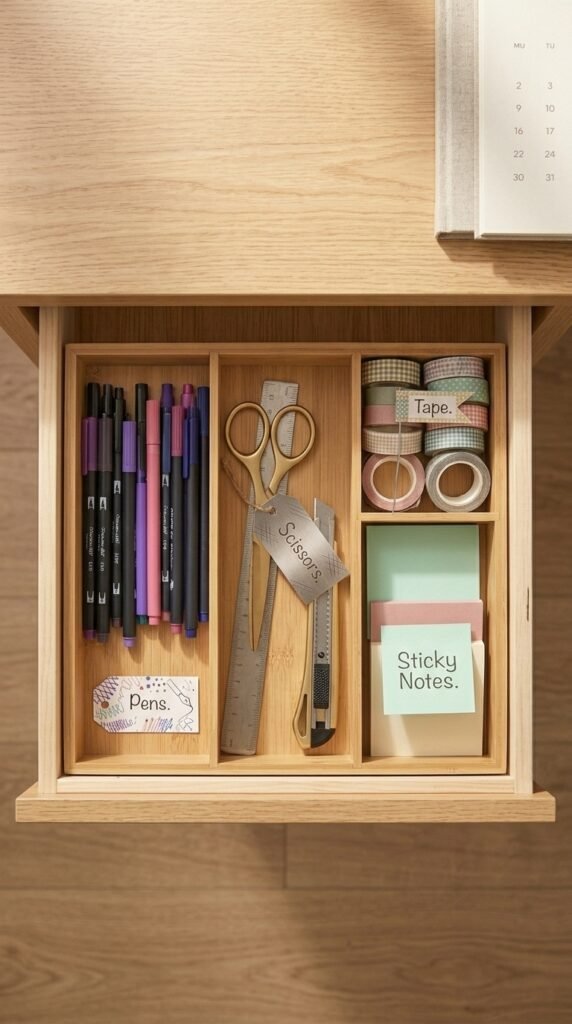
Use drawer dividers, small bins, or labeled containers to keep categories from bleeding into each other. Clear containers are a game-changer — you can see exactly what’s running low without digging around.
Create a “Restock Zone”
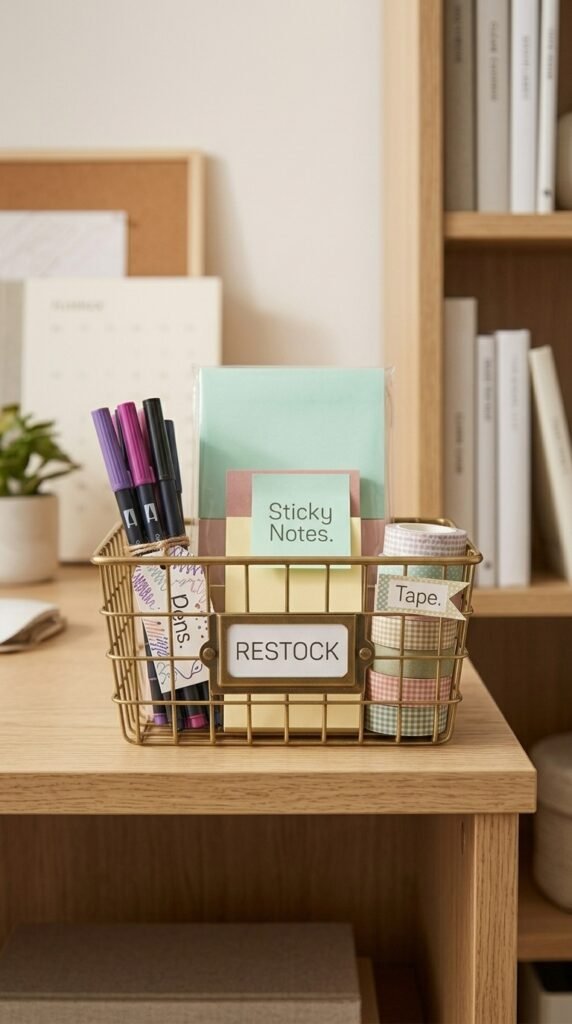
This is the secret weapon most people skip. Set up a dedicated restock area — a small shelf, a basket, or even just one labeled bin — where you keep backup supplies.
The rule is simple: when you open the last of something from your main supply area, it immediately goes into the restock zone (or onto your shopping list). This creates a buffer so you never reach for something and find nothing there.
Some people use a two-bin system:
- Active bin — what you use daily, kept at your desk
- Backup bin — extras stored nearby, replenished on a regular schedule
When the active bin runs out, you grab from the backup. When the backup gets low, you reorder. No surprises, no last-minute runs to the store.
Build a Simple Reorder Routine
Even the best system breaks down without a maintenance habit. Set a recurring reminder — weekly, biweekly, or monthly depending on how much you use — to do a quick supply check.
During your check, ask yourself:
- What’s running low in my active supply area?
- Does the restock zone need to be refilled?
- Are there items I keep reaching for that I never seem to have enough of?
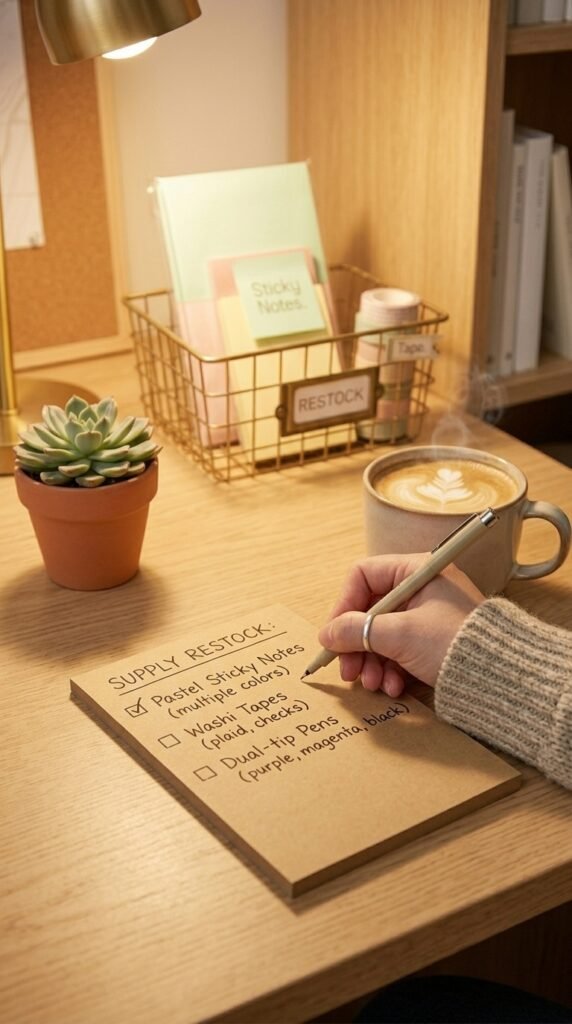
Keep a small notepad or use a notes app to jot down items as you notice them running low throughout the week. That way, your supply check is just a quick review instead of a full audit every time.
Label Everything (Seriously, Everything)
Labels aren’t just for neat freaks — they’re for anyone who shares a space with other humans. When supplies are clearly labeled, everyone knows where things go back, and nothing mysteriously migrates to another room.
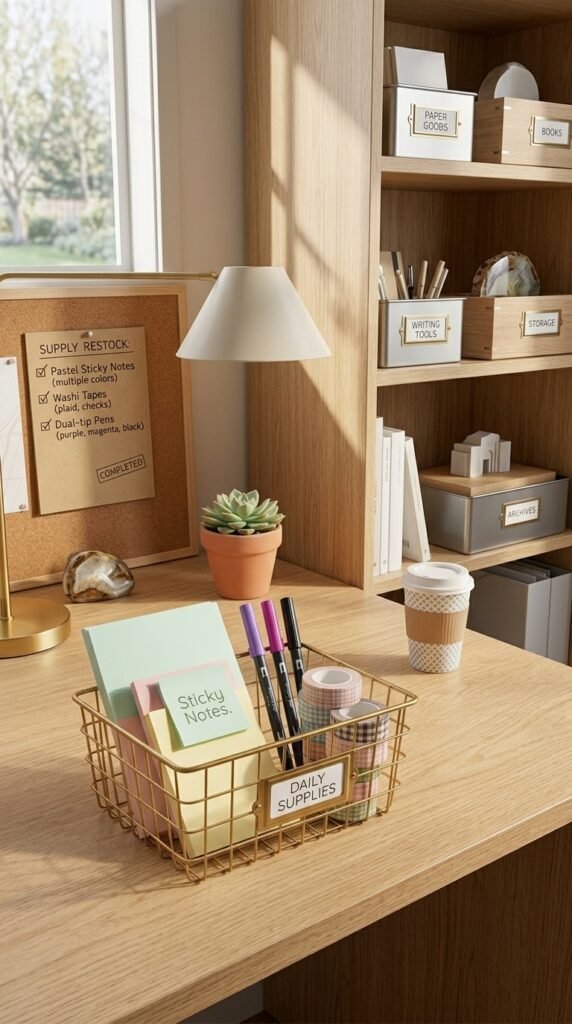
Use a label maker, printable labels, or even neat handwriting on masking tape. Label:
- Bins and baskets
- Drawer sections
- Storage boxes on shelves
- The restock zone itself
Consistent labeling also makes it easy to onboard new team members or assistants without giving a full tour every time.
Digitize Your Supply Tracking (Optional Power Move)
If you manage a larger office or tend to order in bulk, consider keeping a simple spreadsheet to track your inventory. List each supply, the quantity on hand, the reorder threshold, and where you buy it from.
This takes about 20 minutes to set up once and can save hours of guesswork — especially for items like printer ink, paper, or batteries that disappear faster than you’d expect.
The Payoff: A Workspace That Just Works
When every supply has a home, a backup, and a reorder trigger, you stop wasting mental energy on logistics. You walk into your workspace, find what you need immediately, and focus on the work that actually matters.
An organized supply system isn’t about perfection — it’s about removing friction from your day. Start with the purge, build your categories, and set up that restock zone. Once the habit clicks, you’ll wonder how you ever worked any other way.
Save this post and set up your system this weekend — future you will be grateful every single Monday morning.