






Picture this: it’s 2 a.m., your child has a fever, and you’re frantically digging through a jumbled cabinet — knocking over half-empty bottles, expired cough syrup, and mystery tablets with no labels. Sound familiar? A disorganized medicine cabinet isn’t just frustrating — it can be genuinely dangerous. The good news? A little planning goes a long way.
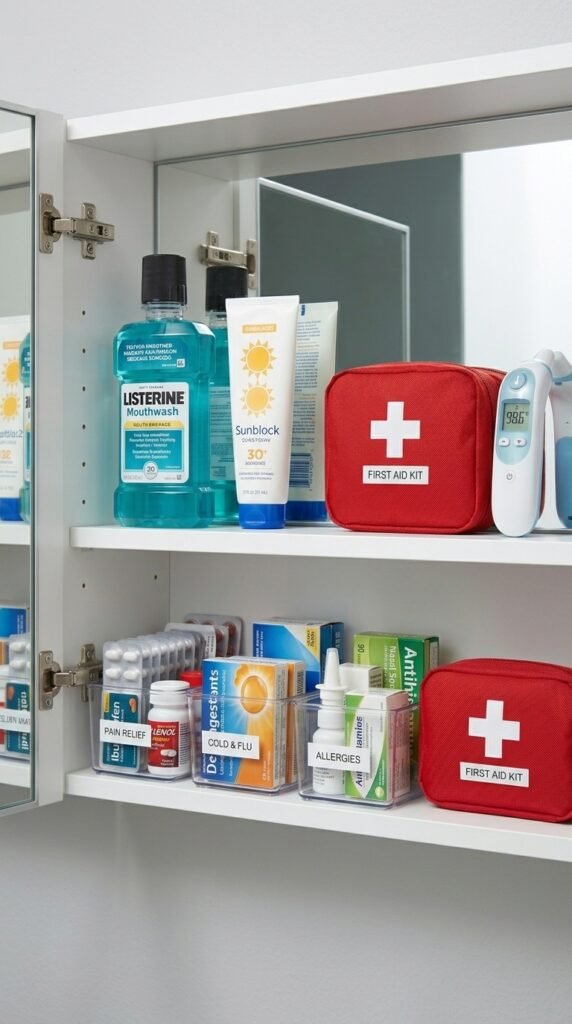
Whether you’re a household of two or a family of six, here’s exactly how to set up a medicine cabinet that keeps everyone safe, informed, and stress-free.
Step 1: Empty Everything Out and Start Fresh
Before you organize, you have to un-organize. Pull every single item out of the cabinet and lay it all on a flat surface. This is your reset moment.
As you sort, ask yourself three things:
- Is it expired? Check every label. Medications lose potency — and some become harmful — after their expiration date.
- Can you identify it? If there’s no label or you genuinely don’t know what it is, toss it.
- Does anyone in the household still need this? Old prescriptions for conditions that have resolved? Out they go.
How to dispose of medications safely: Don’t flush them or toss them in the trash. Many pharmacies and local health departments offer drug take-back programs — the safest and most eco-friendly option.
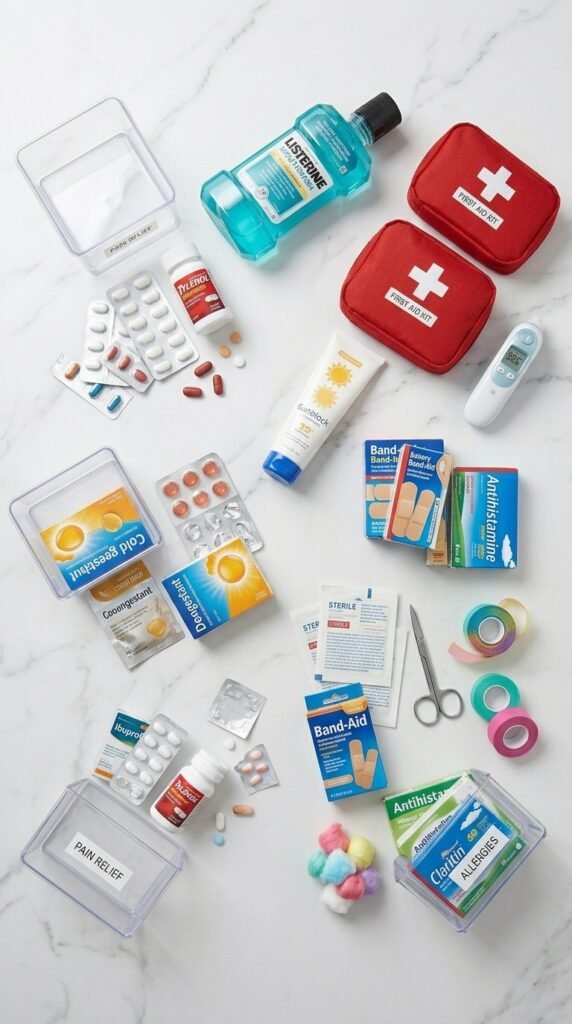
Step 2: Store Medications in the Right Place
Here’s a surprising fact: your bathroom medicine cabinet may actually be one of the worst places to store medications. Heat and humidity from showers can degrade drugs faster than you’d think.
Better storage spots include:
- A cool, dry bedroom drawer or closet shelf
- A dedicated kitchen cabinet away from the stove
- A locked box if you have children or teens in the home
Whatever location you choose, keep it consistent so every family member knows where to look — and where not to look unsupervised.
Step 3: Organize by Category
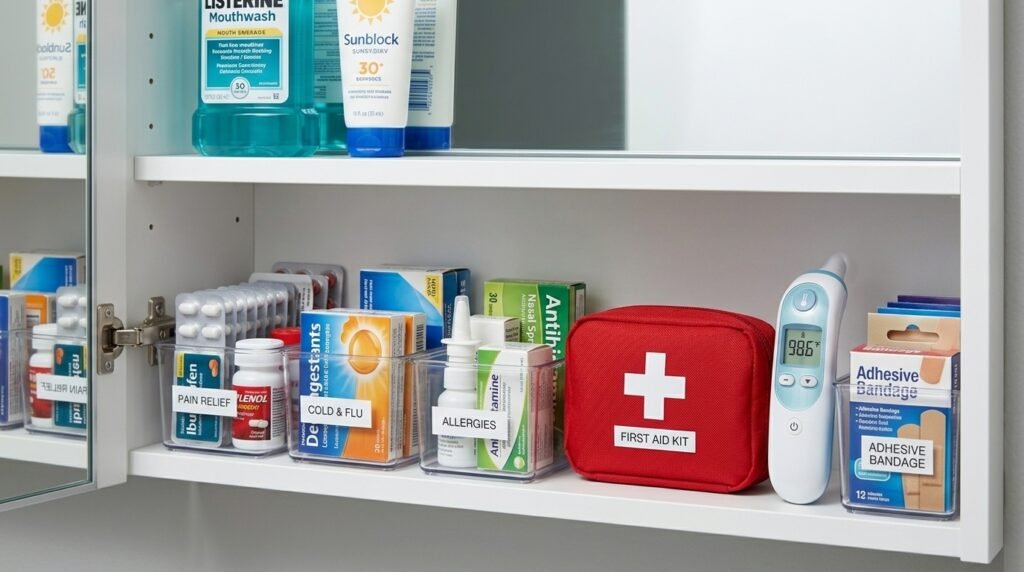
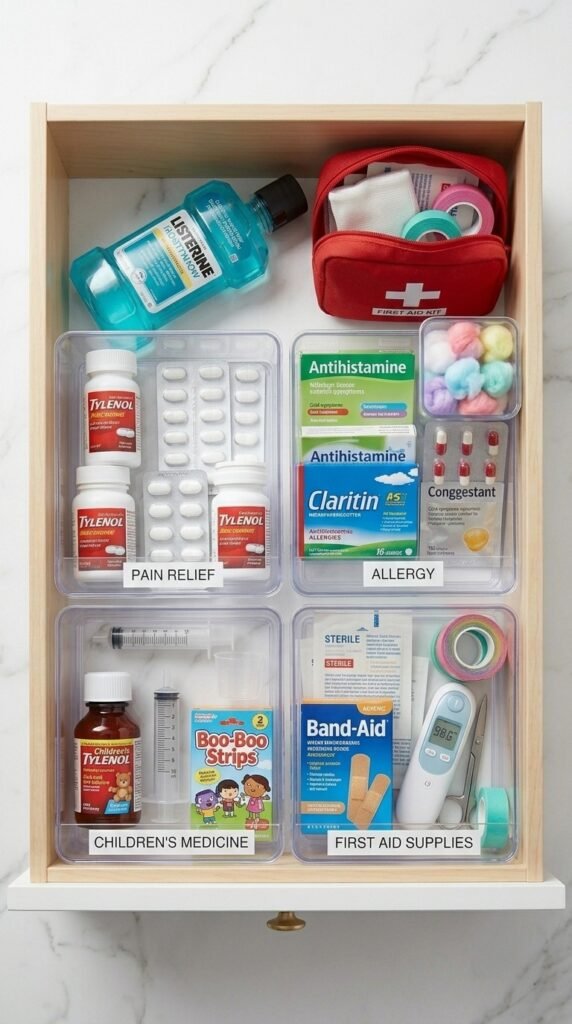
Now for the satisfying part. Group your medications and supplies into clear categories so nothing gets buried or confused.
Suggested categories:
- Pain & fever relief — ibuprofen, acetaminophen, aspirin
- Cold & allergy — antihistamines, decongestants, throat lozenges
- Digestive health — antacids, anti-diarrheal, nausea remedies
- Wound care — bandages, antiseptic wipes, antibiotic ointment, medical tape
- Prescription medications — stored separately, clearly labeled with the patient’s name
- Children’s medications — kept completely separate from adult dosages
Use small bins, baskets, or a tiered organizer to keep categories visible and accessible. Clear containers work best — no guessing games.
Step 4: Childproof and Secure It
If you have little ones at home, this step is non-negotiable. Accidental medication ingestion is one of the leading causes of poisoning in young children.
A few essential safety moves:
- Use child-resistant caps on every bottle — and actually close them properly after each use.
- Store medications up high or in a locked cabinet, even if you think kids can’t reach.
- Keep vitamins and supplements locked up too — they look like candy and can be toxic in large doses.
- Program Poison Control into your phone: In the US, it’s 1-800-222-1222. In Pakistan and many other countries, your local emergency number or hospital hotline is your first call.
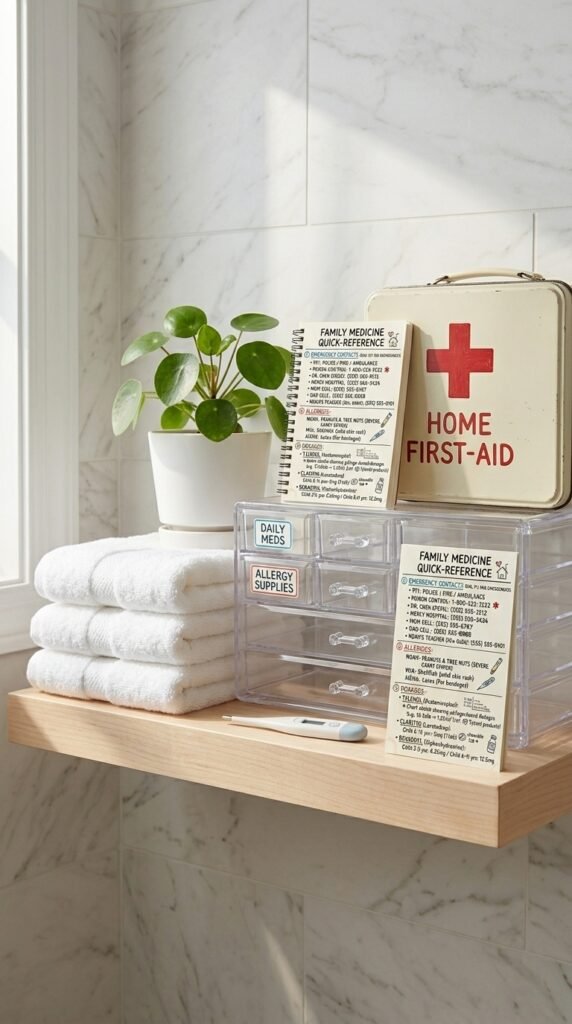
Step 5: Label Everything Clearly and Create a “Family Guide”
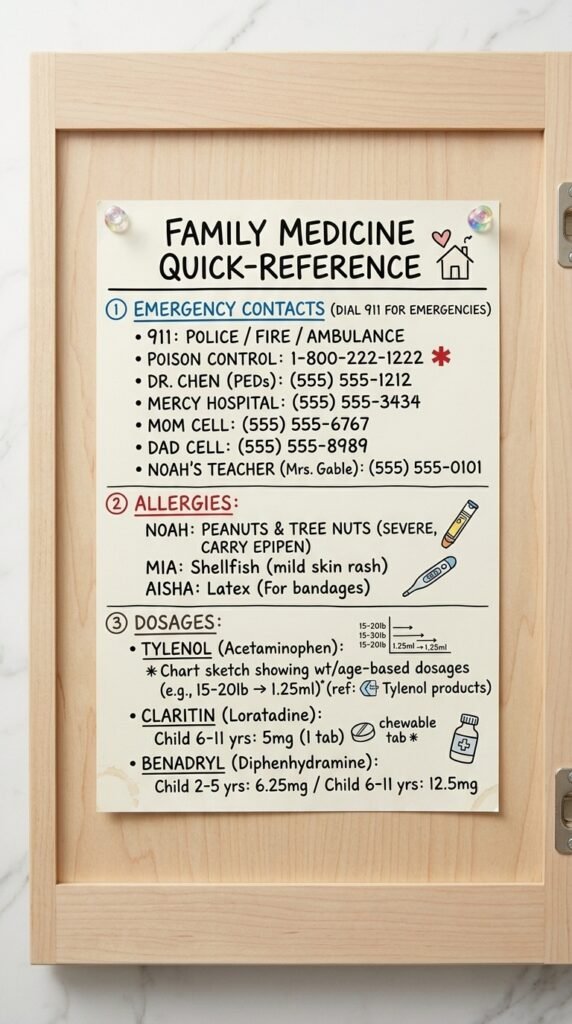
The best-organized cabinet in the world fails if no one knows how to use it. Take 10 minutes to write (or print) a simple reference card to keep inside the cabinet door.
Your family guide should include:
- Dosage reminders for common medications by age/weight
- Allergy alerts for any family member
- Emergency contacts — doctor, pharmacy, nearest urgent care
- Notes on prescriptions — what they’re for, who takes them, how often
This is especially helpful for babysitters, grandparents, or anyone else caring for your family in your absence.
Step 6: Do a Seasonal Check-In
Organizing your medicine cabinet isn’t a one-time event — it’s a habit. Set a reminder every three to six months (think: when the clocks change, or at the start of each season) to:
- Toss anything newly expired
- Restock essentials that are running low
- Update dosages if children have grown
- Rotate medications so newer ones go to the back
This small habit takes about 15 minutes and could genuinely prevent a crisis.
A Safe Cabinet Is a Gift to Your Whole Family
An organized, safe medicine cabinet is one of those quiet acts of care that most people never think about — until they desperately need it. You’re not just tidying a shelf; you’re making sure that the next time someone wakes up sick at midnight, the right help is exactly where it should be.
Save this guide for your next spring-cleaning day, share it with a fellow parent, or tackle it this weekend — your future self will thank you.