




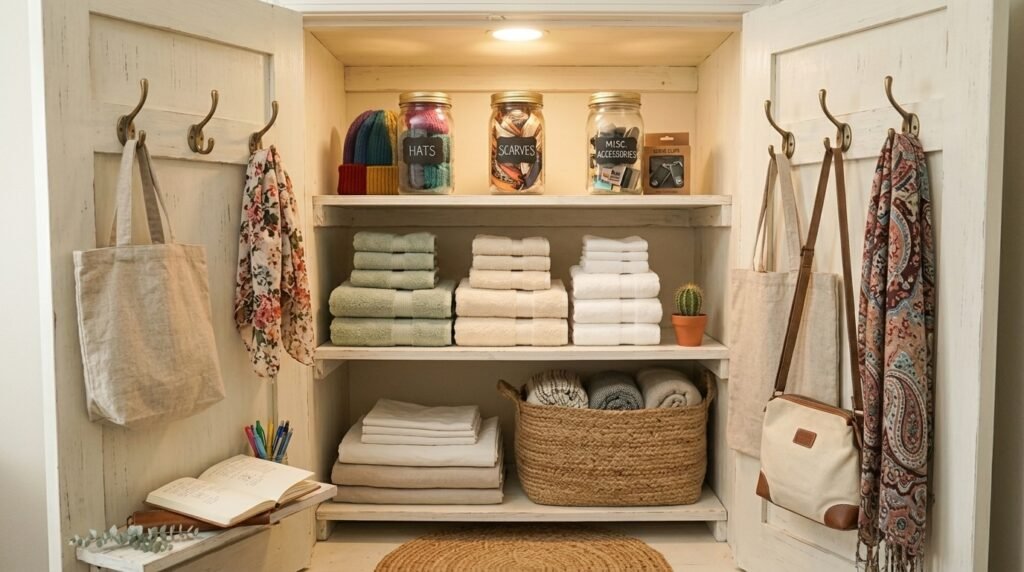
A hall closet that’s bursting at the seams the moment you open it isn’t just an eyesore — it’s a daily frustration. You shove something in, something else falls out, and that one thing you actually need is always buried at the very back. Sound familiar? Here’s the truth: a tiny hall closet isn’t the problem. A system that hasn’t been designed for small spaces is. With the right approach, even the most cramped closet can hold more than you’d think — and actually stay organized. Let’s fix it.
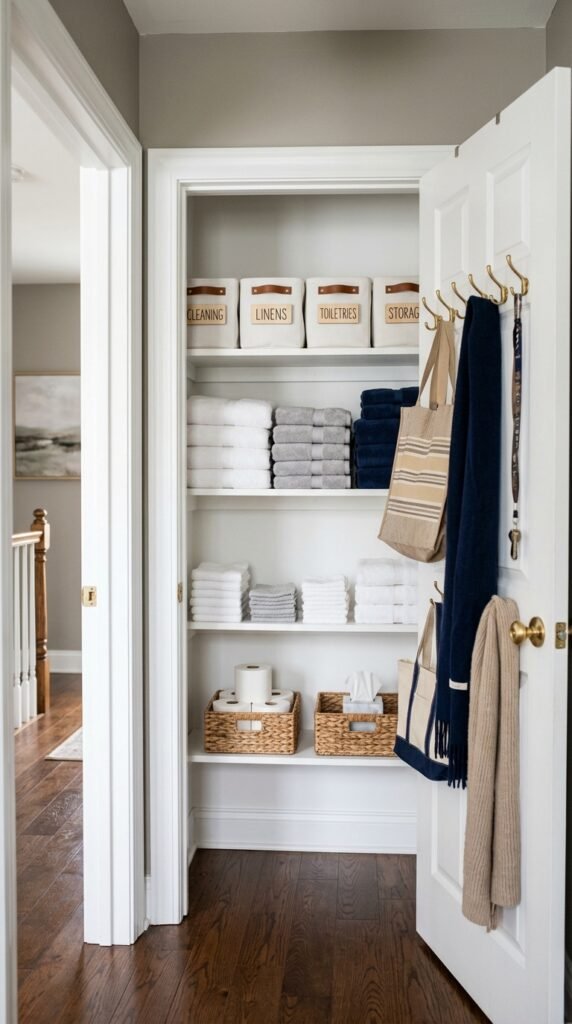
Empty It Out and Be Ruthless
Before any organizing happens, everything needs to come out. Every last thing.
This isn’t just about seeing what you have — it’s about making an honest decision about what actually deserves prime closet real estate.
As you pull things out, sort into three piles:
- Keep: Items you use regularly and genuinely belong in this closet
- Relocate: Things that drifted here but belong somewhere else in the home
- Donate or toss: Duplicates, broken items, things you haven’t touched in over a year
Be honest. That stack of plastic shopping bags you’ve been “saving”? The broken umbrella? The mystery cables? This is the moment to let them go. Every item you remove is space you’re giving back to yourself.
Map Out What the Closet Actually Needs to Do
Not all hall closets serve the same purpose — and your organization system should reflect your life, not a generic Pinterest template.
Ask yourself: what do you actually reach for most often from this closet?
- Everyday outerwear and accessories (coats, hats, gloves, scarves, umbrellas)
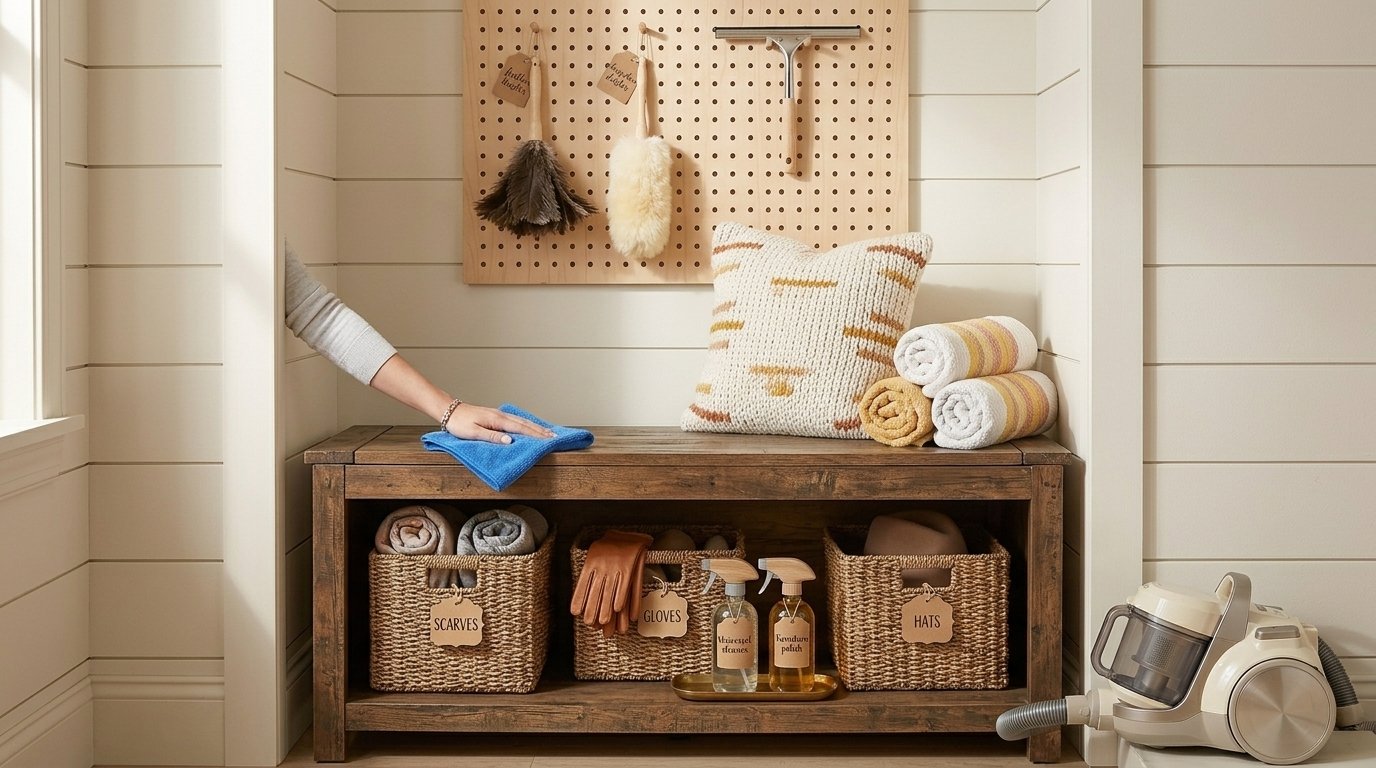
- Cleaning supplies (vacuum, broom, mop, sprays)
- Linens and towels (guest towels, extra blankets, sheets)
- Miscellaneous household (batteries, light bulbs, tools, first aid)
Most small hall closets need to serve two or three of these categories at once. Once you know exactly what yours needs to hold, you can assign every inch of space with intention instead of just shoving things in and hoping for the best.
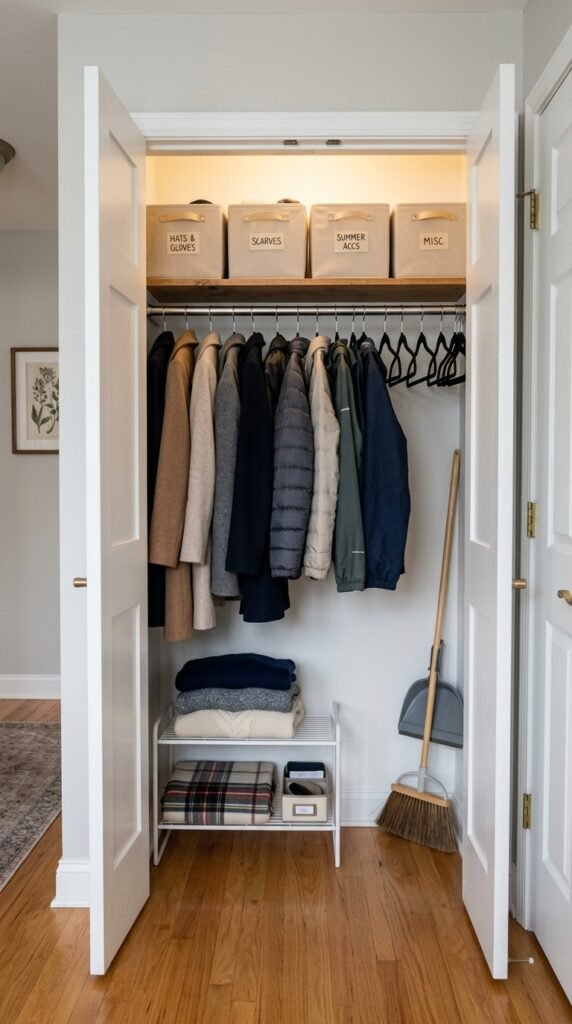
Go Vertical: Use Every Inch of Height
In a small closet, floor space is precious — but vertical space is almost always underused. This is your biggest opportunity.
- Double your hanging rod with a hanging rod extender — it drops down below your existing rod and instantly creates a second tier for shorter items like jackets
- Add a shelf riser on existing shelves to stack items in two layers instead of one
- Install an over-door organizer on the inside of the closet door — this is free space most people completely forget about
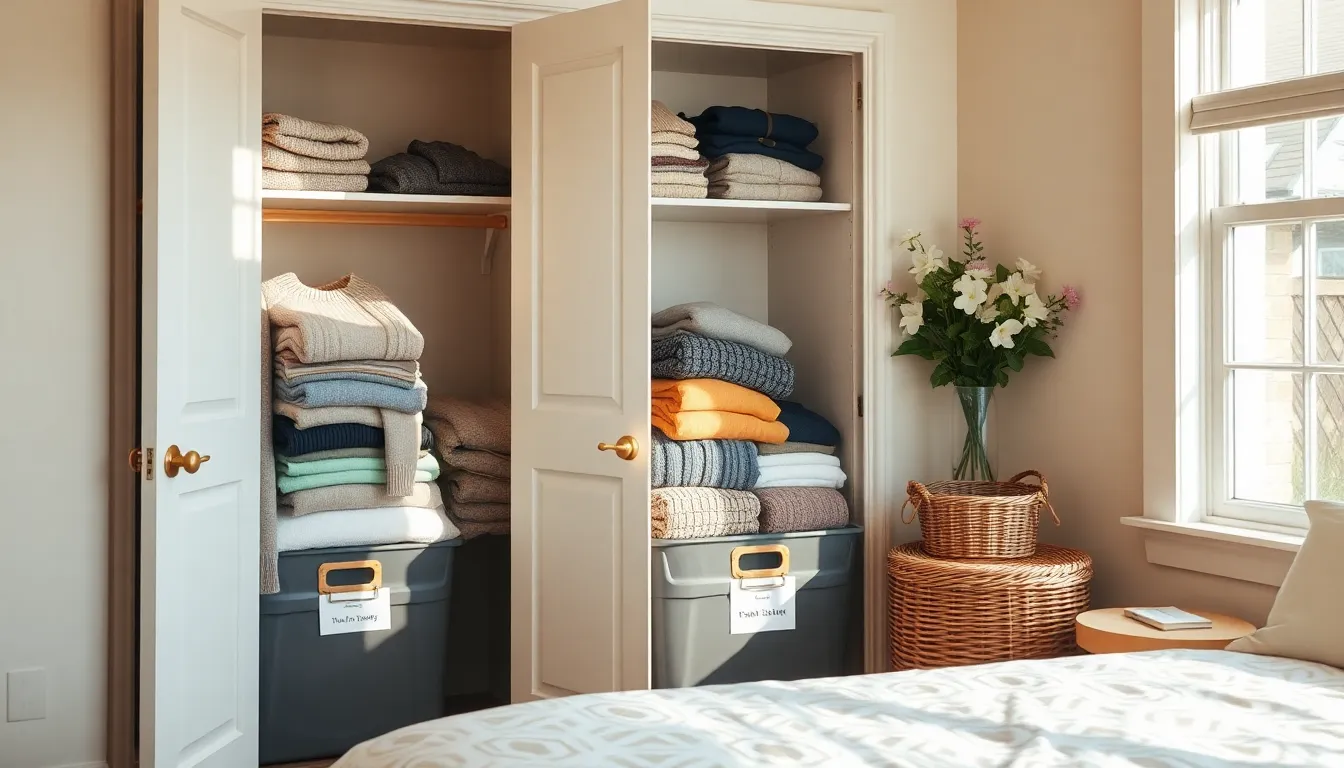
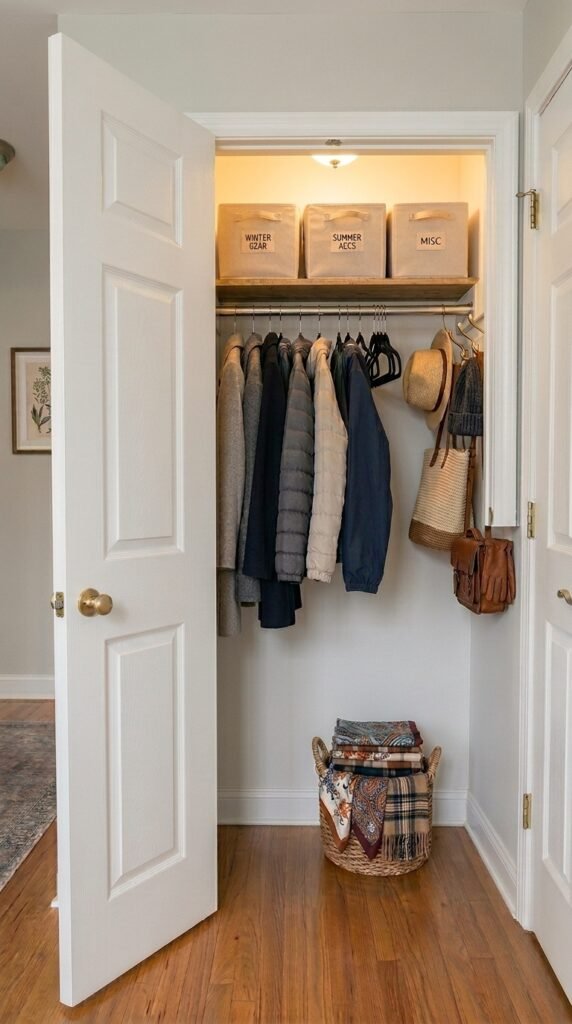
- Stack bins and baskets on the top shelf for items you don’t need daily (seasonal accessories, spare linens, extra toiletries)
- Use the floor intentionally — a small two-tier shelf unit on the floor gives you structure instead of a pile
The goal is to stop thinking horizontally and start thinking in layers.
Choose the Right Storage Tools
The right containers make a dramatic difference in a small closet. The wrong ones — mismatched boxes, flimsy bins, bags piled on bags — create chaos even when things are technically “put away.”
For small hall closets, look for:
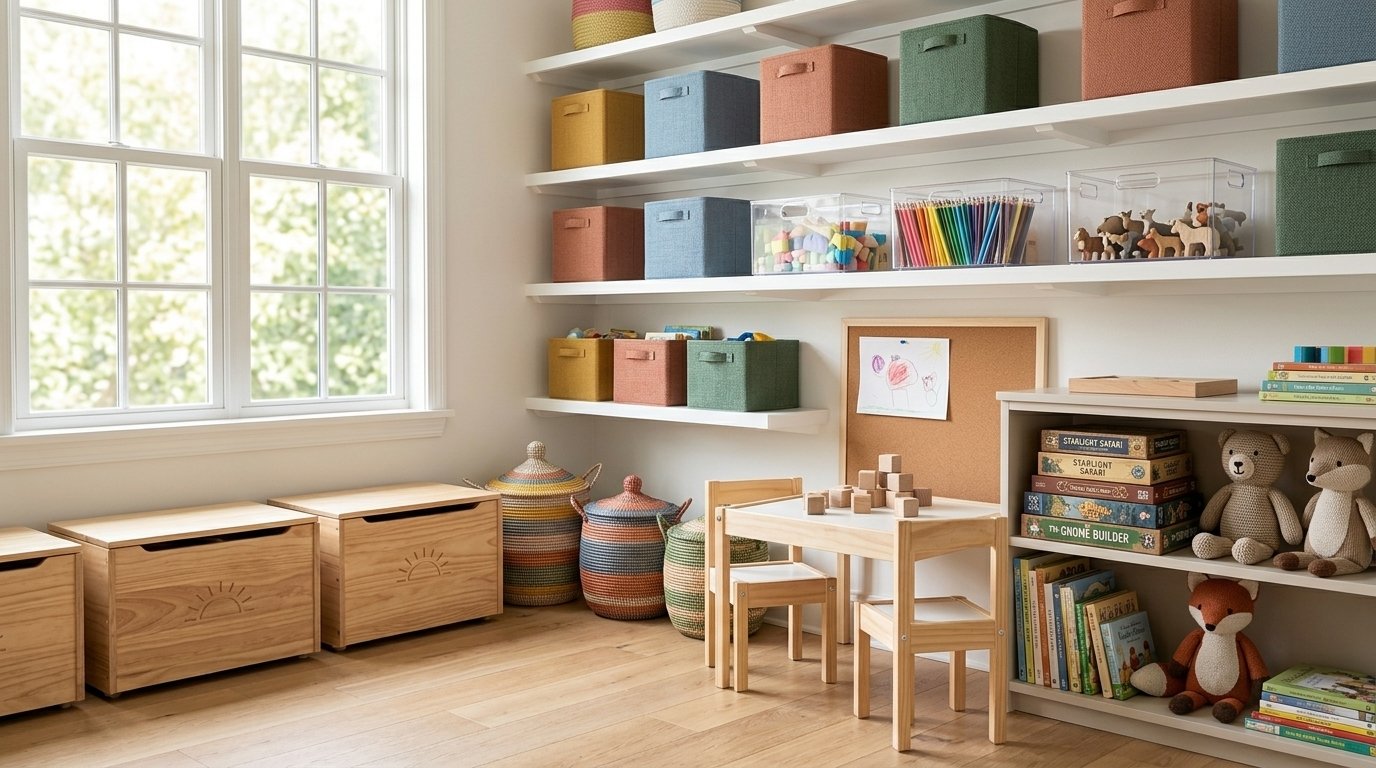
- Slim, stackable bins in a consistent color or material — uniformity makes a tight space feel calm instead of chaotic
- Hooks on every available wall surface — command hooks on side walls and the back of the door multiply your storage without taking up an inch of floor space
- Vacuum storage bags for bulky items like extra blankets and seasonal coats — they compress down to a fraction of the size
- A narrow shoe rack if footwear lives in your hall closet — it keeps shoes upright and contained instead of tumbling across the floor
- Clear labels on every bin — when everything is labeled, things get put back where they belong (by you and everyone else in the household)
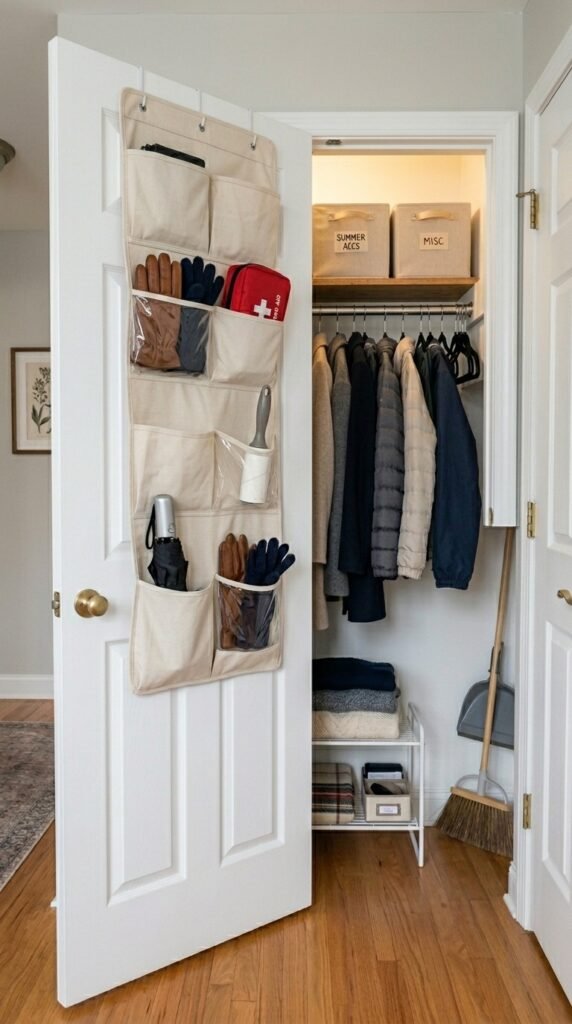
Maintain It with a Monthly Five-Minute Reset
Here’s the part nobody talks about: organization isn’t a one-time event. A small closet gets overwhelmed faster than a large one simply because there’s less margin for error.
Build a simple maintenance habit:
- Once a month, do a quick five-minute scan — pull out anything that doesn’t belong and return it to its proper home
- Seasonally, swap what’s at the front — winter coats and gloves move forward in fall, back out in spring
- Immediately after shopping, resist the urge to shove new items in — find a proper spot or relocate something to make room
- Keep the floor clear as a non-negotiable rule — a clear floor is the single biggest visual signal that a closet is organized
The system you build only works if things go back where they came from. Make it easy enough that anyone in the household can do it without thinking.
Small Closet, Big Results
A limited hall closet isn’t a design flaw — it’s a challenge that a smart system handles beautifully. When every shelf, hook, and inch of door space is working for you, it’s genuinely surprising how much a small closet can hold.
Pin this article for your next weekend project — a calmer, more functional closet is just a few hours away! 🗄️