


There is a special kind of chaos that lives inside the Tupperware cabinet. You open the door, an avalanche of mismatched lids spills out, you spend four minutes searching for the container that matches the lid in your hand, and by the time you find it — if you ever do — you’ve lost the will to meal prep entirely. The Tupperware drawer is the most universally dreaded cabinet in the kitchen. But here’s the thing: it doesn’t require a miracle, a massive purge, or an expensive organization system to fix. It requires one simple method, applied consistently. Get this cabinet under control and it will stay that way — even on hectic weeknights when dishes are piling up and patience is running low.
Start With the Great Tupperware Reckoning
You cannot organize chaos — you can only reduce it first. Before any system goes in, everything comes out. Pull every single container and lid out of the cabinet and onto the counter or kitchen floor.
Now begin the match-up:
- Pair every container with its lid. Set matched sets aside.
- Orphaned lids with no container? Toss them — they serve no purpose.
- Orphaned containers with no lid? Repurpose for craft storage, pet food scoops, or toss.
- Warped, stained, or cracked pieces? Let them go. Damaged containers don’t seal properly and aren’t worth the space they take up.
Most people discover during this step that a shocking percentage of what’s in their cabinet is completely unusable. Pairs that have been separated for so long nobody remembers the match. Lids from containers donated two apartments ago. Getting ruthless here is what makes the rest of the system actually work.
Choose One Container Brand and Commit
This is the single most transformative decision you can make for long-term Tupperware sanity — and it’s one most people never think to make.
Mixed container sets from a dozen different brands are nearly impossible to organize. Different shapes, different lid mechanisms, different heights — they don’t stack, they don’t nest, and finding a matching pair becomes a logic puzzle every single time.
The fix: pick one system and use it exclusively.
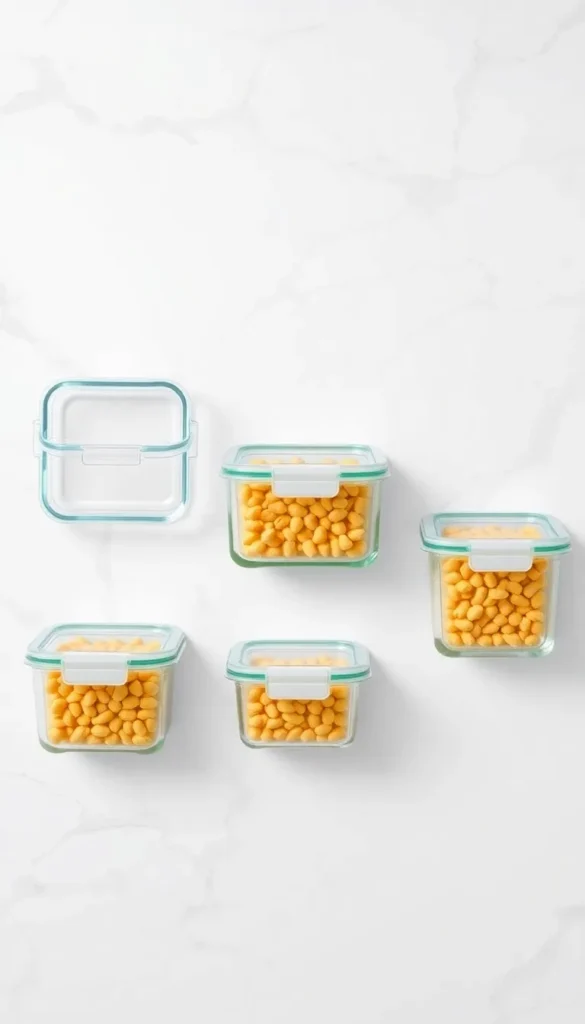
Great options that stack and nest beautifully:
- Glass containers with snap lids (OXO, Pyrex, or similar): Durable, stain-resistant, microwave and oven safe — a genuine lifetime investment
- Plastic sets with uniform shapes (Rubbermaid Brilliance, Sistema): Crystal-clear, modular, nesting perfectly by size
- Silicone bags: For households going low-waste — they collapse flat for storage and eliminate the lid problem entirely
You don’t have to replace everything at once. Start by identifying a system you love, donate the mismatched pieces over time, and replace as needed. Within a few months, your cabinet will be cohesive.
The One Simple System: Nest Bodies, Stand Lids Vertical
Here it is — the method that solves the Tupperware problem once and for all. It has two parts, and together they change everything.
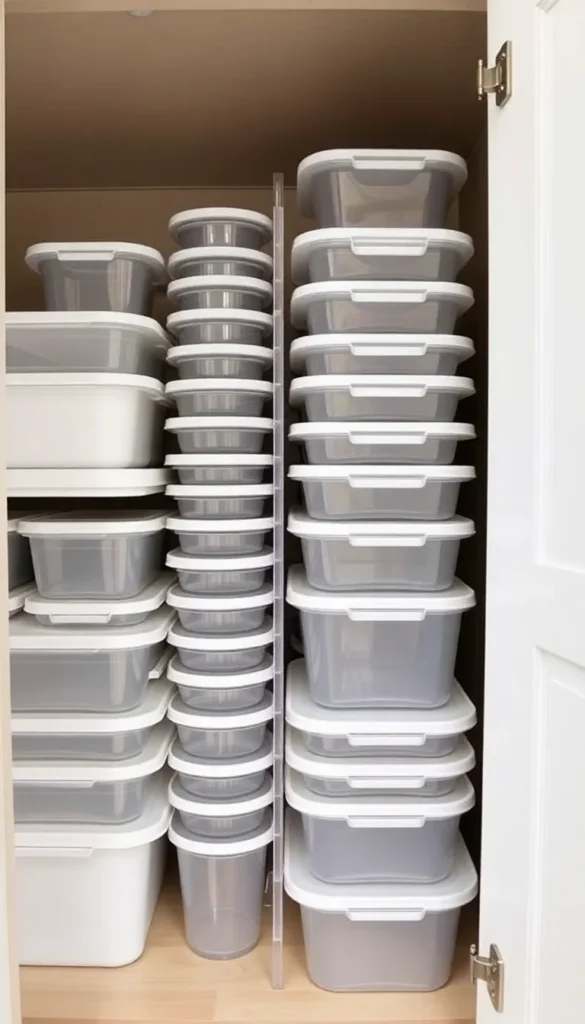
Part 1: Nest the containers by size. Stack containers inside each other, largest to smallest, grouped by shape (round together, rectangular together, square together). This dramatically reduces the footprint they take up and makes it immediately obvious which size you’re reaching for.
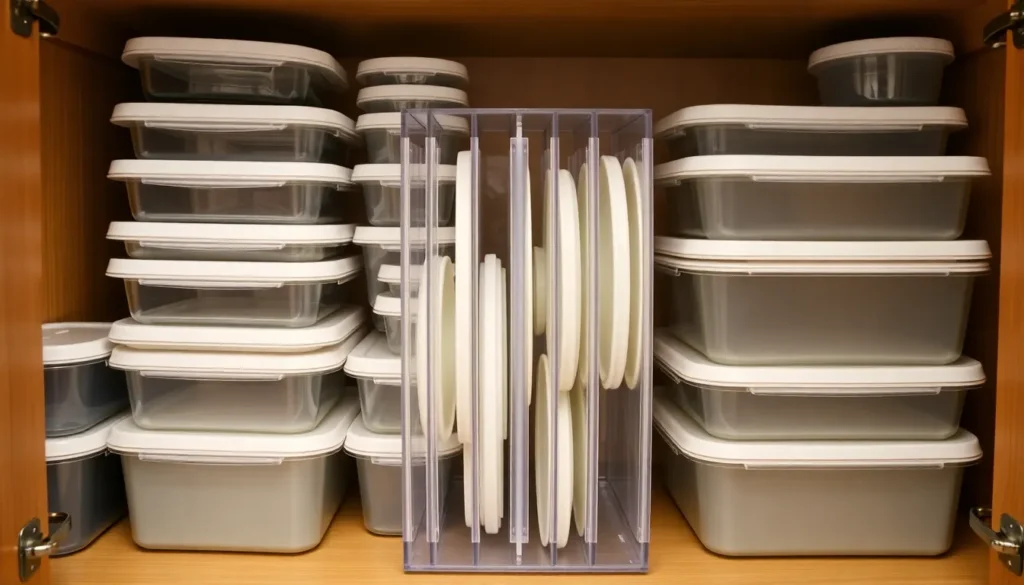
Part 2: Store lids vertically. This is the game-changer most people miss. Instead of stacking lids flat in an unstable wobbly pile, store them standing upright — like files in a filing cabinet.
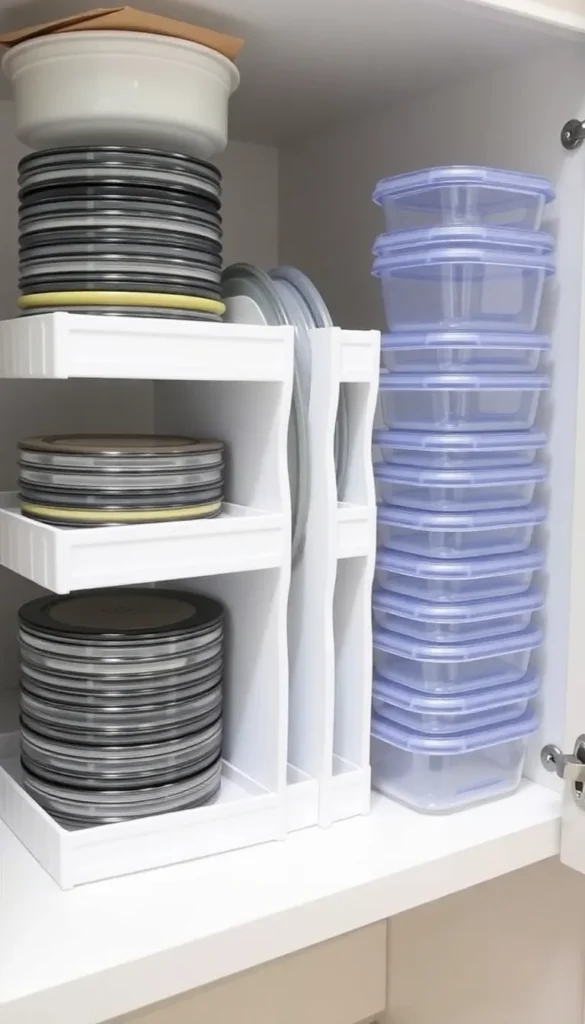
Use one of these to make it work:
- A small dish rack or plate organizer placed inside the cabinet
- An expandable drawer divider set upright as a lid file
- A magazine file or narrow acrylic organizer — inexpensive and works perfectly
Lids stored vertically are visible, individual, and grabbable in one motion. No more toppling stack. No more searching. Just reach in, pull the right lid, done.
Assign Every Container a Permanent Home
The system only holds if every piece has a specific, consistent place it lives. Decide now — before everything goes back in — where each category will live.
A layout that works well:
- Daily-use containers (lunch boxes, leftovers sizes): Front of the shelf, easiest access
- Large containers and mixing bowls with lids: Back of the shelf or a lower cabinet
- Specialty or rarely used pieces: High shelf or a separate cabinet entirely
- Lid organizer: Always on the same shelf as the containers it belongs to — never separated
Label the shelf with a small piece of tape if it helps the rest of the household maintain the system. “Lids here” does more work than you’d expect.
Keep It Maintained With Two Simple Habits
Even the most beautiful Tupperware system slowly unravels without a couple of intentional habits holding it in place.
Habit 1 — Unload the dishwasher straight into the system. When containers come out of the dishwasher clean, return them immediately to their nested spot and stand the lid back in the organizer. It takes 30 extra seconds and prevents the pile-up that leads to chaos.
Habit 2 — Quarterly lid-and-container audit. Four times a year, do a quick five-minute check. Pull everything out, re-match pairs, remove anything that’s warped or missing its partner, and reset the system. Quarterly is enough to catch drift before it becomes an avalanche again.
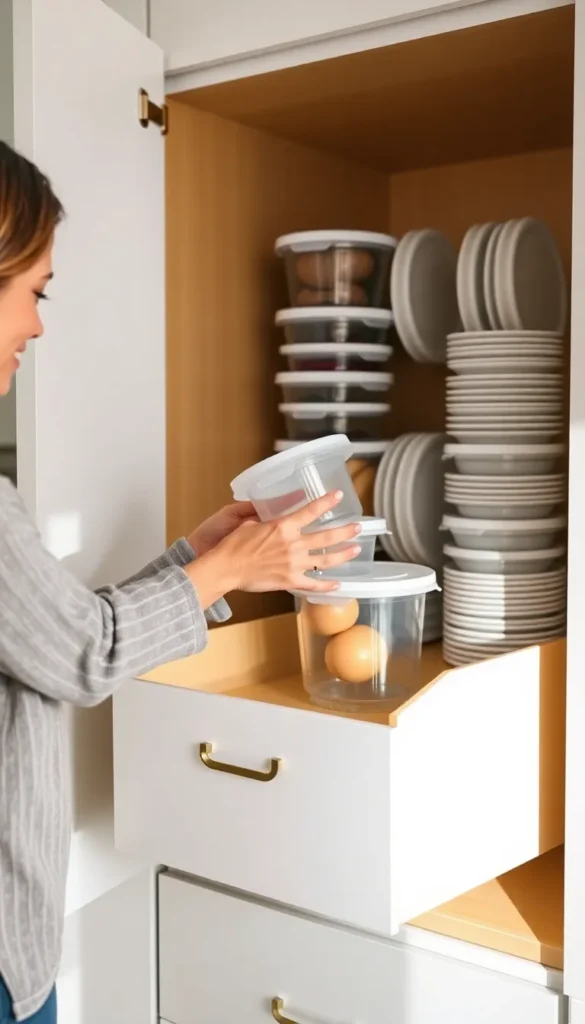
One System, Lasting Peace
The Tupperware cabinet has a reputation as the most chaotic spot in the kitchen — but that reputation is entirely fixable. One clear-out, one matching container set, one vertical lid organizer, and two small habits is genuinely all it takes. The next time you reach for a container five minutes before dinner, everything you need will be exactly where it should be.
Save this article to your kitchen organization board and share it with anyone whose Tupperware drawer deserves a fresh start — that’s basically everyone. 🥡