

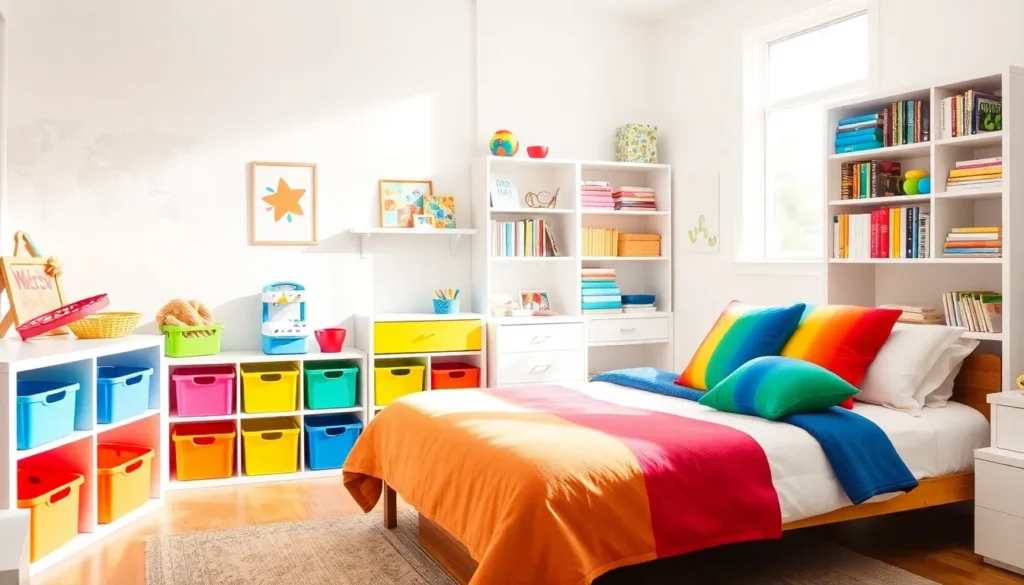
You spent three hours organizing your child’s room. It looked like a magazine spread. You felt genuinely proud. Then you walked past the door four hours later and somehow every toy was back on the floor, three drawers were hanging open, and a sock was on the bookshelf. If this sounds painfully familiar, here’s the truth most organizing advice skips: the problem isn’t your kid — it’s the system. A room organized for adults will never stay clean when children are the ones using it. But a room organized for kids — with simple, low-effort systems that match how they actually think and move? That room has a real shot at staying tidy. Let’s build one.
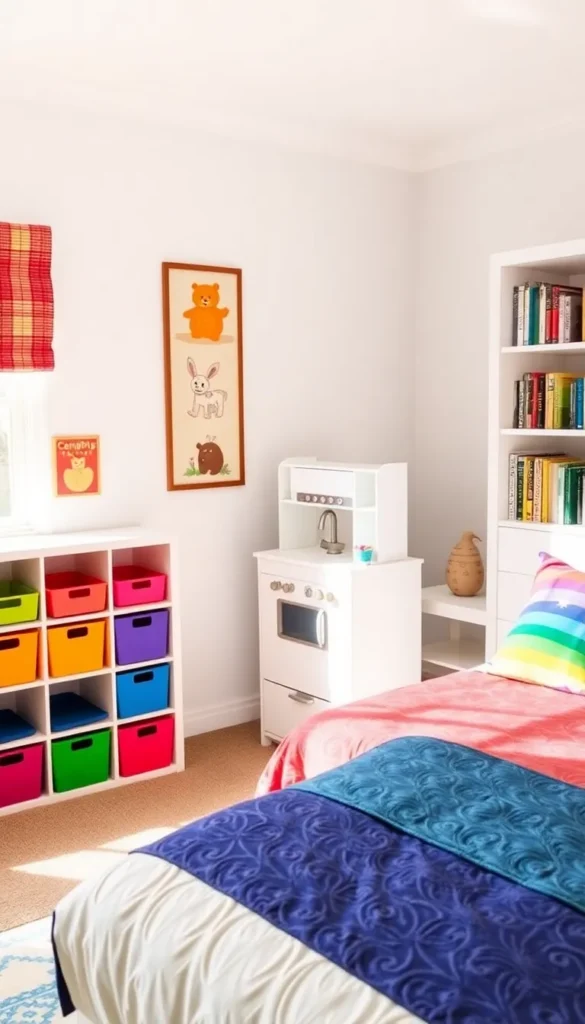
The Real Reason Kids Rooms Don’t Stay Clean
Before diving into bins and labels, it helps to understand why kid spaces fall apart so fast. It almost never comes down to laziness or not caring.
The real culprits:
- Systems are too complicated: If putting something away requires more than two steps, it won’t happen
- Storage is too hard to access: Lids, latches, high shelves, and heavy containers are adult-friendly, not kid-friendly
- There’s simply too much stuff: More toys than storage will always end up on the floor — it’s physics
- There’s no clear home for things: If a kid genuinely doesn’t know where something goes, it goes on the floor
Fix the system, and the behavior follows. It really is that simple — and that’s actually great news.
Declutter First, Organize Second
Here’s the organizing rule that saves more time than any product or system ever will: you cannot organize excess. Too much stuff is the foundation of every chaotic kids room. Before a single bin goes on a shelf, the amount of stuff needs to come down.
Do this together with your child if they’re old enough — it teaches valuable lessons and avoids meltdowns over accidentally donated favorites.
Sort everything into:
- Loves and plays with regularly: Stays
- Hasn’t touched in months: Donate or store in rotation
- Broken, missing pieces, or outgrown: Toss
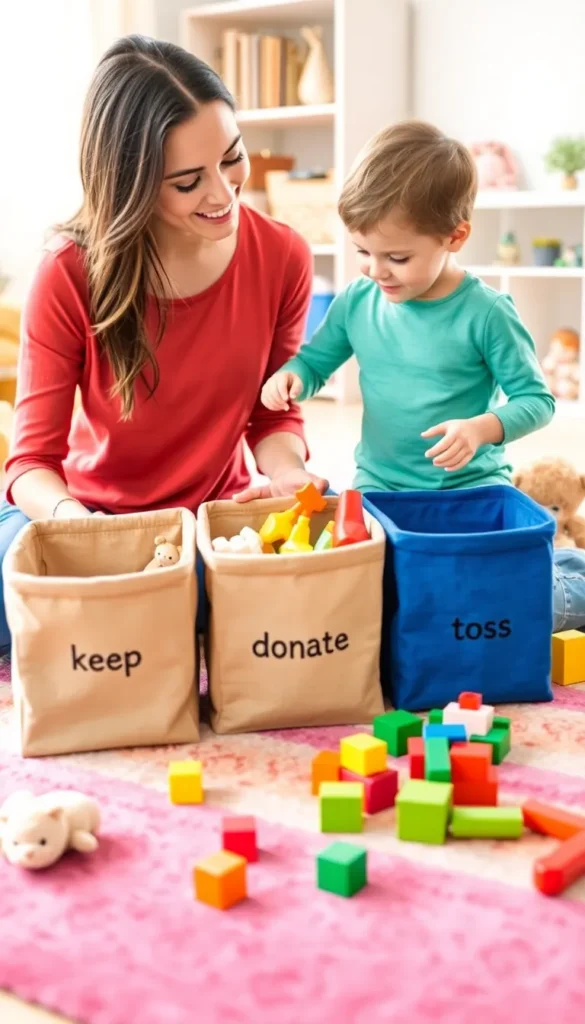
A good rule of thumb: if the toys that are left don’t fit neatly into the available storage, there are still too many toys. Toy rotation — keeping half in storage and swapping every few weeks — is genuinely life-changing for keeping rooms manageable.
Design Storage That Kids Can Actually Use
This is where most kid room organization goes wrong. The storage looks beautiful but requires a child to lift a lid, sort by category, and return items to precise locations. That’s never going to happen after a long day of playing.
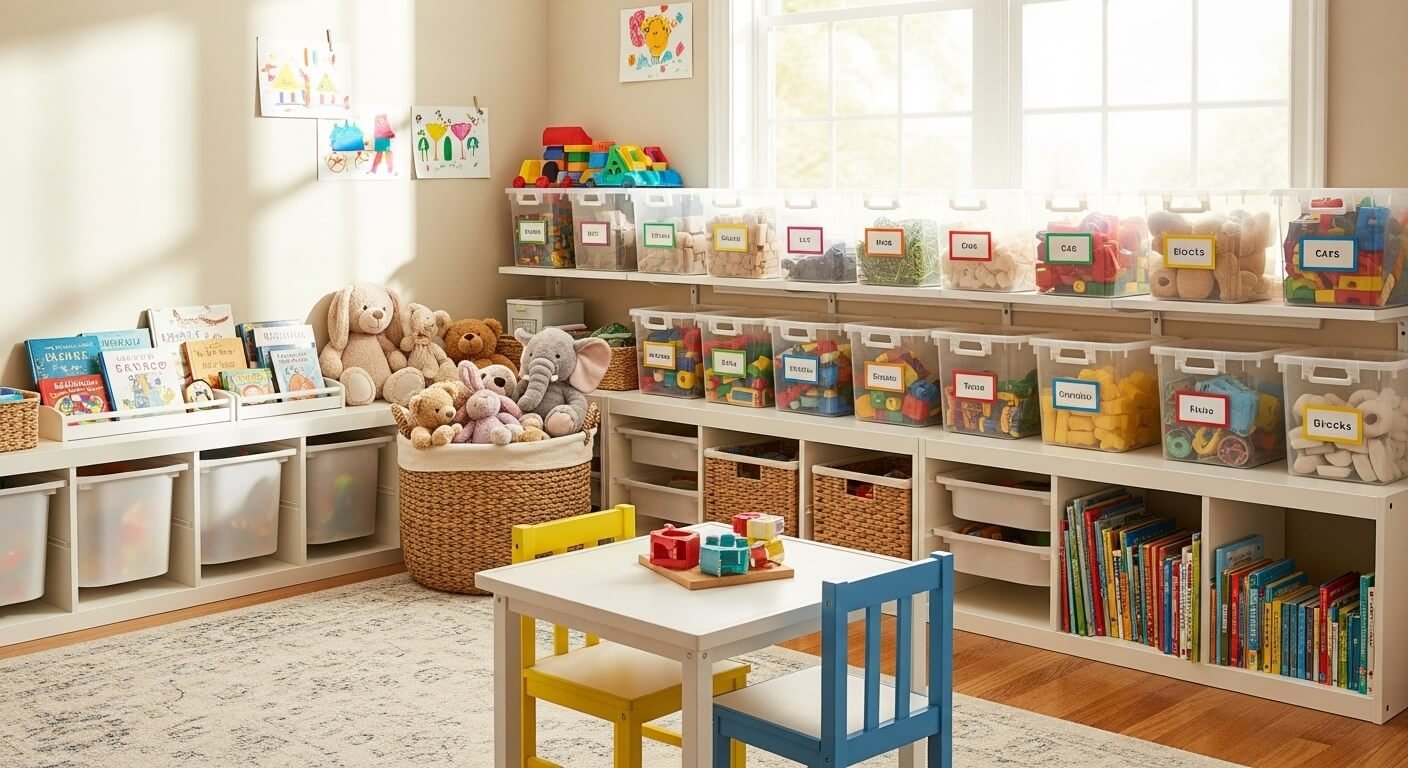
The golden rules of kid-friendly storage:
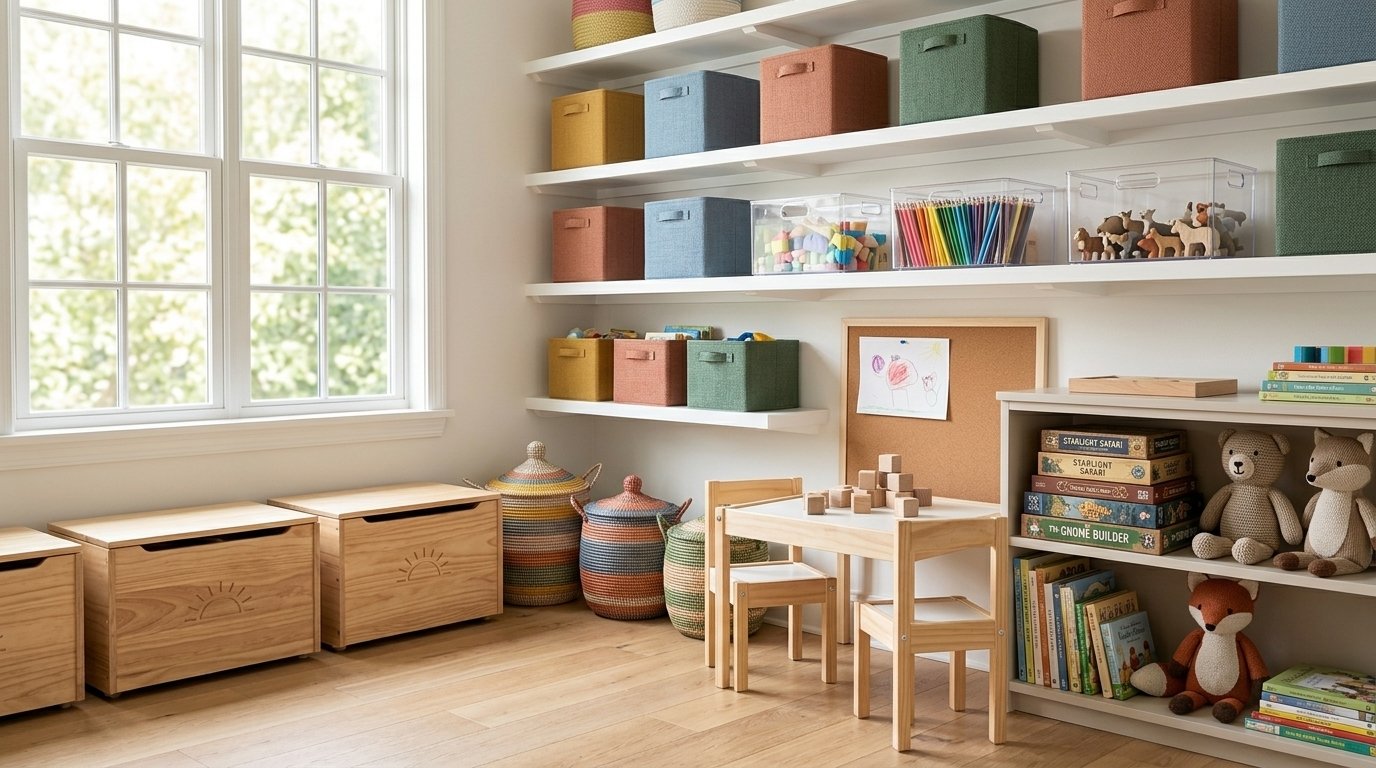
- Open bins over closed containers — if they can see it and drop it in, they’ll actually use it
- Low and reachable — storage at a child’s eye level means independence and accountability
- Big categories, not micro-sorting — “stuffed animals,” “cars,” and “building toys” beats twenty hyper-specific subcategories
- Labeled with pictures AND words — especially for younger kids or early readers, picture labels remove all ambiguity about where things go
Storage that works brilliantly:
- Fabric cube bins in an open cubby unit
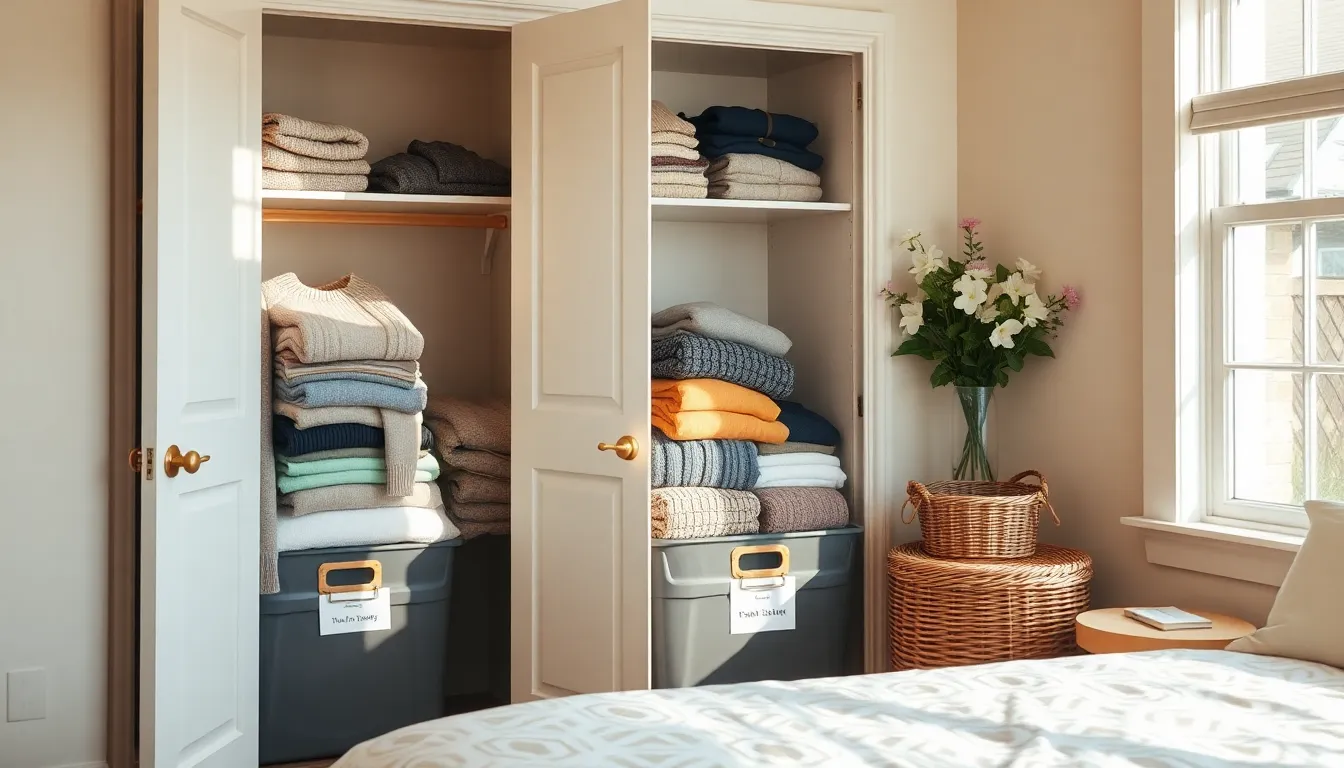
- Large wicker or mesh baskets for bulky toys
- A low bookshelf with forward-facing picture book display
- Over-the-door shoe pockets for small toys, art supplies, and accessories
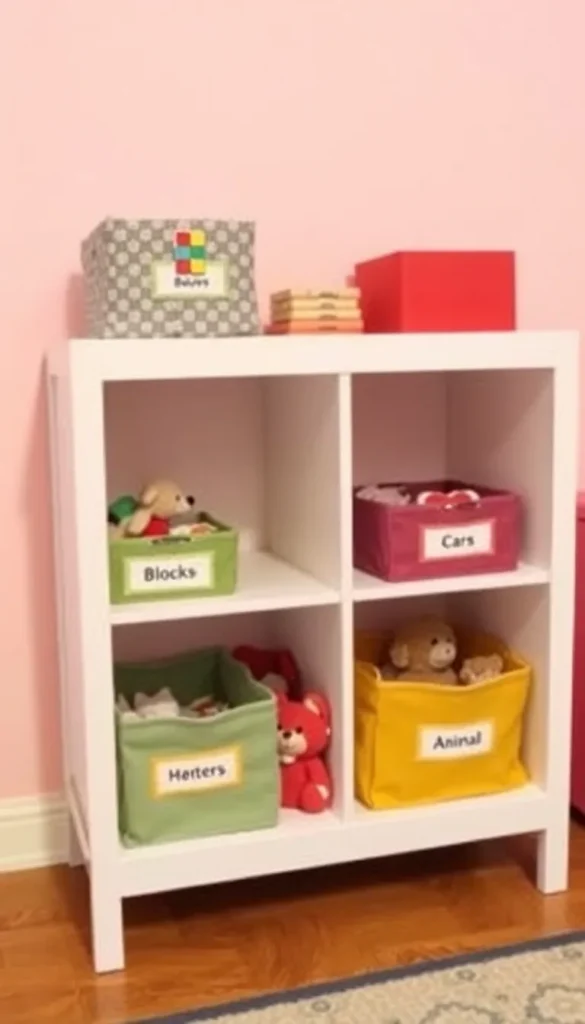
The less friction between a child and putting something away, the more often it actually happens.
Create Zones That Make Sense to a Child
Kids naturally gravitate toward different activities in different parts of a room. Working with that instinct instead of against it makes tidying up far more intuitive.
Simple zones to define:
- Sleep zone: The bed area — keep this clear and calm, minimal toys
- Play zone: The floor area where active play happens — easy-to-grab-and-return storage lives here
- Creative zone: A small table or desk for art, puzzles, and building — supplies stored directly on or beside it
- Reading zone: A cozy corner with a bean bag or floor cushion, books within arm’s reach
You don’t need labels or floor tape to define zones — furniture placement does the job naturally. A bookshelf beside the reading nook, a small bin next to the art table, a toy chest at the foot of the play area. Zones make it obvious where things belong without anyone having to say a word.
Build a Cleanup Routine That Actually Sticks
Even the best-organized room needs a daily reset. The secret is making the routine short, consistent, and — where possible — fun.
What works:
- “10-minute tidy” before dinner or bed — set a timer, everyone picks up until it goes off
- One-in-one-out rule — a new toy comes in, an old one leaves. This keeps the volume naturally in check over time
- Put it away before the next thing comes out — one activity at a time is genuinely easier to maintain than cleaning up three at once
- Make it a game — “Can you get all the blocks in the bin before the song ends?” works better than “Clean your room” every single time
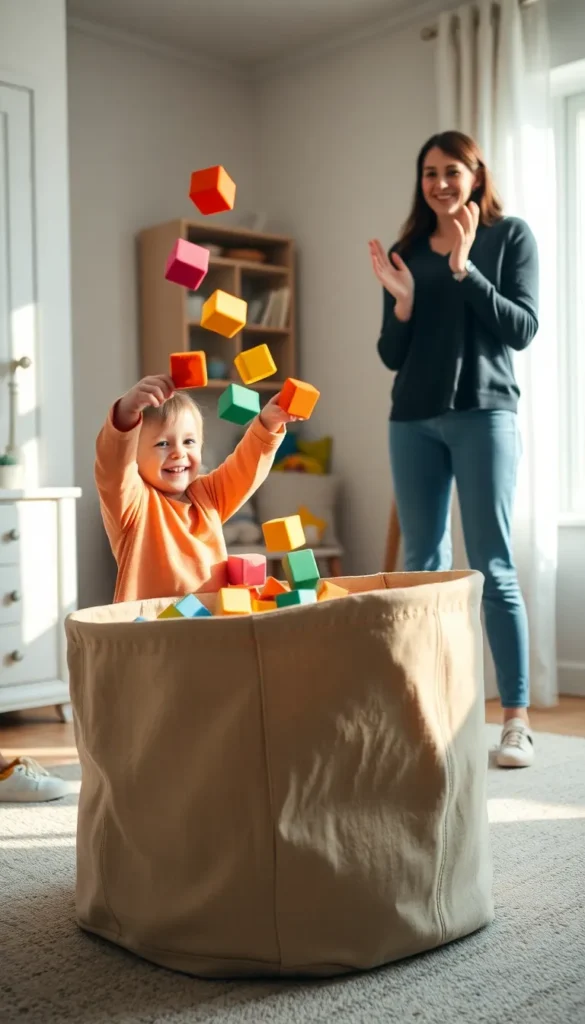
Consistency matters more than perfection. A five-minute daily reset beats a two-hour weekly overhaul every time.
A Clean Room Starts With a Kid-Proof System
The goal was never a perfectly pristine room — it was a room that bounces back quickly, that your child can maintain with minimal help, and that doesn’t require you to spend your weekend reorganizing from scratch. A system built around how kids actually think and move makes all of that possible.
Start with the declutter. Build in the open bins. Create the zones. And watch how differently a room behaves when the system was designed for the person actually using it.
Save this article to your kids room organization board and share it with every parent who has cleaned the same room three times this week — they need this! 🧸