



You open the cabinet under the sink and — whoosh — an avalanche of crinkly plastic bags spills onto your feet. Sound familiar? Plastic bags have a sneaky way of multiplying overnight, stuffed into corners, shoved into drawers, and tumbling out of every available crevice. The good news? A little system goes a long way. Here’s exactly how to wrangle those bags and keep your kitchen looking calm and clutter-free.
Step 1: Do a Full Purge First
Before organizing anything, you need to know what you’re working with.
- Pull every single bag out of your kitchen — under the sink, in the junk drawer, stuffed in a corner cabinet.
- Toss anything that’s torn, stretched out, or has a broken handle. Be ruthless.
- Separate grocery bags from zip-lock bags, produce bags, and bread bags. They each deserve their own home.
Starting fresh makes the whole system stick. You can’t organize chaos — you have to reduce it first.
Step 2: Choose Your Storage Method
This is where the fun begins. There’s no one-size-fits-all solution, so pick what works for your space and your habits.
The Tissue Box Trick Stuff your plastic bags into an empty tissue box. Pull one out from the top just like a tissue. It’s quick, cheap, and surprisingly satisfying. Tuck it inside a cabinet door or under the sink.
A Dedicated Bag Dispenser Wall-mounted plastic bag dispensers are affordable and keep bags accessible without taking up shelf space. Mount one inside a cabinet door or on the side of a pantry unit.
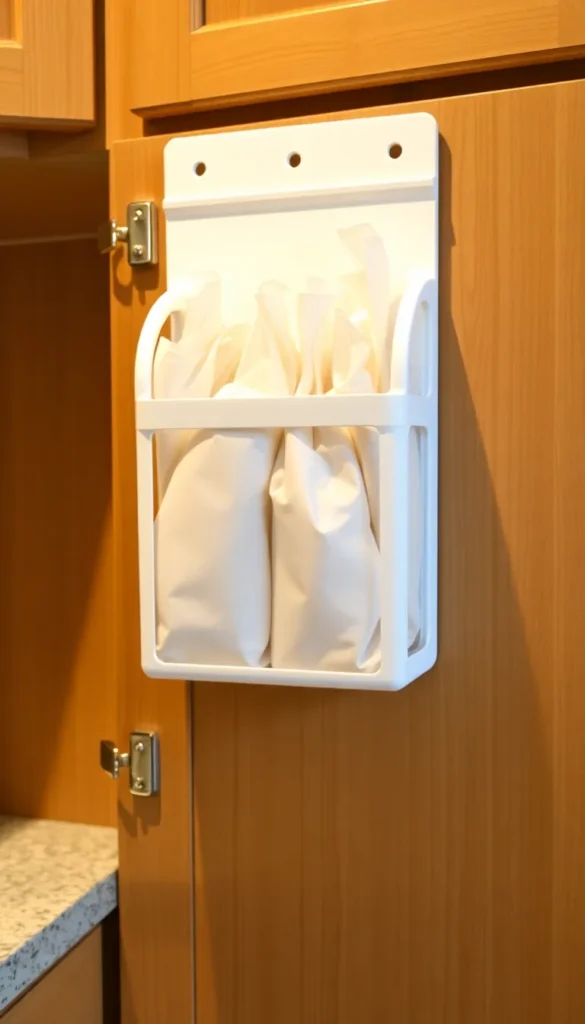
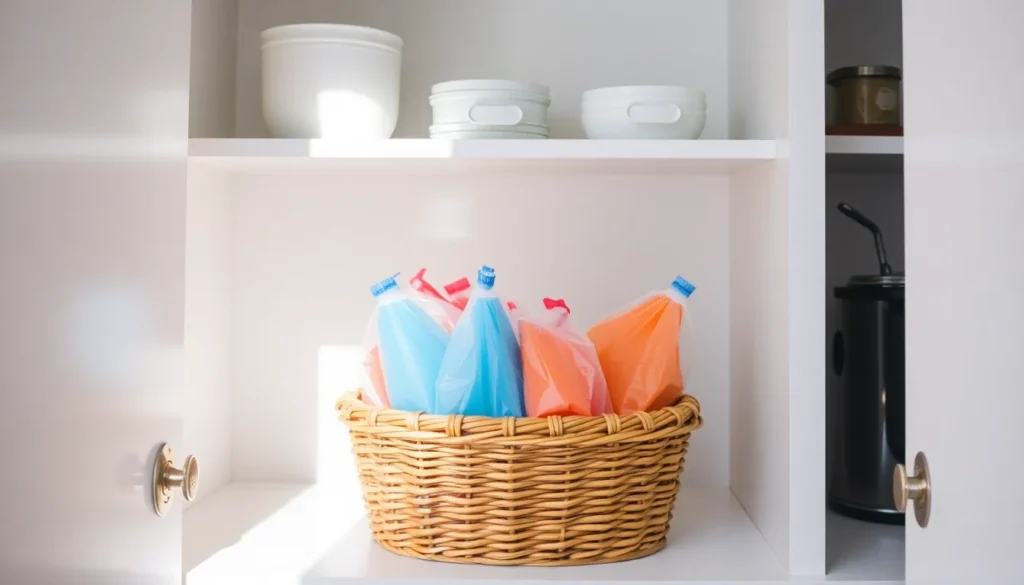
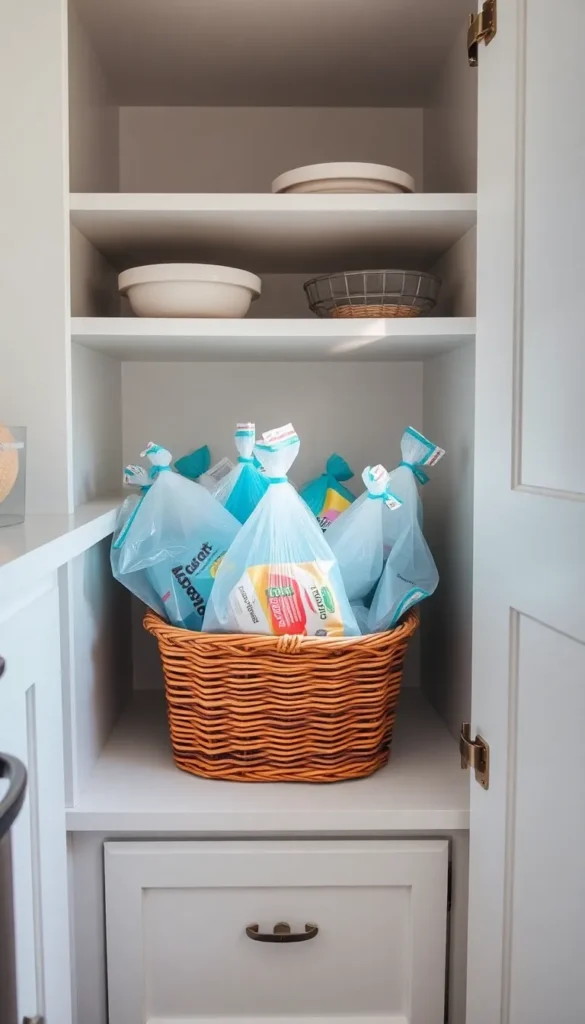
A Small Basket or Bin A compact bin or open-top basket on a shelf corrals bags without requiring any folding. Toss them in loosely, grab one when you need it. Simple, fast, and zero fuss.
The Fold-and-Stack Method If you prefer tidiness over speed, fold bags into neat triangles and stack them in a small container. It takes a couple of extra seconds but keeps everything uniform and easy to count.
Step 3: Pick the Right Storage Spot
Location matters more than most people think.
- Under the sink is the most popular spot — hidden but accessible.
- Inside a pantry door keeps them out of sight without sacrificing convenience.
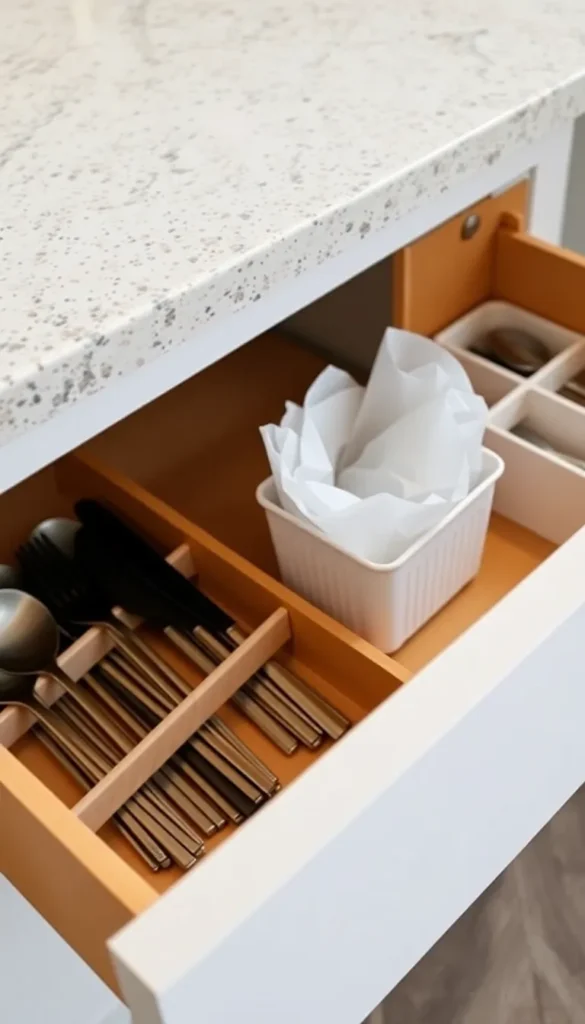
- A drawer divider works well if you have a spare kitchen drawer with a little extra room.
- Near the trash can makes practical sense — you’ll always know exactly where to grab a liner.
Avoid storing bags in a spot you have to dig around to reach. If it’s inconvenient, the system won’t last a week.
Step 4: Set a “One In, One Out” Rule
Here’s the secret no one talks about: organizing only works if you maintain it.
Every time you bring new bags home, spend 60 seconds folding and storing them before they hit the counter. Set a limit — say, no more than 20–25 bags at a time. When your storage spot is full, it’s time to use up the backlog before adding more.
This small habit is what separates a kitchen that stays tidy from one that relapses into chaos every few weeks.
Step 5: Reuse and Reduce Going Forward
The best way to manage plastic bags long-term? Have fewer of them.
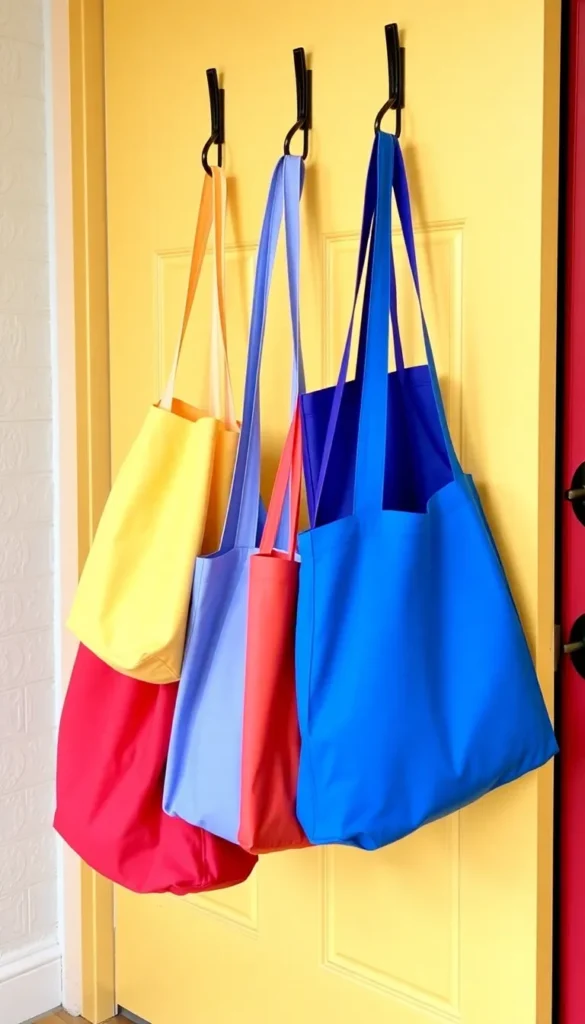
- Keep a few reusable tote bags near the front door or in your car so you actually remember to use them.
- Repurpose plastic bags as small trash can liners, dog waste bags, or packing material.
- Many grocery stores have plastic bag recycling bins near the entrance — a great way to responsibly clear out overflow.
You’ve Got This
Plastic bags don’t have to be the villain of your kitchen organization story. With the right storage method, a smart location, and one simple daily habit, you can keep them completely under control — no more avalanches, no more chaos.
Save this article for your next kitchen refresh, and share it with someone whose cabinet situation could use a little love! 🛍️