

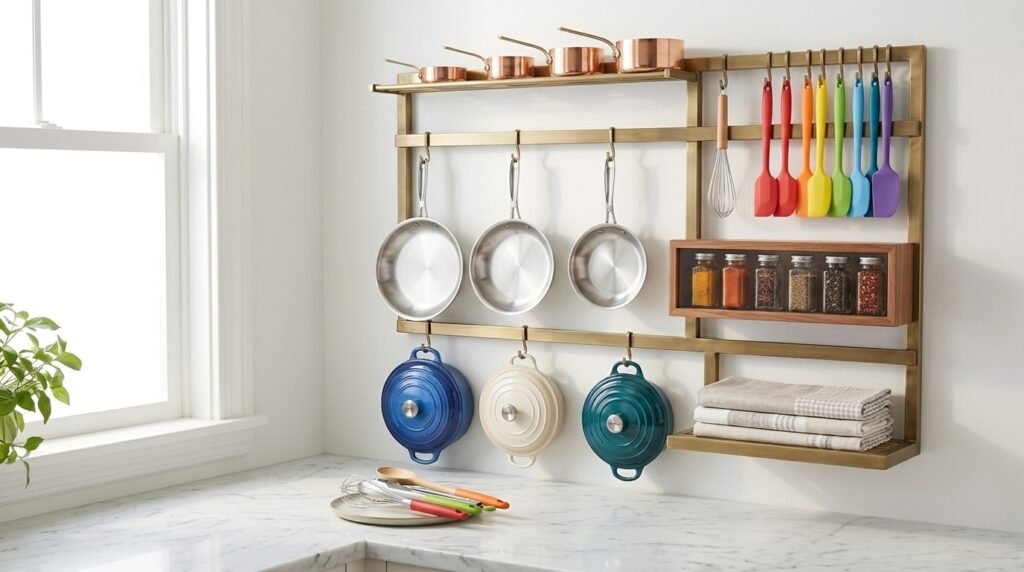
If you’ve ever yanked a skillet from a chaotic cabinet and sent three lids crashing to the floor, you already know the struggle. Cookware organization is one of those kitchen problems that feels small — until you’re elbow-deep in a pile of nested pans at 6 p.m. trying to get dinner on the table. The good news? A few smart changes can make your pots and pans genuinely easy to grab every single time.
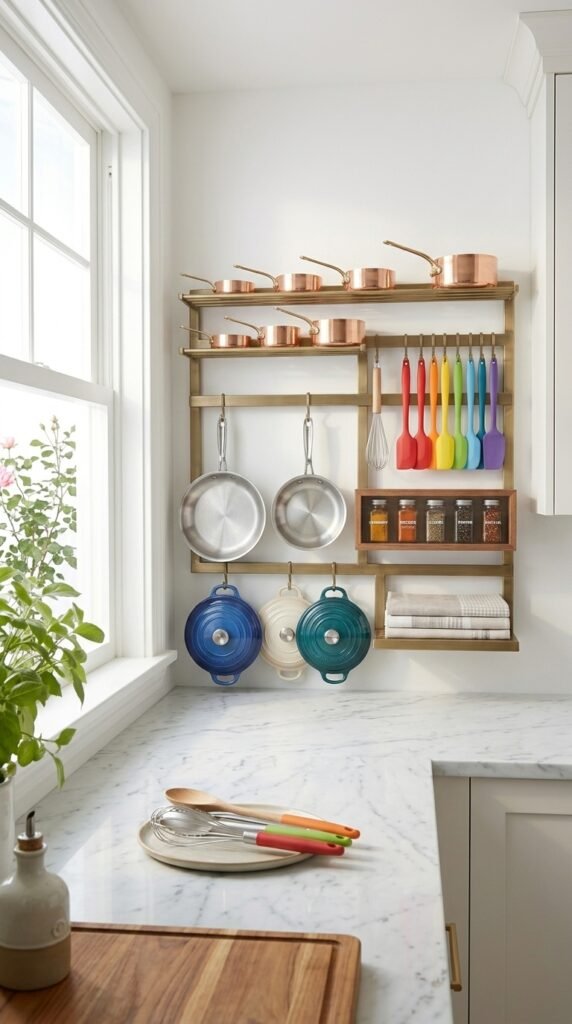
Start by Editing What You Actually Own
Before you reorganize anything, do a quick cookware audit. Pull everything out and ask yourself honestly:
- Do I use this regularly?
- Does it work well, or is it warped/scratched?
- Do I have two of the same size pan?
Most kitchens hold 30–40% more cookware than one household actually needs. Donating duplicates and worn-out pieces immediately creates breathing room — and that’s what makes organization sustainable.
Choose a Storage Method That Matches Your Kitchen
Not every kitchen is the same, and the best pots-and-pans system depends on your space. Here are the four most practical options:
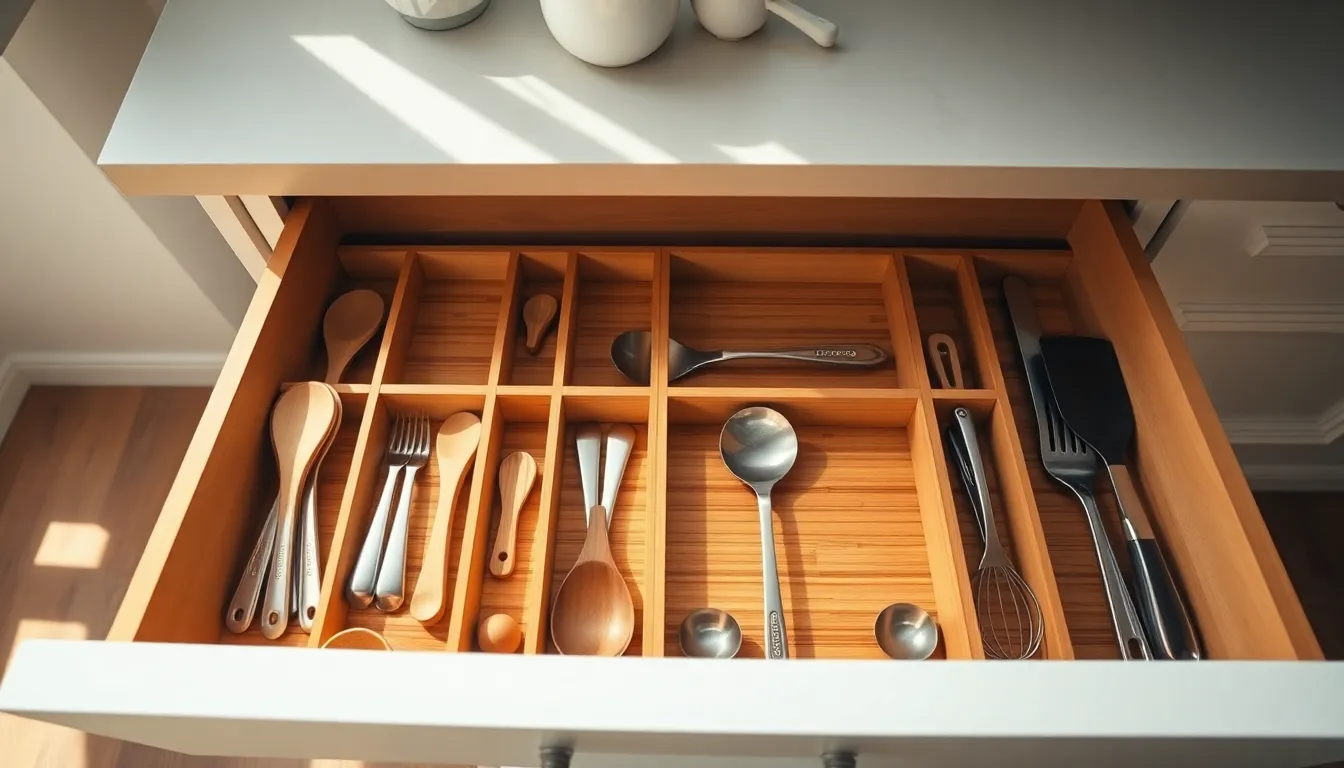
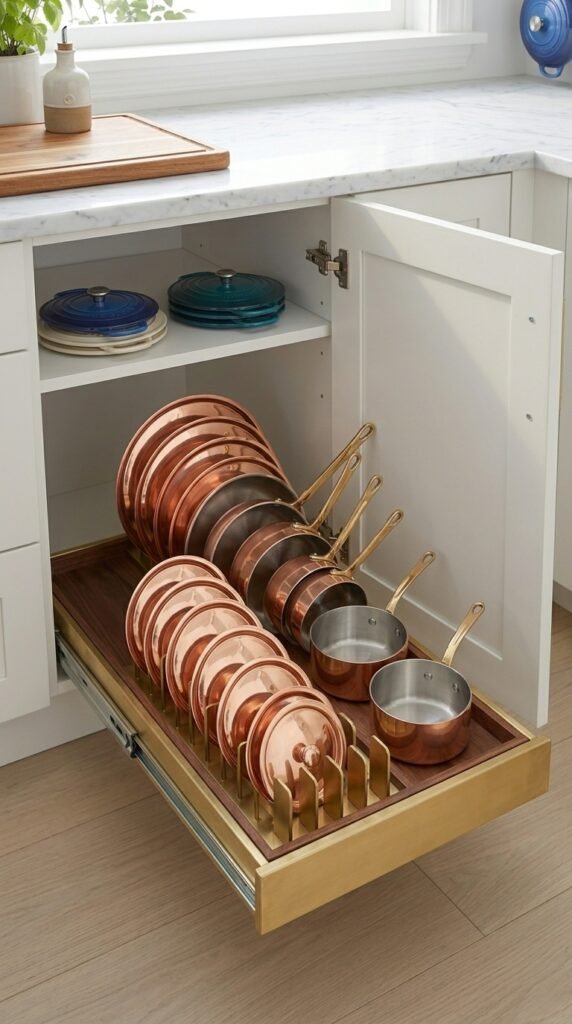
1. Deep Drawer with Dividers If you have a deep base drawer, this is arguably the most accessible option. Pans lie flat in a single layer, lids slot vertically between dividers, and you can see everything at a glance without lifting a single thing.
2. Pull-Out Cabinet Organizer A pull-out shelf or lazy Susan inside a lower cabinet is a game-changer for corner or deep cabinets. Everything rolls forward to meet you instead of hiding in the back.
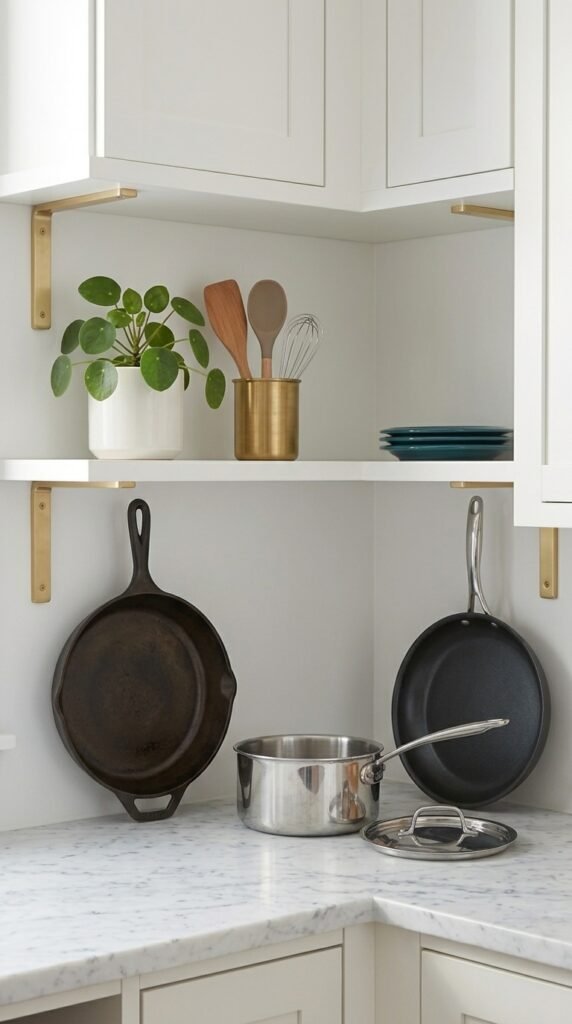
3. Wall-Mounted Pot Rack Hanging cookware keeps it off the counter and off cabinet shelves entirely. A ceiling or wall-mounted rack works especially well in smaller kitchens — it uses vertical space that’s otherwise wasted, and pans are always one quick grab away.
4. Cabinet with a Peg System Adjustable pegs inside a cabinet let you create custom dividers that perfectly fit your specific cookware. Move them around as your collection changes.
Store Lids Separately — Always
Lids are the real culprit behind cookware chaos. When lids and pots are stored together, everything becomes a puzzle. Try one of these dedicated lid solutions:
- A vertical lid organizer mounted inside a cabinet door
- A file organizer repurposed to hold lids upright on a shelf
- A pull-out lid rack installed inside a drawer or cabinet
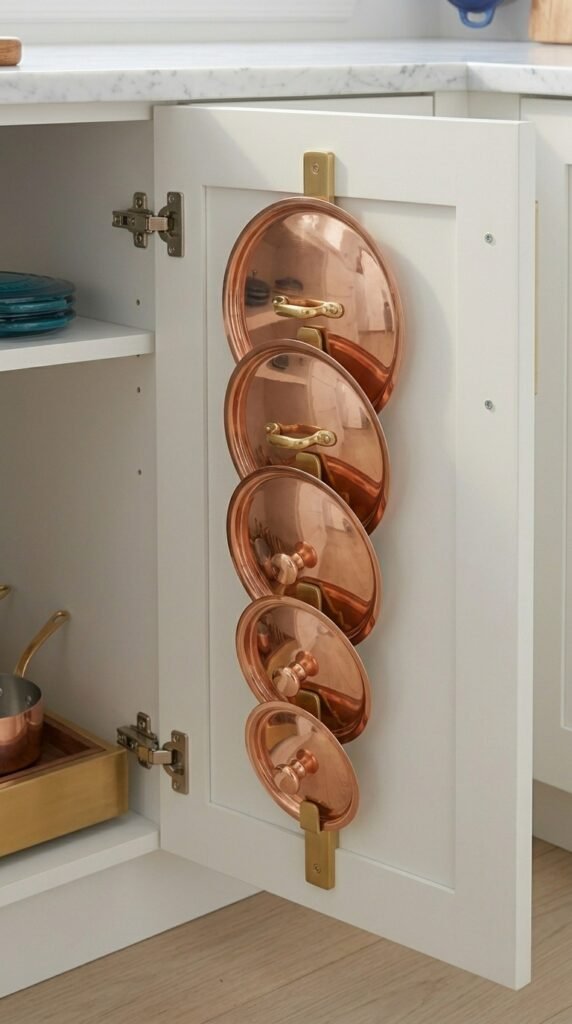
Keeping lids in their own designated spot means you’ll always know exactly where to find them — and you’ll stop treating the cabinet like a Tetris game every time you cook.
Use a Nesting Strategy for Smaller Pieces
For pots that genuinely must share a shelf, smart nesting keeps things tidy:
- Nest by size — largest on the bottom, smallest on top
- Place a folded dish towel or pan protector between each piece to prevent scratches
- Keep only two or three levels of nesting maximum; anything deeper becomes inaccessible
The goal is that removing any pan shouldn’t require unstacking the whole pile.
Position by Frequency of Use
This is the step most people skip — and it makes the biggest difference day to day. Think about which pans you reach for constantly (a 10-inch skillet, probably your go-to saucepan) versus which ones come out only occasionally (a large stockpot, a roasting pan).
- Daily-use pieces belong at eye level or in the most accessible drawer
- Occasional pieces can live in a harder-to-reach cabinet or on a higher shelf
- Rarely used items (think: turkey roaster, wok) can go in a pantry, utility shelf, or upper cabinet
A Few Finishing Touches
Once everything has a home, keep it that way with these small habits:
- Put things back in the same spot every time — the system only works if it’s consistent
- Do a 10-minute reset once a month to catch any drift before it becomes chaos again
- Label shelves or zones if you share the kitchen with others
Your Kitchen, Finally Working For You
Organized pots and pans aren’t just aesthetically satisfying — they genuinely save time, reduce frustration, and make cooking more enjoyable. When you can grab what you need without a second thought, you spend less energy on logistics and more energy on the actual meal.
Save this article for your next kitchen refresh — and start with just one change today. Even a single dedicated lid organizer can transform how your whole kitchen feels to cook in.