





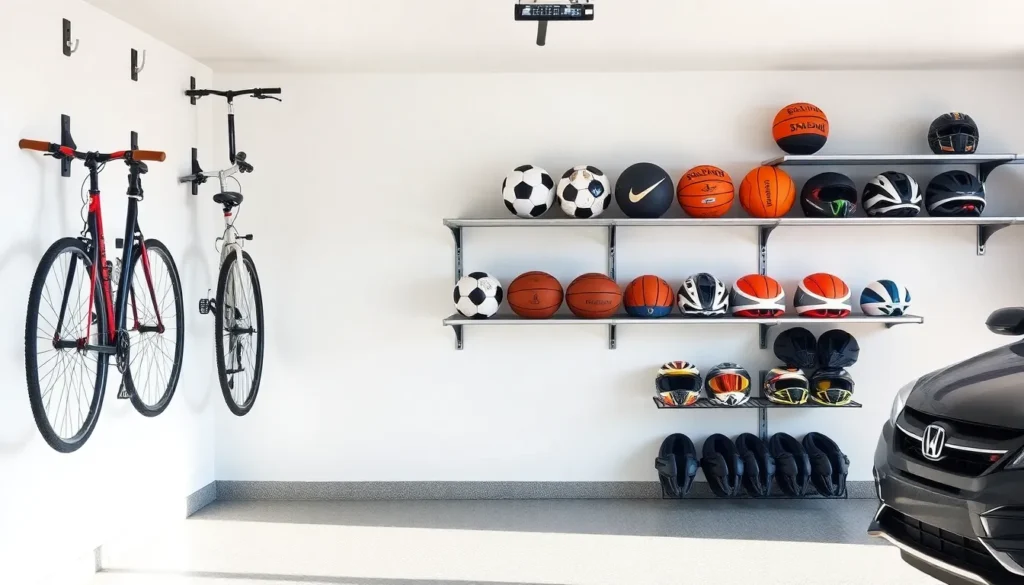
The garage is supposed to be where sports happen — not where injuries do. But somewhere between soccer season, ski trips, and last summer’s kayaking phase, it became an obstacle course. Bikes blocking the car, hockey sticks sliding off shelves, a rogue basketball waiting to roll under your foot at exactly the wrong moment. A disorganized garage doesn’t just look chaotic — it’s genuinely dangerous, especially with kids running in and out. The good news? You don’t need a renovation or a massive budget to fix it. A few smart systems and one productive Saturday is all it takes to turn your garage from hazard zone to a space that actually works.
Start With a Full Equipment Audit
Before a single hook goes into the wall, you need to know what you’re actually dealing with. Pull everything out of the garage — or at least everything sports-related — and sort it ruthlessly into four piles:
- Active gear: Used regularly this season or the next
- Seasonal gear: Used once or twice a year (ski equipment, camping gear, pool floats)
- Kids have outgrown it: Bikes two sizes too small, old shin guards, that tiny tennis racket
- Broken or missing pieces: One inline skate, a deflated ball with no valve, a helmet with a cracked shell
Donate or toss the last two piles immediately. Every item you remove is one fewer tripping hazard permanently. Be honest — if nobody has touched it in two years, it’s not coming back into rotation.
Think Vertical: The Wall Is Your Best Friend
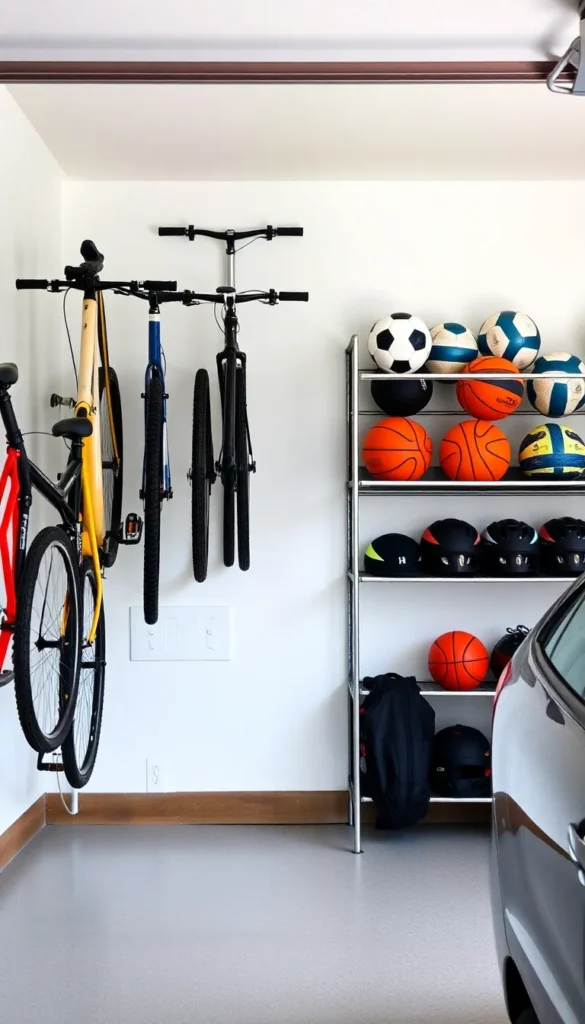
The floor is where tripping happens. The wall is where organization lives. Shifting as much equipment as possible off the floor and onto walls is the single most impactful change you can make for both safety and space.
Essential wall systems to consider:
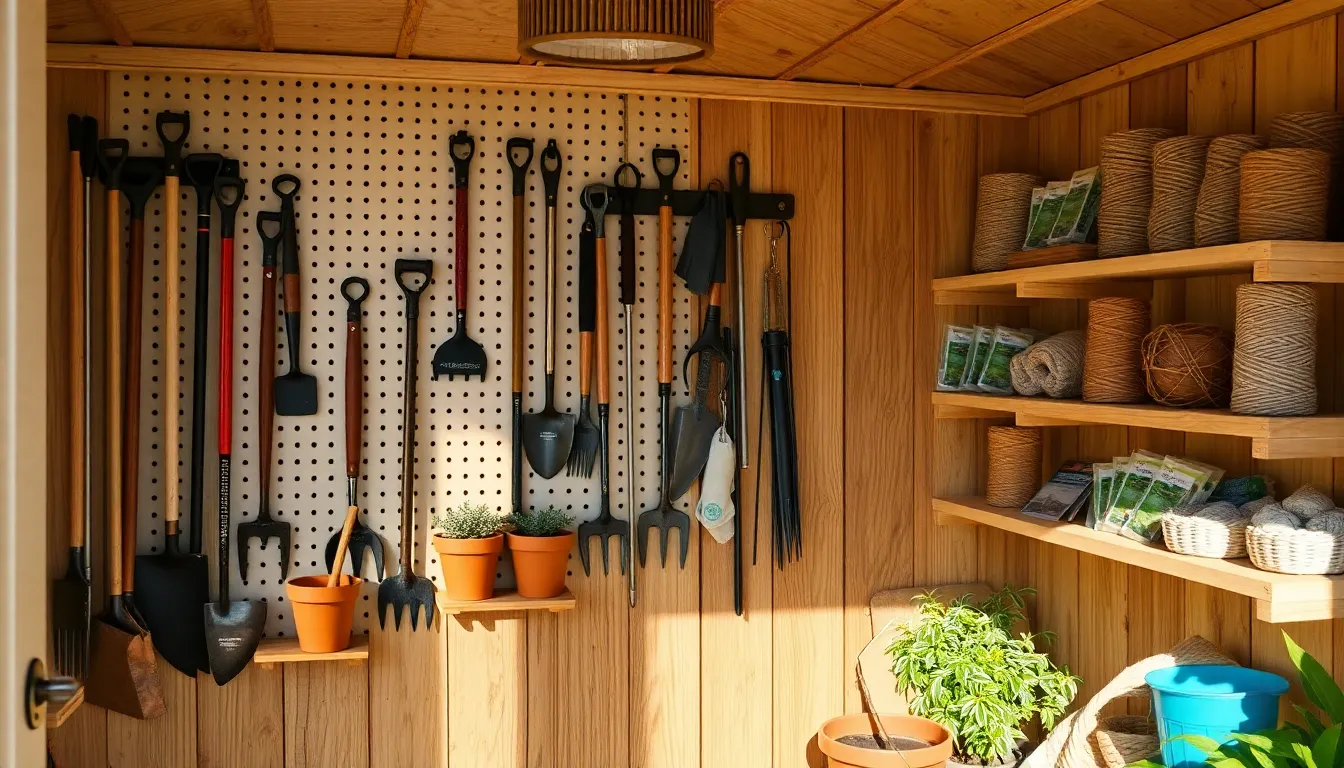
- Pegboard panels: Incredibly versatile — hooks, bins, and clips can hold everything from helmets to jump ropes, and the layout rearranges as your needs change
- Slatwall panels: Sturdier than pegboard, holds heavier gear like skis and snowboards, and looks very clean on a garage wall
- Individual heavy-duty hooks: Perfect for bikes, ladders, and oversized items — no panel needed
- Wall-mounted ball racks: Bungee-cord style or metal cage racks keep balls contained vertically instead of rolling across the floor
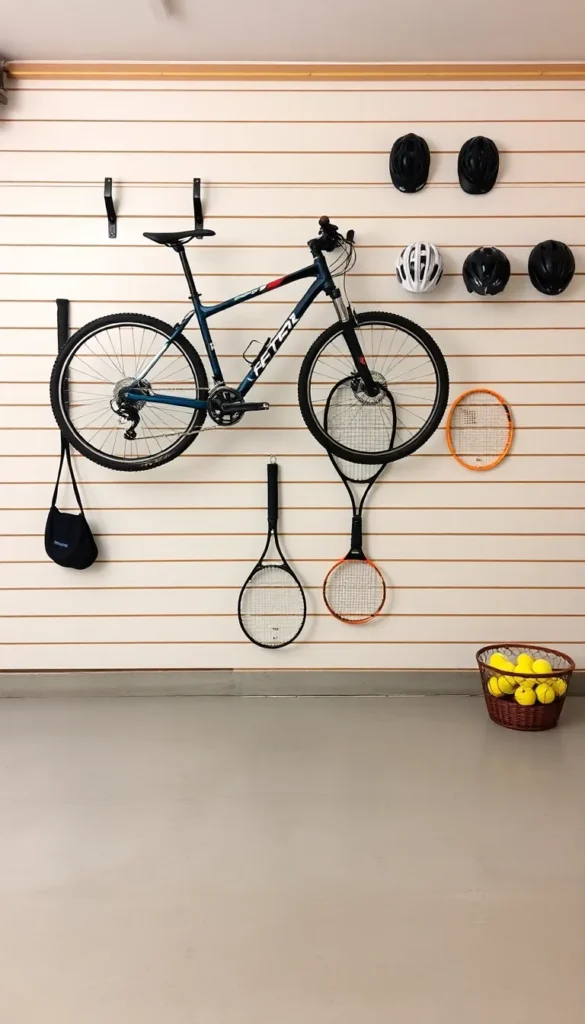
Aim to keep everything below eye level for kids so they can grab and return gear independently — which means it actually gets put back.
Solve the Ball Problem Once and For All
Loose balls are arguably the number one garage tripping hazard. They roll, they hide, and they have an uncanny ability to appear directly under your foot in the dark.
The best solutions:
- A vertical bungee ball rack: Mounts to the wall, holds up to 9 balls of various sizes, keeps them completely off the floor
- A large mesh laundry bag: Hung from a hook, it holds a dozen balls and costs almost nothing
- A tall wire bin or milk crate on a shelf: For households with fewer balls — simple and effective
- Separate bins by sport: One container for outdoor balls, one for indoor, one for inflatables — makes grab-and-go much faster
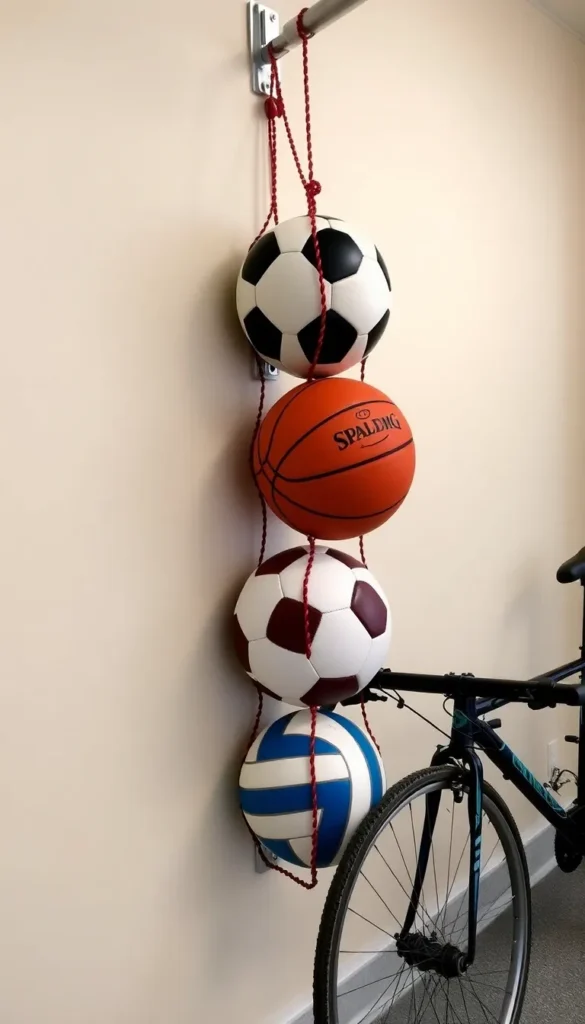
Whatever system you choose, the rule is simple: if it’s round and bouncy, it lives off the floor.
Create Zones by Sport or Season
The secret to a garage that stays organized is zones — dedicated areas where each type of gear always lives. When everything has a home, it takes five seconds to put things back instead of fifteen minutes to sort through a pile.
A simple zoning framework:
- Daily-use zone (near the garage door): Bikes, scooters, helmets, anything grabbed on the way out
- Team sports zone: Soccer, baseball, basketball gear in clearly labeled bins or cubbies
- Seasonal zone (higher shelves or back wall): Ski gear, sleds, pool equipment stored off-season
- Backyard/casual zone: Frisbees, badminton sets, lawn games in a large bin or crate
Label every zone clearly — even simple masking tape labels work. When a ten-year-old knows exactly where the lacrosse sticks go, they’re far more likely to actually put them there.
Keep the Floor Clear With These Ground Rules
Even with great wall systems in place, floors creep back into chaos without a few firm ground rules — especially in households with kids.
Non-negotiables for a safe garage floor:
- No equipment on the floor overnight — everything goes back to its wall or shelf home after each use
- A designated “needs attention” bin for gear that’s broken, needs air, or needs to go back to school — one spot, not scattered everywhere
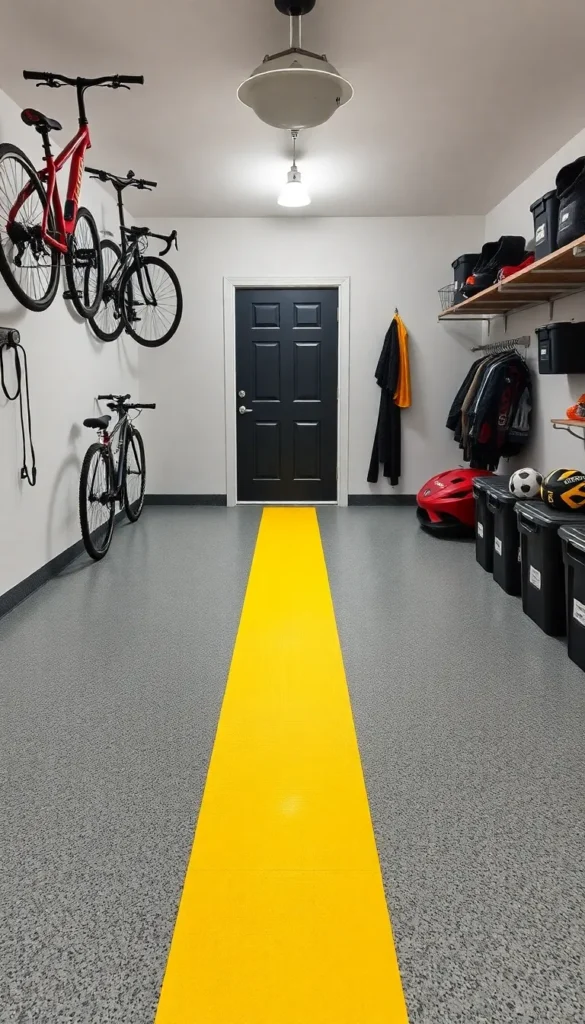
- Clear pathways marked out — if needed, use floor tape to mark a walking path to the car and the door; visual cues help kids respect the space
- A weekly 5-minute reset — Sunday evening, every family member spends five minutes returning anything that drifted during the week
A Safe Garage Is a Garage Everyone Actually Uses
Here’s the thing about a well-organized sports garage: it doesn’t just prevent injuries — it makes everyone more likely to actually go outside and play. When gear is easy to find, easy to grab, and easy to return, spontaneous bike rides and pickup games happen more often. The friction disappears.
One afternoon of setup pays off every single day your family uses that space.
Save this article to your garage organization board and share it with any sports family that deserves a space they can actually move through safely! 🏅