




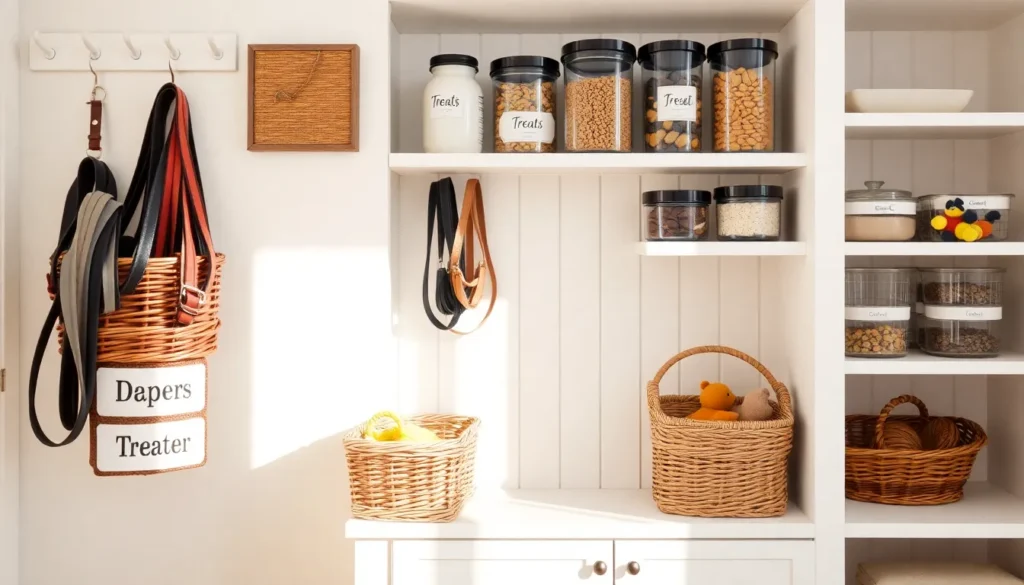
Pet ownership brings so much joy — and also, somehow, an absolutely staggering amount of stuff. Leashes draped over doorknobs, food bags slumped against the wall, toys scattered across three rooms, and medications you’re pretty sure are somewhere in the kitchen cabinet but cannot locate right now. Sound familiar? Whether you have a dog, cat, rabbit, bird, or the full menagerie, getting your pet supplies organized means less daily scrambling and more quality time with the animals you love. Here’s how to build a system that actually holds up.
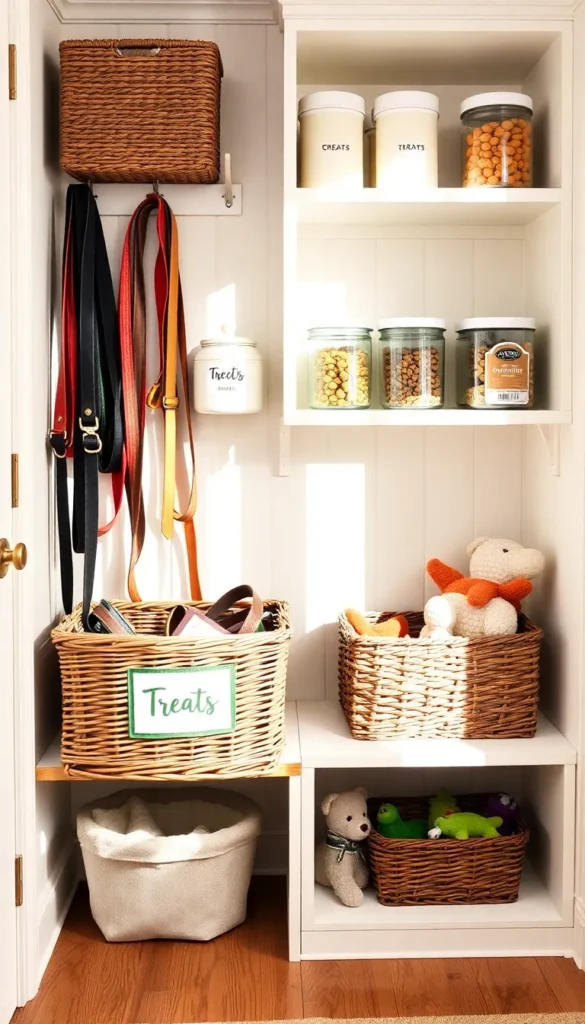
Step 1: Do a Full Pet Supply Inventory
Before organizing a single item, gather every pet-related product in your home into one place. Check every room, every cabinet, every bag. You’ll almost certainly be surprised by what you find — and how much of it has been forgotten.
As you sort through everything, evaluate honestly:
- Expired products — medications, treats, flea treatments, and food all have expiration dates; check every single one
- Items your pet has outgrown — puppy collars, kitten-size carriers, starter products from when your pet was young
- Duplicates — three half-open bags of the same treat, four spare leashes you never use
- Toys that are damaged or destroyed beyond play — a completely gutted toy with exposed stuffing is a choking hazard, not a keepsake
- Products you tried and your pet rejected — the special shampoo they hated, the food topper they refused, the bed they never once used
Be honest in this step. Everything that stays should be something your pet uses or that you genuinely need. The rest can be donated to a local shelter, which will put it to excellent use.
Step 2: Group Everything by Category and Pet
Once you’ve edited down to what’s genuinely useful, sort it into clear categories. If you have multiple pets, create a section per animal within each category, or give each pet their own dedicated zone entirely.
Core categories for most pet households:
- Food and feeding — dry food, wet food, supplements, feeding bowls
- Treats and rewards — training treats, dental chews, special snacks
- Health and grooming — medications, flea and tick prevention, shampoos, brushes, nail clippers
- Walking and outdoor gear — leashes, harnesses, collars, poop bags, reflective gear
- Toys and enrichment — active toys, comfort toys, puzzle feeders
- Bedding and comfort — spare blankets, pet bed covers, comfort items
- Travel and vet essentials — carrier, vaccination records, emergency contact info, travel bowls
Having categories defined before you choose storage means you’re buying solutions for real problems — not just cute bins that don’t quite fit your actual needs.
Step 3: Create a Dedicated Pet Supply Station
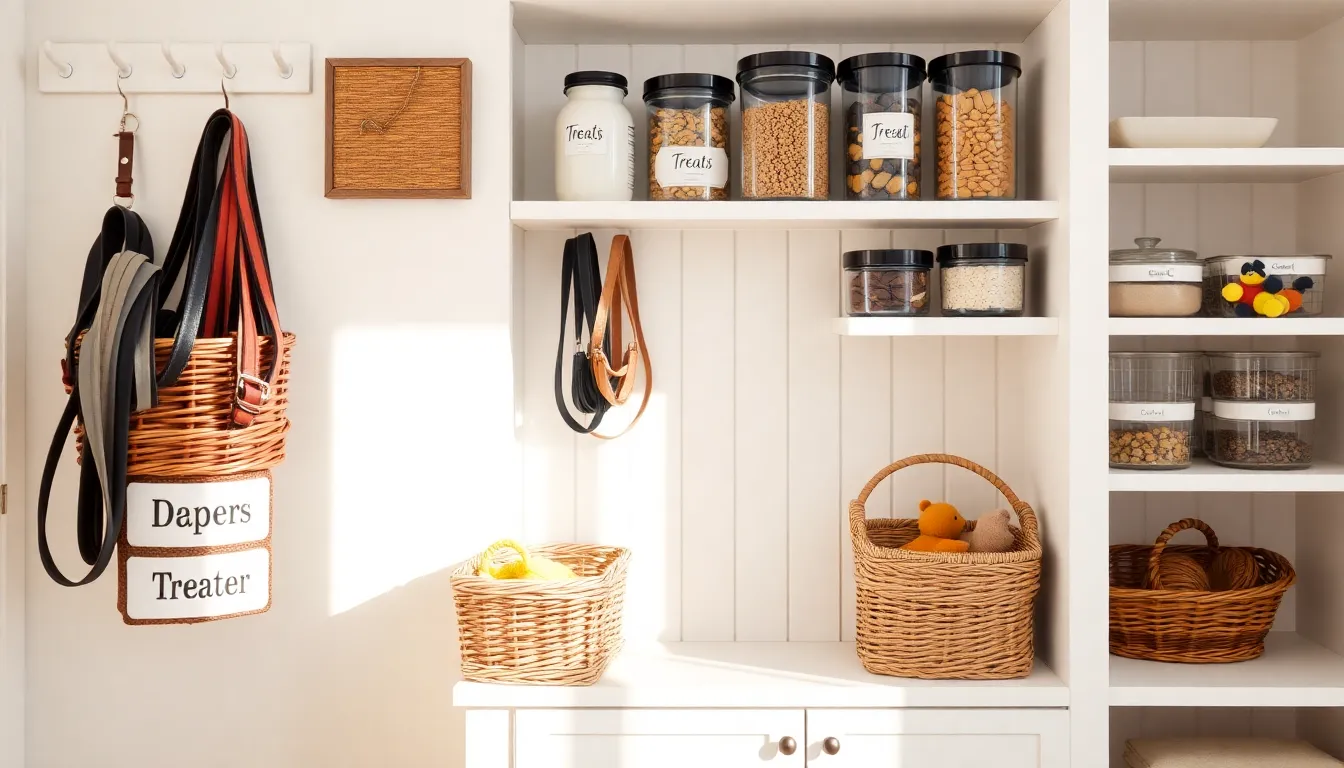
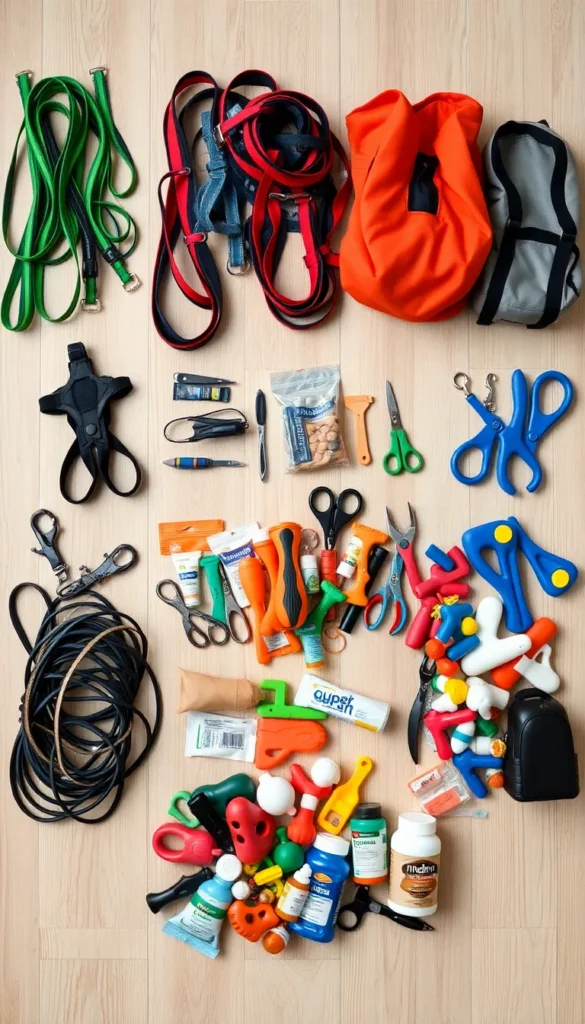
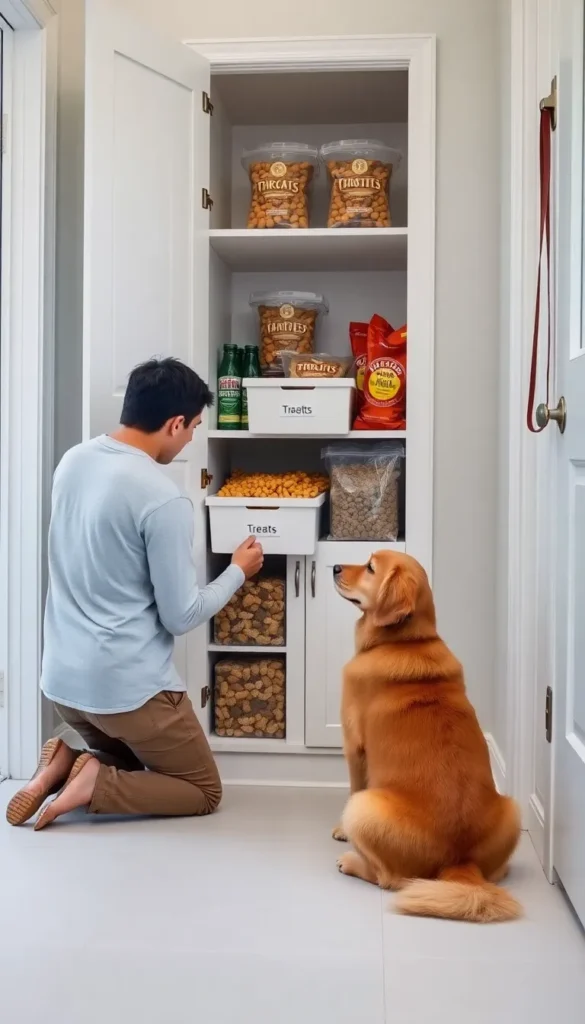
The single biggest upgrade you can make to pet supply organization is giving everything one consistent home — a pet station that functions as the central hub for your animal’s daily needs.
This could live in a:
- Mudroom or entryway — ideal for dogs; walking gear is right where you need it
- Kitchen corner or pantry section — convenient for feeding supplies and daily routines
- Laundry room or utility area — great for grooming supplies and cleaning products
- Dedicated cabinet — works beautifully for cats or smaller pets whose supplies are more compact
What makes a great pet station:
- A large canister or airtight container for dry food — keeps it fresh and eliminates bulky bags
- A labeled basket or bin for leashes, harnesses, and collars
- A small ceramic jar or tin for everyday treats on the counter
- A drawer or bin for health and grooming supplies
- A hook or rack near the door specifically for the leash you use every single day
Everything your pet needs on a daily basis should be reachable in under ten seconds.
Step 4: Store Food Properly to Keep It Fresh
Food storage deserves its own focus because doing it wrong affects your pet’s health — not just your home’s tidiness.
Best practices for pet food storage:
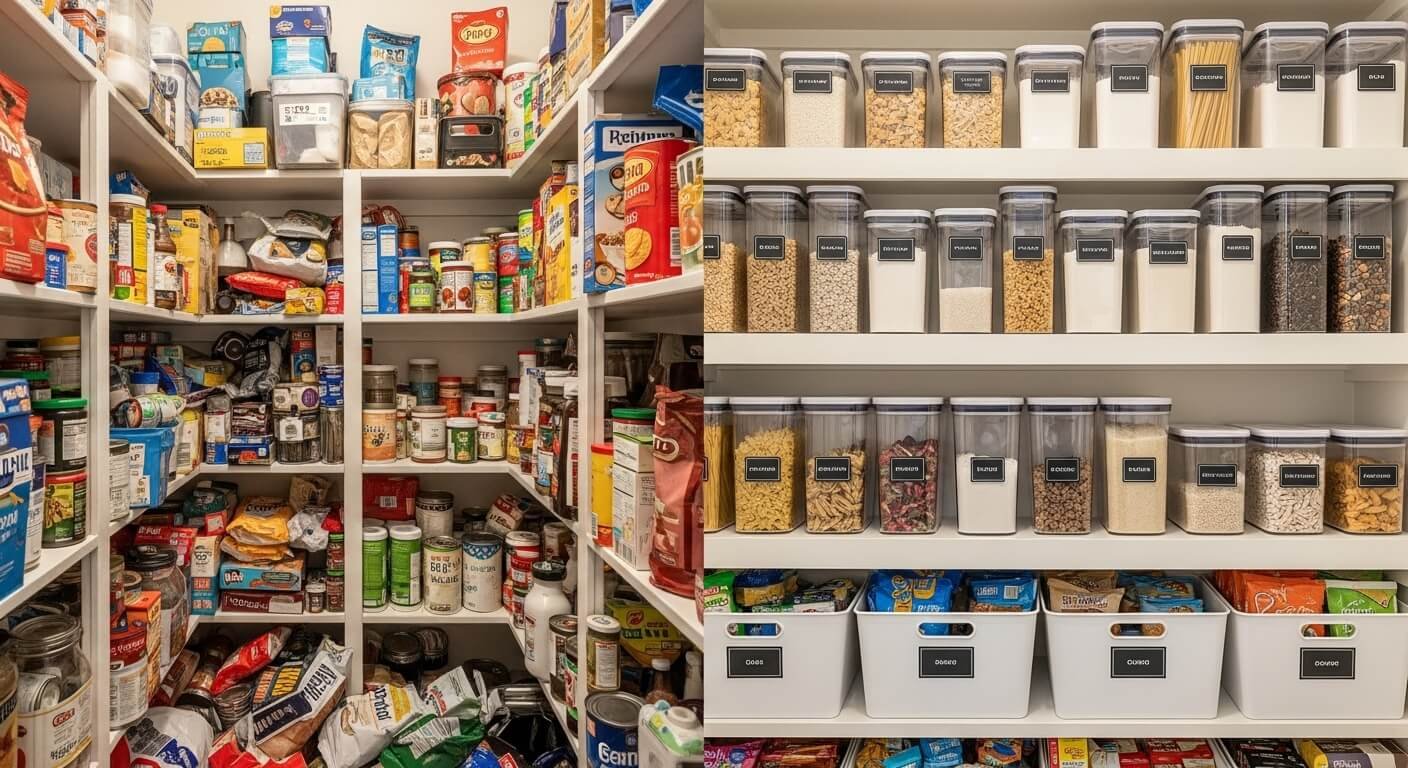
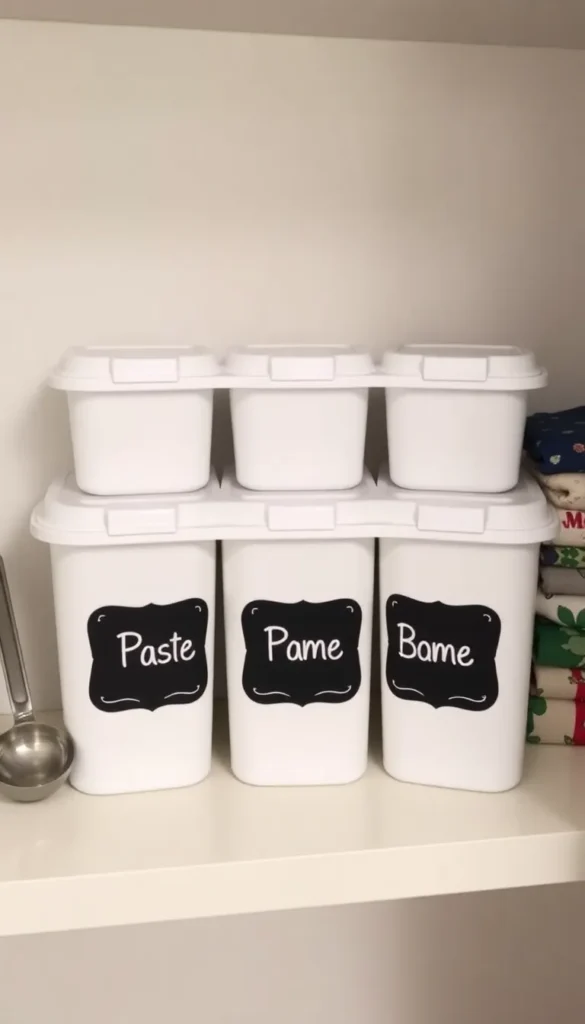
- Transfer dry kibble into an airtight pet food container with a sealed lid — exposure to air causes fat oxidation and flavor loss
- Keep the original bag inside the container if possible — the bag has the batch number and expiration date you may need for a recall
- Store wet food cans in a cool, dry place; once opened, cover and refrigerate and use within 48 hours
- Keep food away from direct sunlight and heat sources — a pantry or cabinet is ideal
- Write the purchase date on containers so you always know how long it’s been open
For homes with multiple pets on different foods, label each container clearly with the pet’s name and feeding instructions. This is especially helpful when a pet sitter or family member is covering feeding duties.
Step 5: Build a Pet Health and Emergency Kit
This is the category most pet owners handle reactively — meaning they hunt for medications in a panic when they’re actually needed. A dedicated health kit changes that entirely.
What to include in your pet health kit:
- Current medications with clear dosage instructions
- Flea, tick, and parasite prevention products
- Pet-safe wound spray or antiseptic
- Bandages and gauze designed for animals
- Digital thermometer (pet-specific)
- Your vet’s phone number and after-hours emergency clinic contact
- A copy of vaccination records
- Any allergy information or medical history notes
Store the entire kit in a labeled, lidded bin — somewhere consistent and accessible to every adult in the household. A high shelf in a bathroom cabinet or a dedicated section of your pet station both work well.
Step 6: Keep the System Running With Simple Maintenance Habits
Even a beautifully organized pet station needs a little upkeep to stay functional. The good news is that a few small habits are all it takes.
- Restock immediately when you open the last of anything — add it to your shopping list the same day
- Check medications monthly for expiration dates — set a phone reminder if needed
- Rotate toys every few weeks — put some in storage and swap them back in to keep enrichment feeling fresh for your pet
- Do a quick bin reset weekly — it takes under five minutes and prevents the gradual drift back into chaos
A Happy Pet Starts With a Ready Home
Your pet depends on you for everything — and having their supplies organized means you’re always prepared, whether it’s the daily walk, an unexpected health concern, or a last-minute trip to the vet. Organization here isn’t just about aesthetics. It’s about being the best pet parent you can be.
Save this guide and set aside an afternoon to build your pet supply station. You and your furry family member will feel the difference every single day.