
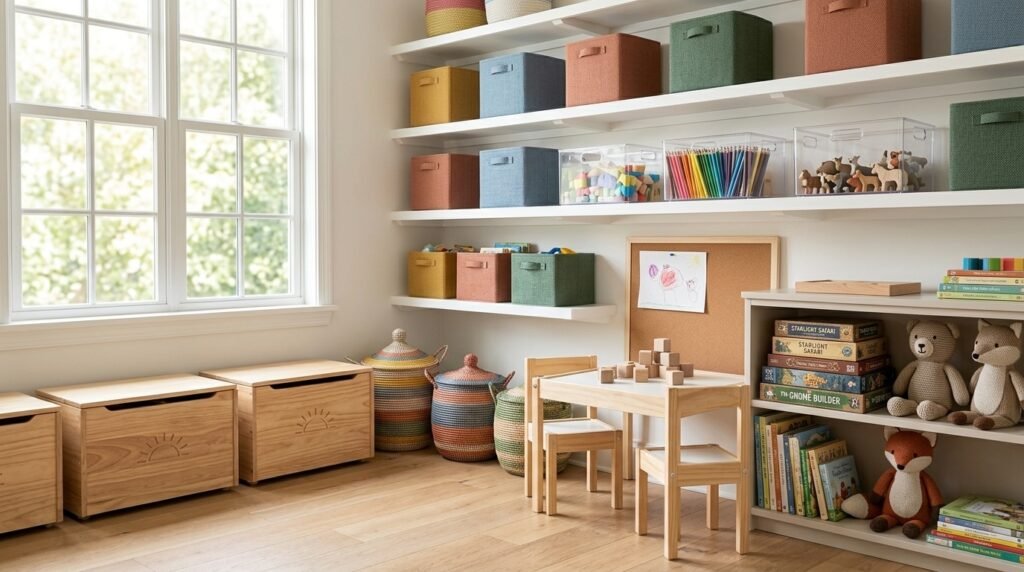
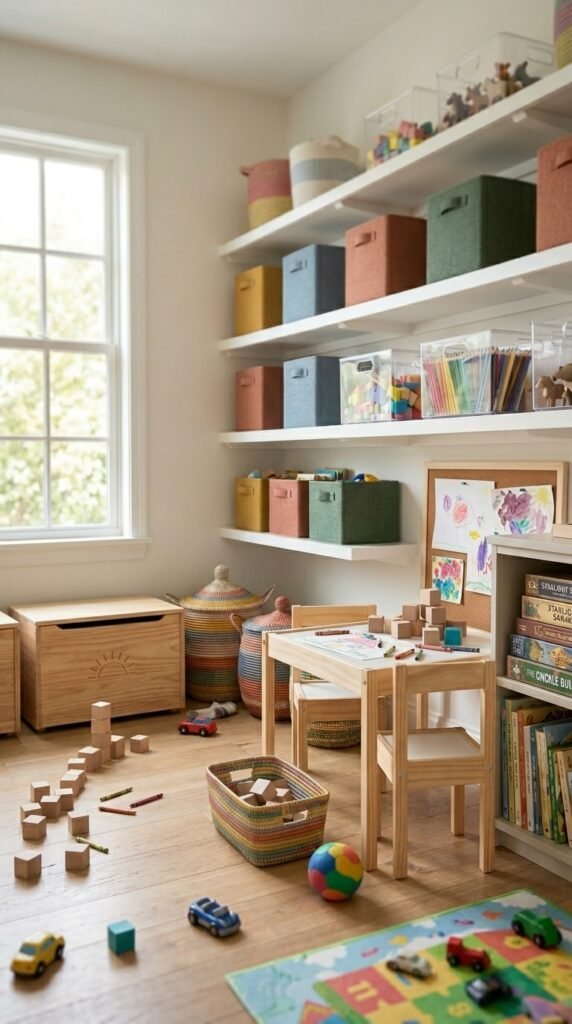
Toys are wonderful — until they take over your entire home. If you’ve ever stepped on a LEGO brick at midnight or lost a TV remote under a pile of stuffed animals, you already know the pain. The good news? You don’t need a massive budget or a total home makeover to get things under control. With the right storage systems in the right spots, you can actually keep the chaos at bay. These 28 ideas are practical, affordable, and real — the kind of solutions that work in actual homes with actual kids.
1. Use a Pegboard Wall for Art Supplies
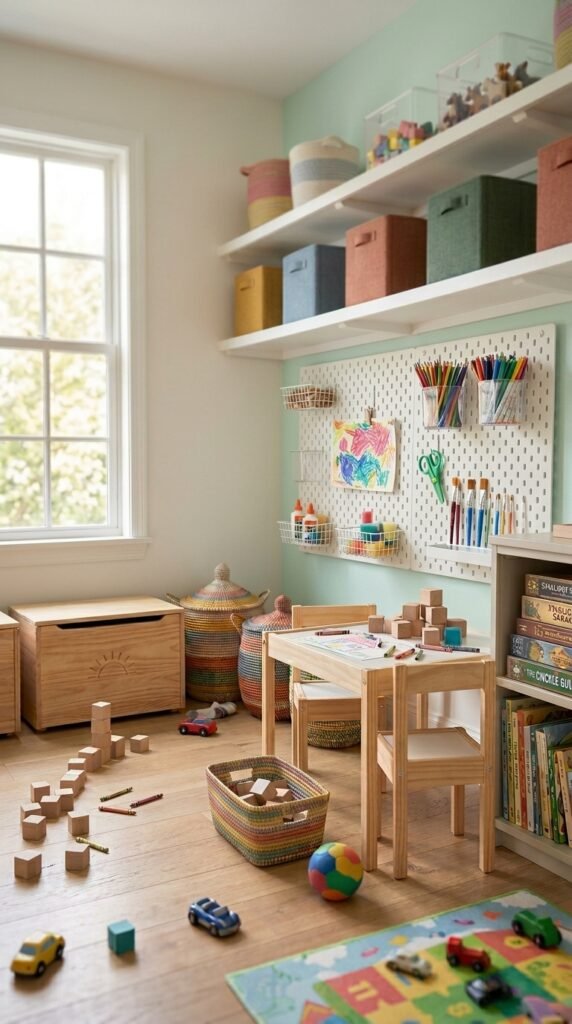
Art supplies multiply overnight. A pegboard wall gives every marker and brush its own home. Mount one above a desk or crafting area. Add small metal cups, hooks, and baskets for under $30 total. You can rearrange the layout anytime — no tools needed. Paint the board a fun color to match the room. Kids can actually see what they have, so they’re more likely to put things back. This beats digging through a chaotic junk drawer every single time.
2. Hang a Fabric Shoe Organizer on the Back of a Door
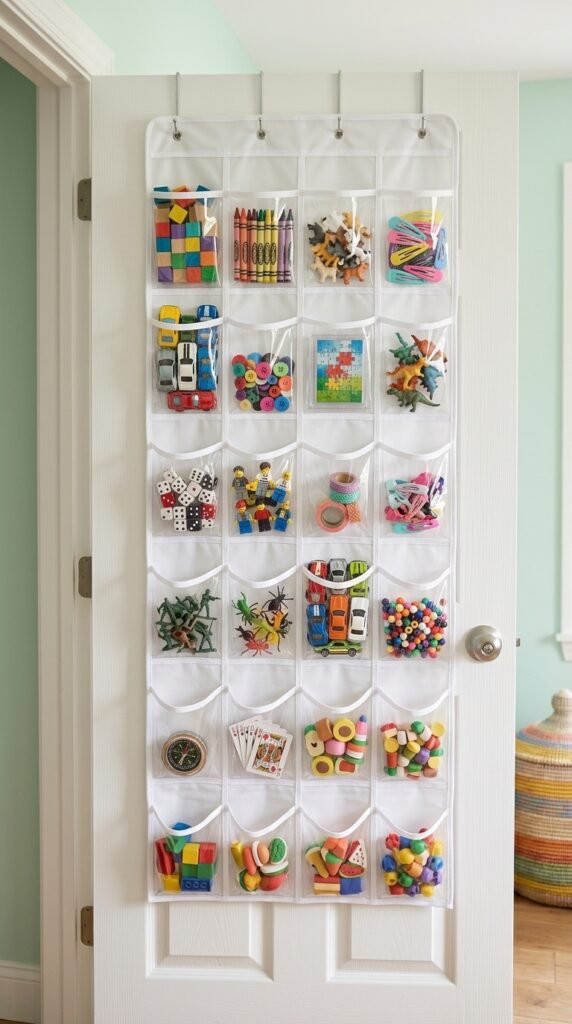
This is one of the cheapest hacks out there. A fabric over-the-door shoe organizer (under $15) holds dozens of small toys in individual pockets. Use it for action figures, art supplies, doll accessories, or small puzzles. Kids can see everything at a glance — no dumping required. Hang it on the back of a bedroom or closet door so it stays out of sight. It’s especially great for tiny pieces that always go missing. Grab one at any dollar or discount store.
3. Roll-Out Bins Under the Bed
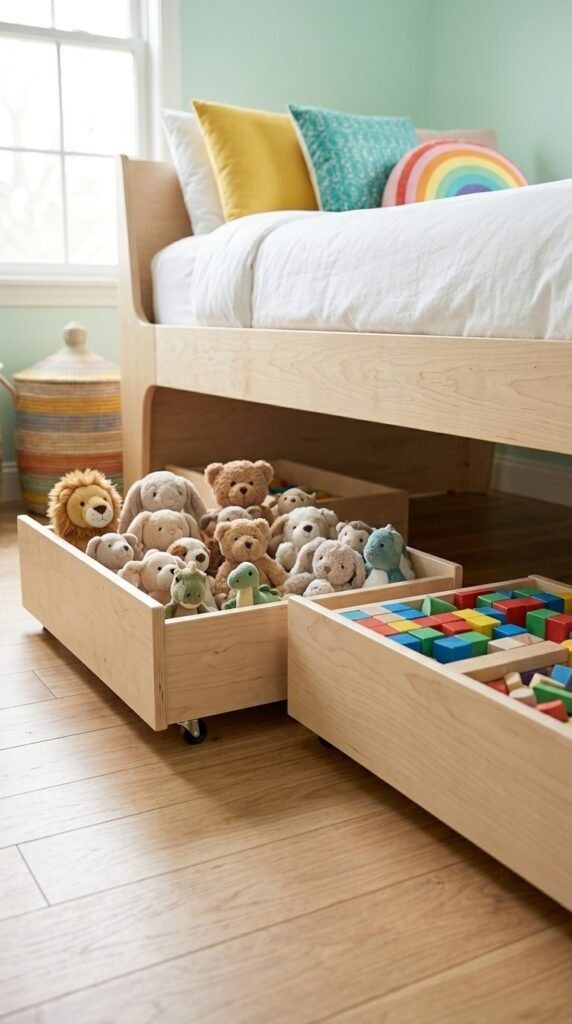
The space under a bed is prime storage real estate. Low-profile rolling bins slide in and out easily — even kids can manage them. Use separate bins for different toy categories: one for stuffed animals, one for building sets, one for dress-up accessories. You can find rolling drawers at IKEA or Target for under $20. Label them with pictures for younger kids. This keeps the bedroom floor clear and teaches kids to put things away independently. It’s a win every single night.
4. A Tension Rod Spray Bottle Holder (for Play Kitchen Sets)
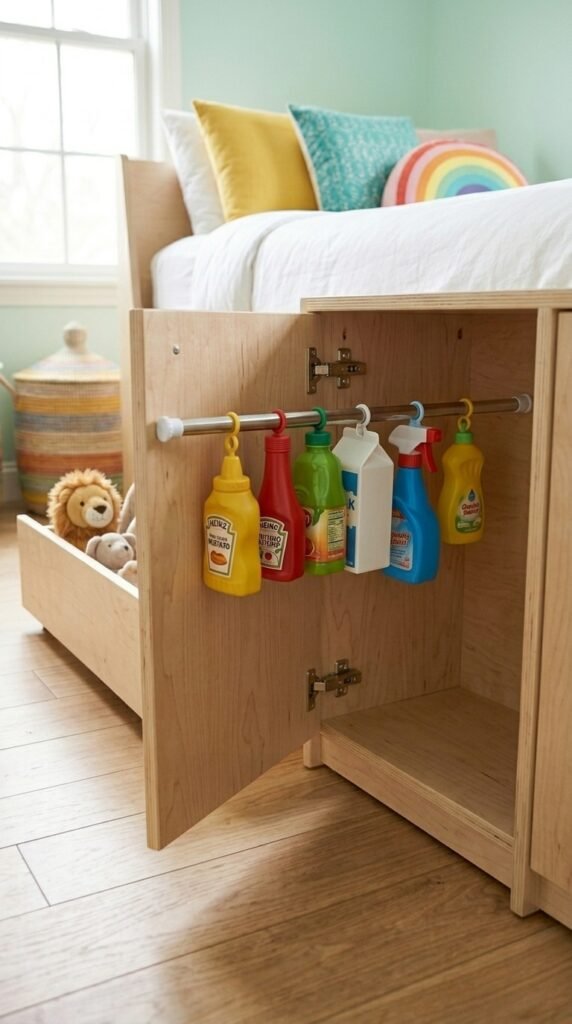
Got a play kitchen? Small bottles and spray toys always fall over and clutter shelves. Install a tension rod inside a low cabinet at bottle-neck height. Hang bottles upside down from the rod — they stay upright and take up half the space. This trick costs about $5 and takes two minutes to set up. No drilling required. It works just as well in a real kitchen cabinet for organizing cleaning bottles while keeping them out of kids’ reach. Simple and surprisingly satisfying.
5. Label Everything with Picture Labels
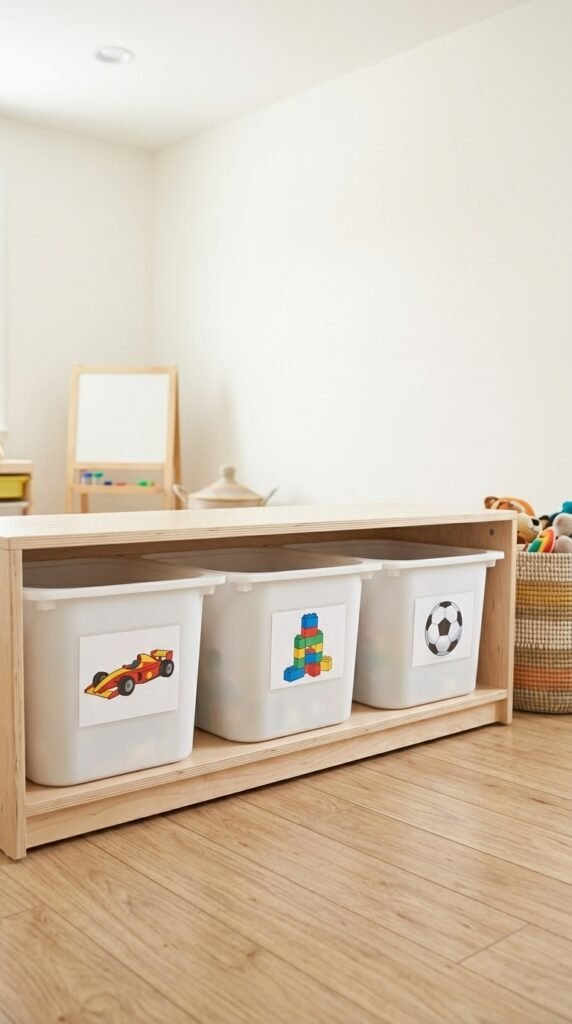
Labels do more than organize — they teach. When you add picture labels to bins and baskets, even toddlers know where things belong. Use a label maker, printable templates, or hand-drawn pictures laminated with tape. Stick them on the front of each bin at eye level. Categories like “cars,” “blocks,” “dolls,” and “puzzles” work great. Kids clean up faster when they don’t have to guess where things go. You’ll spend less time re-sorting after playtime. Totally free if you print at home.
6. A Toy Hammock in the Corner for Stuffed Animals
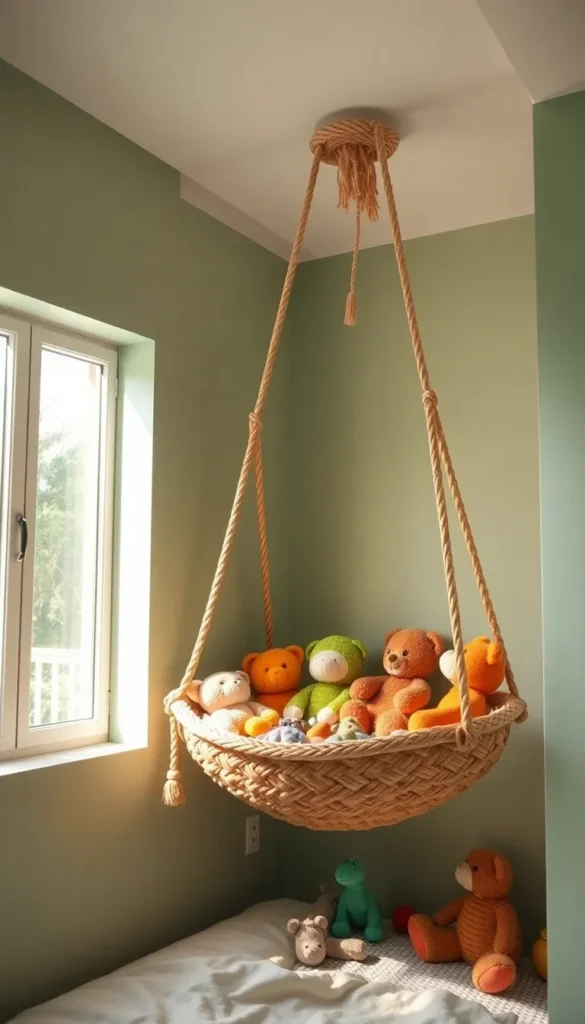
Stuffed animals are soft and lovable — and completely impossible to store without a plan. A corner toy hammock keeps them off the bed and floor while turning them into room decor. Install one high in a corner with two hooks. The hammock holds 20+ animals easily. You can find them online for $10–$20, or make one from a square of mesh fabric and four corner grommets. Kids love seeing their stuffed friends on display. It clears the bed and makes the room look put-together.
7. Stack Crates as Open Cube Storage
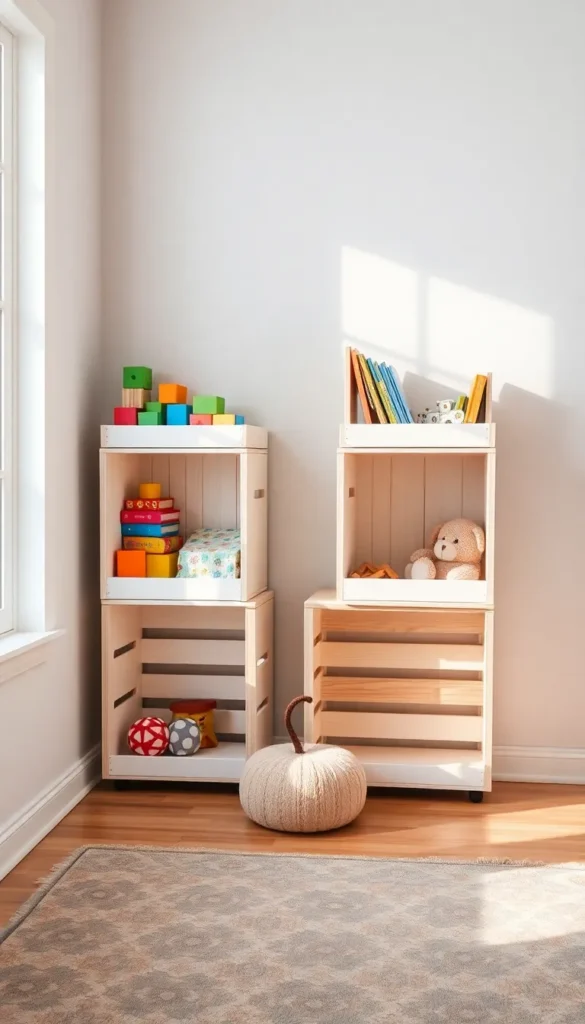
Wooden or plastic crates stacked in a grid make one of the easiest DIY storage units around. Stack them 2×2 or 2×3 depending on your wall space. Anchor them to the wall for safety. Spray paint them all the same color for a polished look. Each cube holds one category of toys — books, balls, blocks, cars. The open front makes it easy for kids to grab and return things without help. Total cost can be as low as $20 if you source them from thrift stores or hardware stores.
8. A Low Bookshelf Doubles as Toy Display
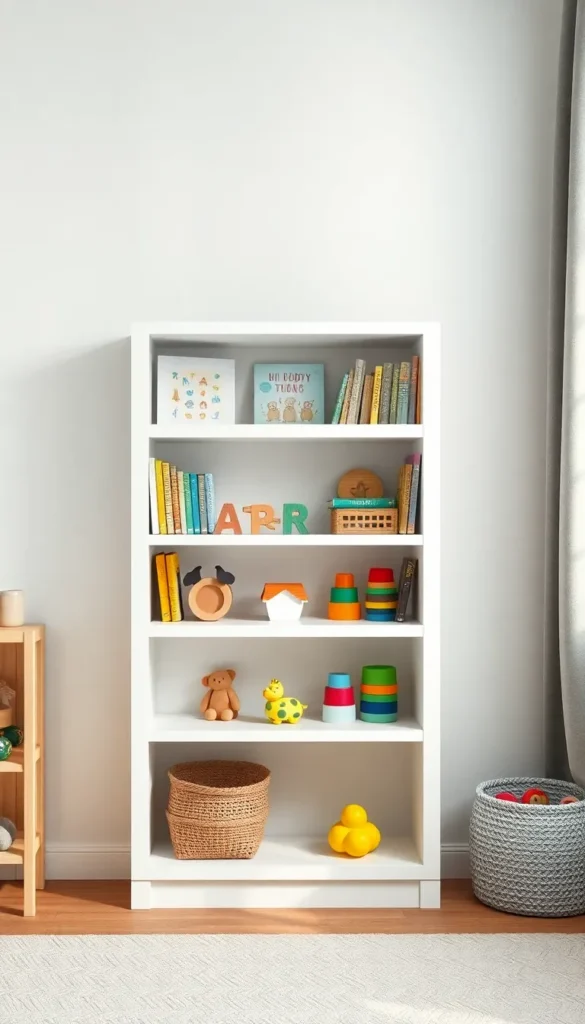
A low bookshelf at kid height is a storage essential. Use it for books on one shelf, baskets of toys on another, and a few display items on top. Keep it accessible — shelves above a child’s eye line become dead space. IKEA’s KALLAX or BILLY range works perfectly and stays affordable. Add baskets or bins in each opening for hidden storage. This type of setup is easy to reorganize as your child grows. A $30 bookshelf can serve you from toddler years all the way into elementary school.
9. A Wooden Toy Box with a Lid That Stays Open
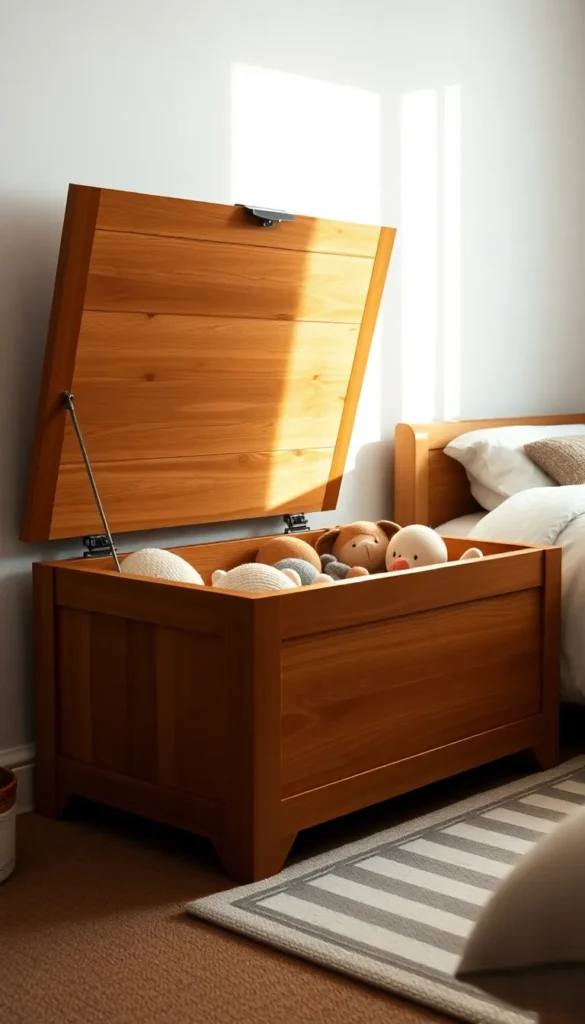
A toy chest is a classic for good reason — it holds a huge amount in a small footprint. Look for one with a safety hinge that holds the lid open (critical for little fingers). Wooden chests double as a bench or step stool. Keep it at the foot of the bed or in a corner. Use it for bulky items like dress-up clothes, sports gear, or large stuffed animals. Line the inside with a washable fabric bin for easy cleaning. Thrift stores often have solid wood chests for under $30.
10. Mounted Bookshelves at Child Height for Easy Access
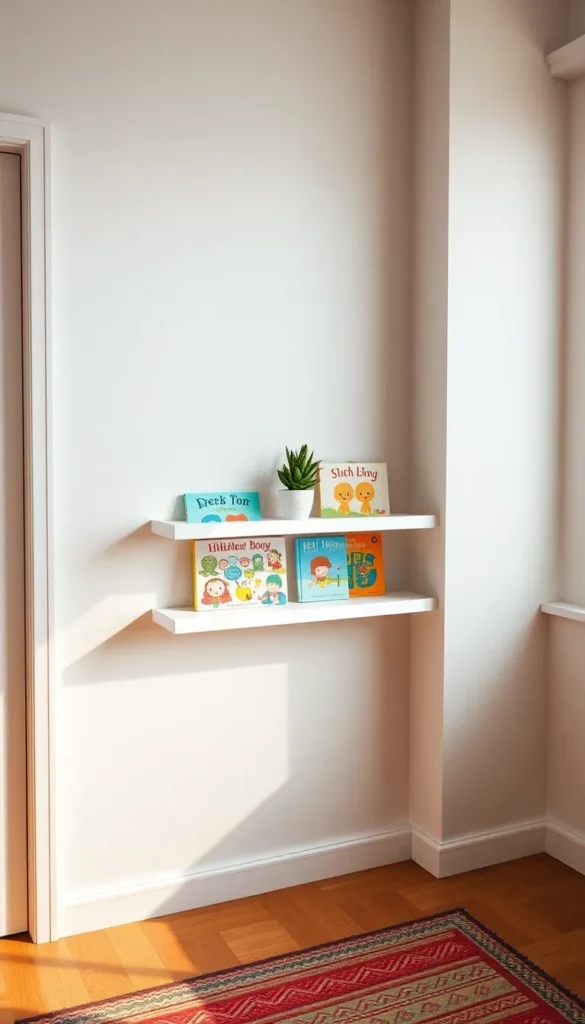
Forward-facing bookshelves mounted low on the wall make books irresistible to kids. When they can see the covers, they actually want to read them. Install two or three narrow shelves at child height — around 18–24 inches from the floor. IKEA picture ledges cost under $15 each and work perfectly. Books stay organized and accessible without a full bookcase. This keeps the floor clear and gives the wall a clean, gallery-like look. It’s one of the simplest upgrades that makes a big daily difference.
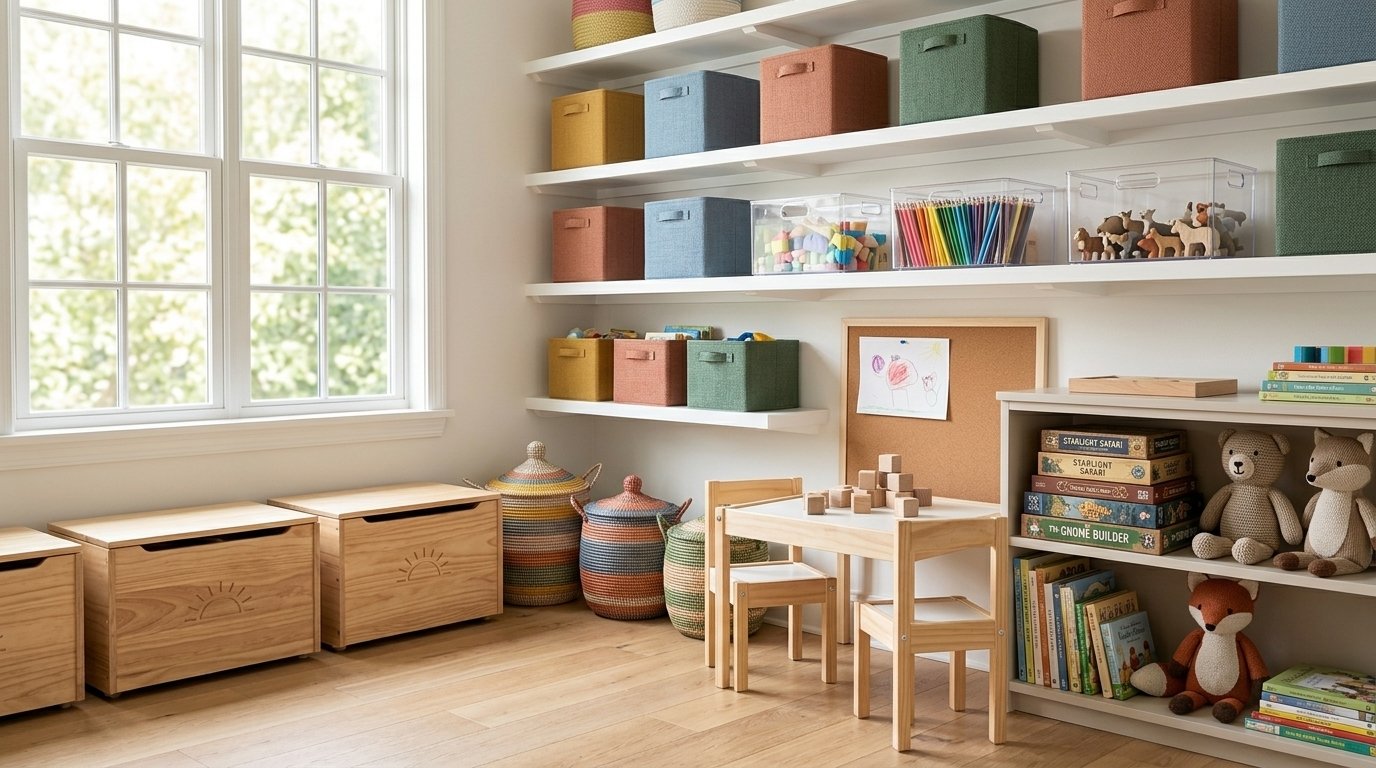
11. A Rolling Cart for Art and Craft Supplies
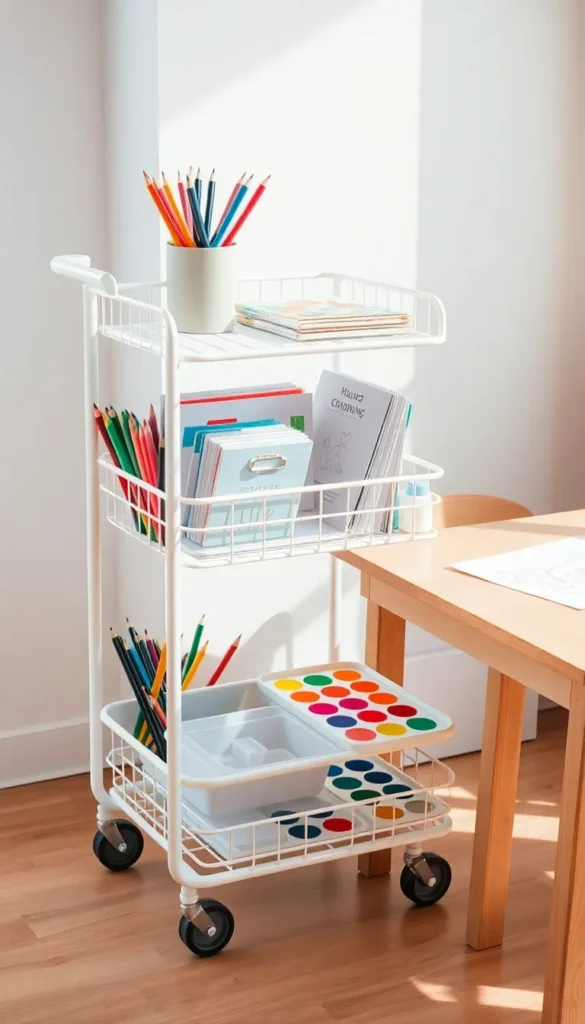
A rolling cart lets art supplies travel where kids are — no more “setting up” before every project. A three-tier metal cart holds everything: paper, markers, paints, glue, scissors. When playtime ends, roll it into a closet or corner. You’ll find them at Target or IKEA for $25–$40. Add a small cup on top for brushes and pencils. The open shelves keep everything visible and easy to grab. This is one of the most-used storage solutions for families who love creative play at home.
12. Clear Stackable Bins with Lids for LEGO Storage
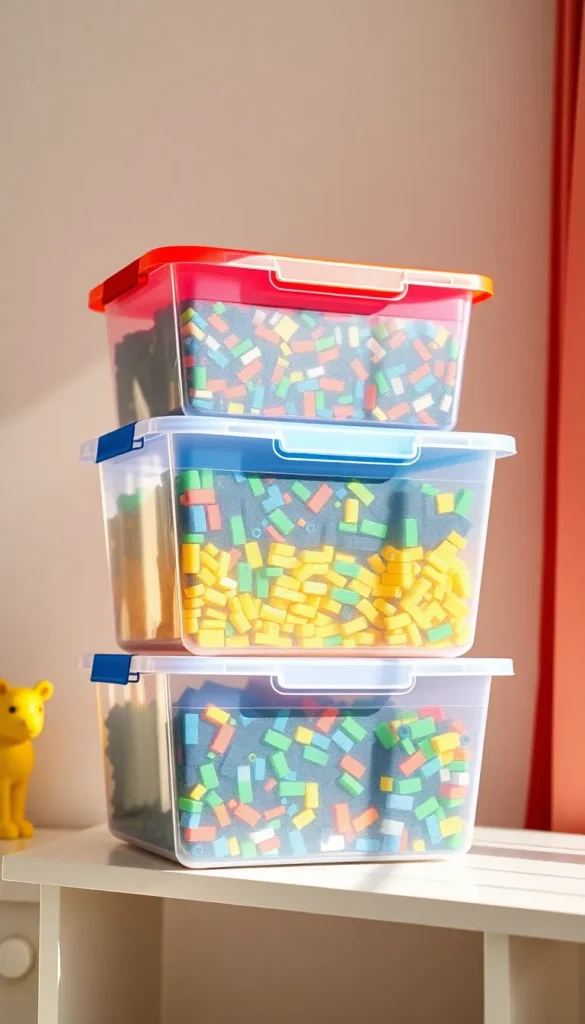
LEGOs are the arch-nemesis of bare feet everywhere. Clear stackable bins with snap lids let kids sort bricks by color or type — and actually find what they need. Label the lids. Stack them on a low shelf or inside a closet. Clear plastic means no guessing what’s inside. You can find sets of six bins for under $20 at most home goods stores. Sorting LEGOs takes about 20 minutes once — and saves hours of hunting later. Kids 5 and up can maintain the system themselves with a little encouragement.
13. Repurpose an Old Dresser as a Toy Organizer
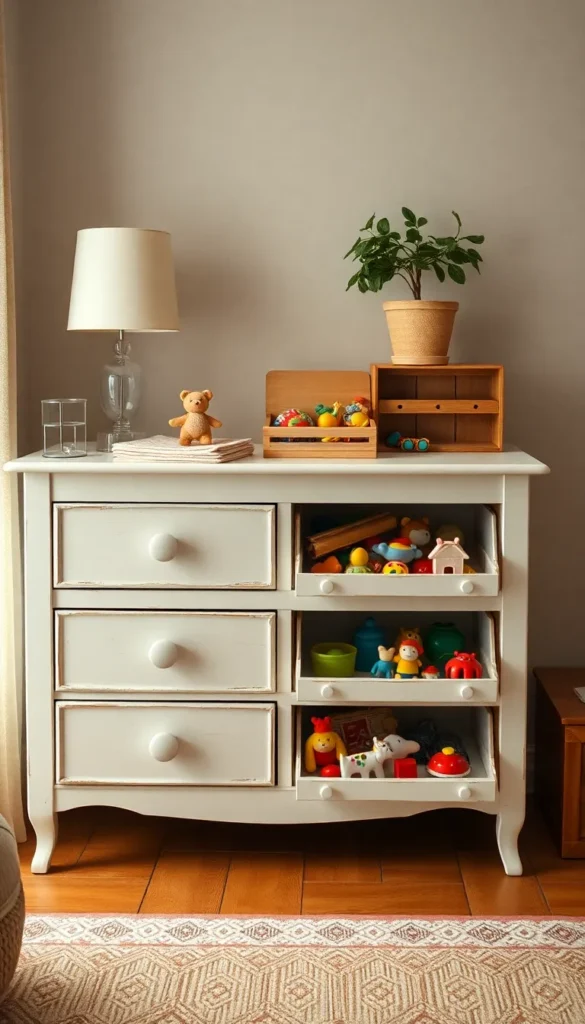
That old dresser sitting in the garage? It’s a goldmine. Repurposed dressers work brilliantly as toy organizers. Deep drawers hold bulky items. Shallow top drawers are perfect for art supplies or small toys. Label each drawer so kids know exactly where things live. Sand it down, paint it white or a fun color, and add new hardware for about $10. You can find dressers at thrift stores for $15–$40. This is one of the most cost-effective storage upgrades with some of the biggest visual impact.
14. Hanging Macramé Baskets for Small Toys
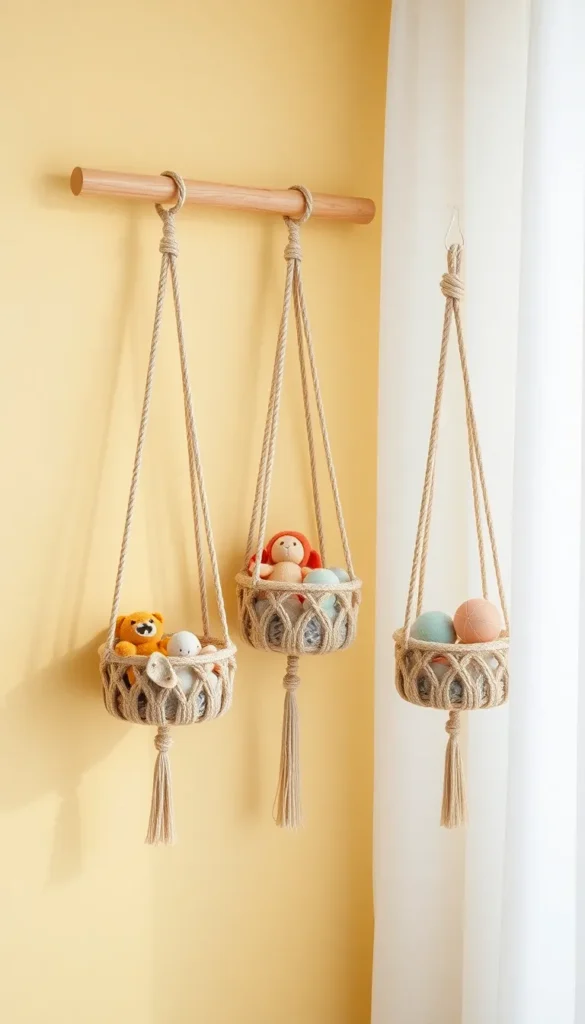
Hanging storage keeps the floor clear and adds a boho-chic look to any kids’ room. Macramé hanging baskets are affordable (often under $15 for a set) and hold small toys, books, or plush animals perfectly. Mount a wooden dowel or curtain rod on the wall. Hang two or three baskets at varying heights. This works especially well in smaller rooms where floor space is tight. You can also DIY your own with basic rope from a craft store for about $5. Kids love having their special things “up on display.”
15. A Designated Lego Building Table with Under-Storage
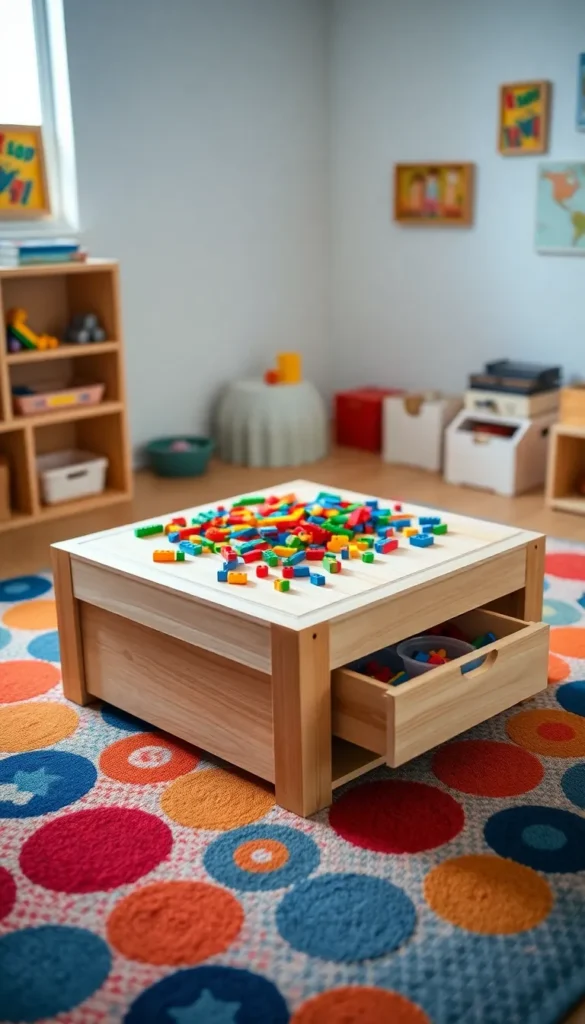
A dedicated building table gives LEGOs (and similar sets) a permanent home. Look for one with built-in drawers or shelf space underneath. IKEA FLISAT or TROFAST setups work great and cost under $60. Kids build on top, and everything stores below when they’re done. This keeps building projects intact between sessions — no more teardowns after every play. Add a baseplate to the tabletop with double-sided tape so bricks stick during building. It’s a game-changer for families dealing with daily LEGO explosions across the floor.
16. Baskets Inside a Closet with a Low Rod for Dress-Up Clothes
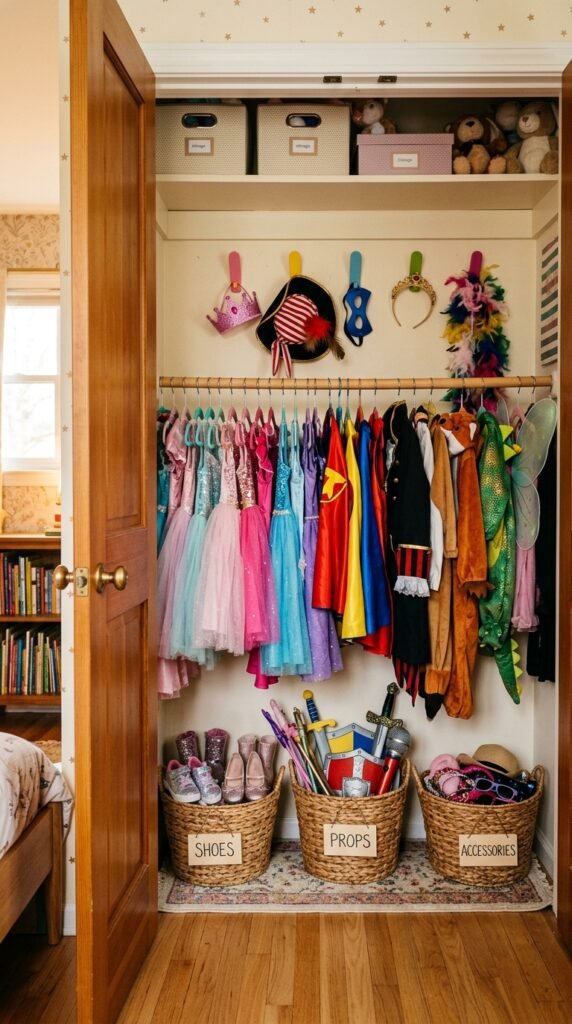
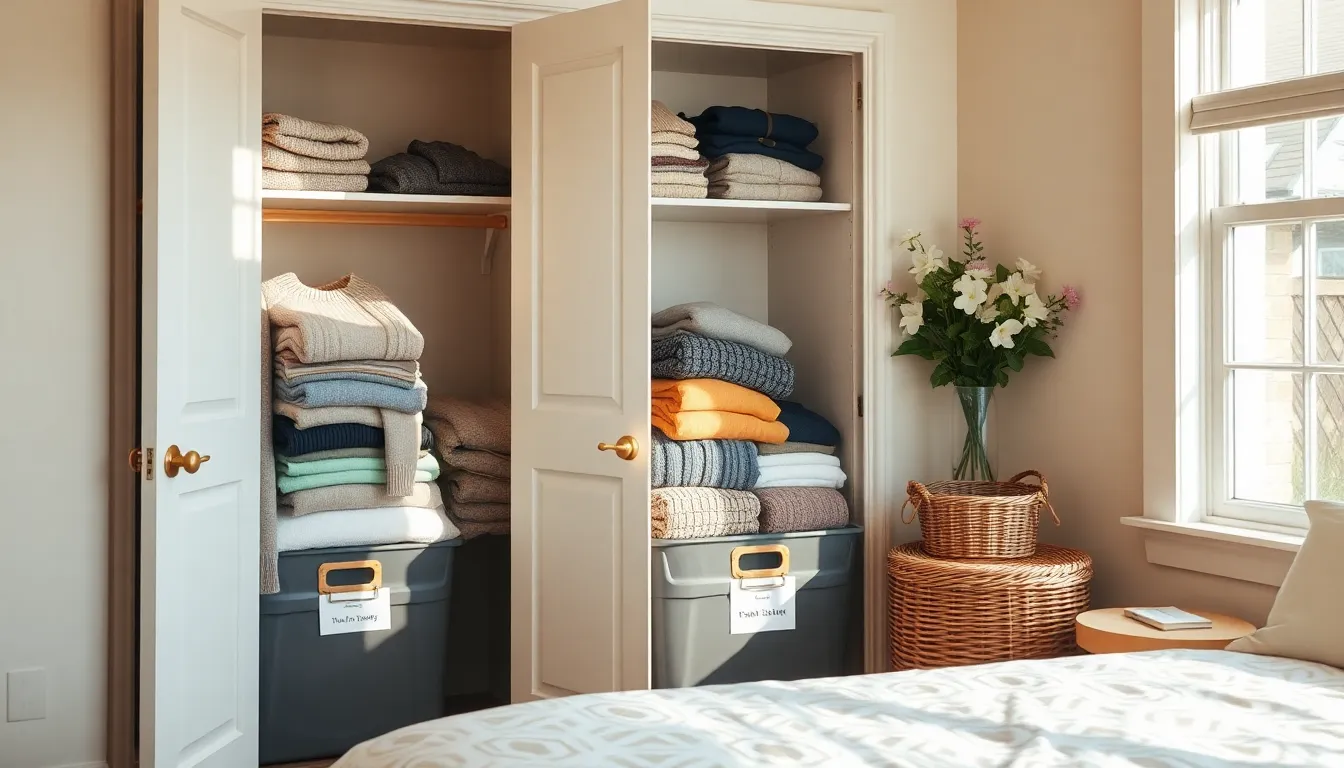
Dress-up clothes need a home of their own. A low closet rod (installed about 36 inches from the floor) gives kids full access to costumes without pulling everything down. Add wicker baskets on the floor for shoes, crowns, wands, and props. Mount a few extra hooks on the back wall for capes and bags. This whole setup costs under $30 in hardware. It keeps costumes wrinkle-free and easy to find. It also teaches kids to hang things up independently — which is the real win here.
17. A PVC Pipe Ball Storage Unit
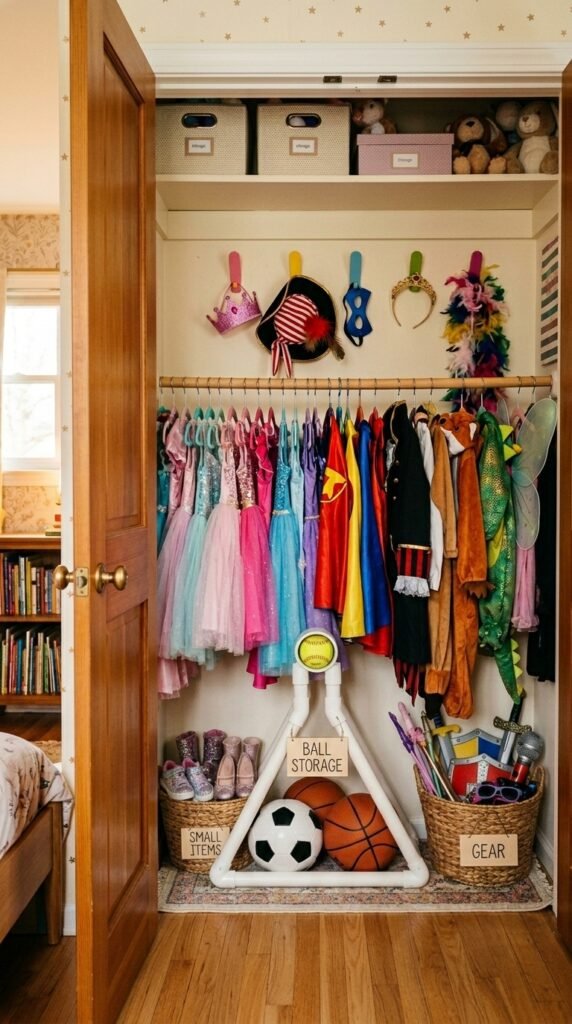
Sports balls are impossible to corral without a real system. Build a PVC pipe ball holder using large-diameter pipes cut into 12-inch sections. Stack them in a triangle or straight row. Each pipe cradles one ball. Cost for materials: about $10–$15 at any hardware store. No special tools needed beyond a saw (or ask the store to cut them). Mount it to a wall or keep it freestanding in a garage corner. It’s sturdy, looks intentional, and actually works — even for kids who aren’t naturally tidy.
18. Magazine Files as Coloring Book Holders
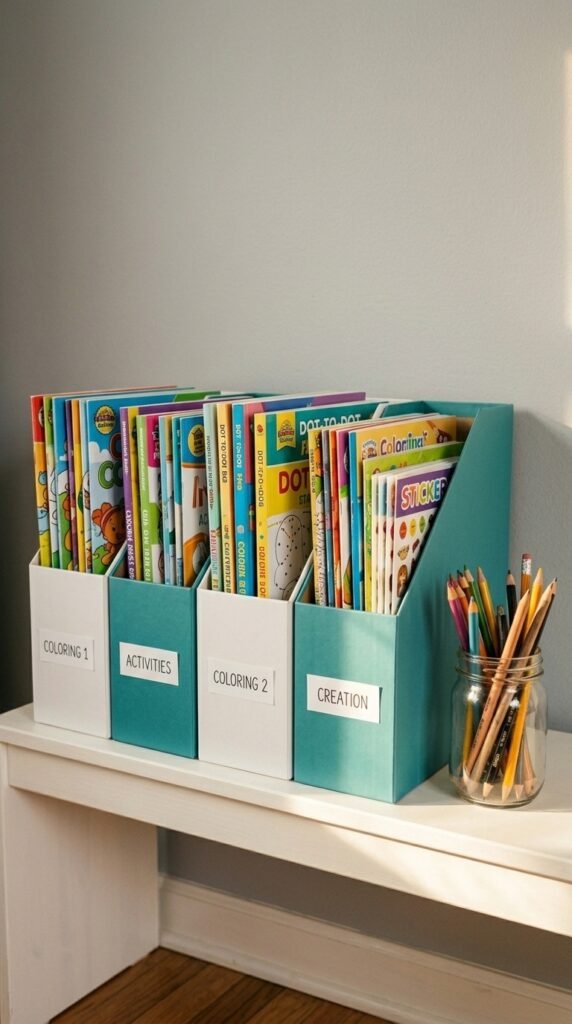
Coloring books pile up fast and never stay stacked neatly. Magazine file holders keep them upright and sorted — one file per category works well. Label the front with a sticker: “coloring books,” “activity pages,” “drawing paper.” Find them at dollar stores for $1–$2 each, or use old cereal boxes trimmed diagonally as a free DIY version. Place them on a low shelf kids can reach on their own. This small tweak alone can dramatically tidy up a craft area. No more paper avalanche when someone pulls one book out.
19. A Tray System for Small World Play Sets
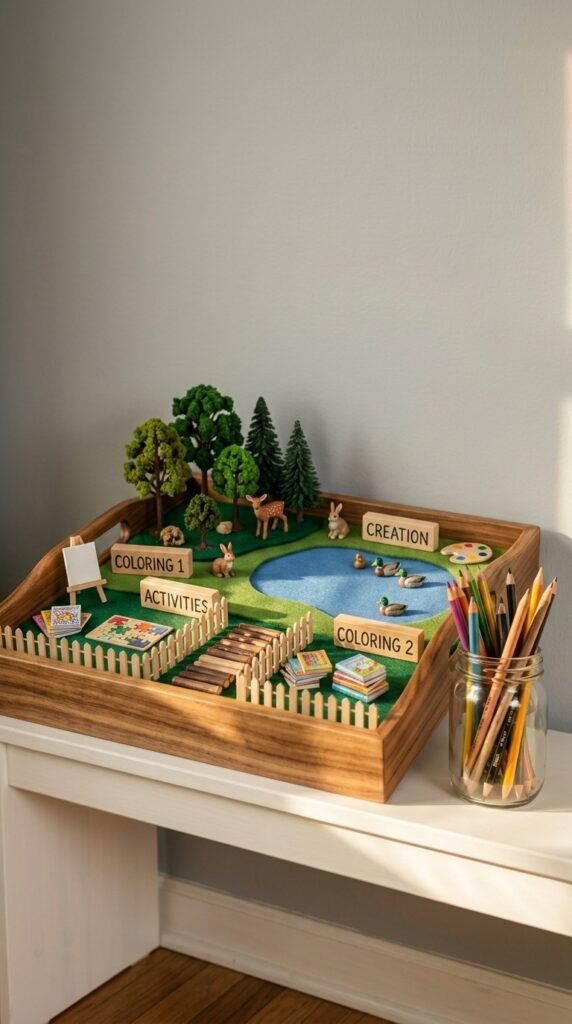
Small world play — farm sets, dinosaur scenes, fairy gardens — creates magic but also massive mess. Use a wooden or metal tray as the play zone. Everything lives on the tray. When playtime ends, the whole tray slides onto a low shelf — scene intact. No taking apart, no hunting for tiny cows. Trays cost $3–$10 at thrift stores or dollar stores. Use one tray per set: farm on one, ocean on another. This method also sparks more imaginative play because the setup is always ready to go.
20. Install a Simple Wall Grid for Backpacks and Bags
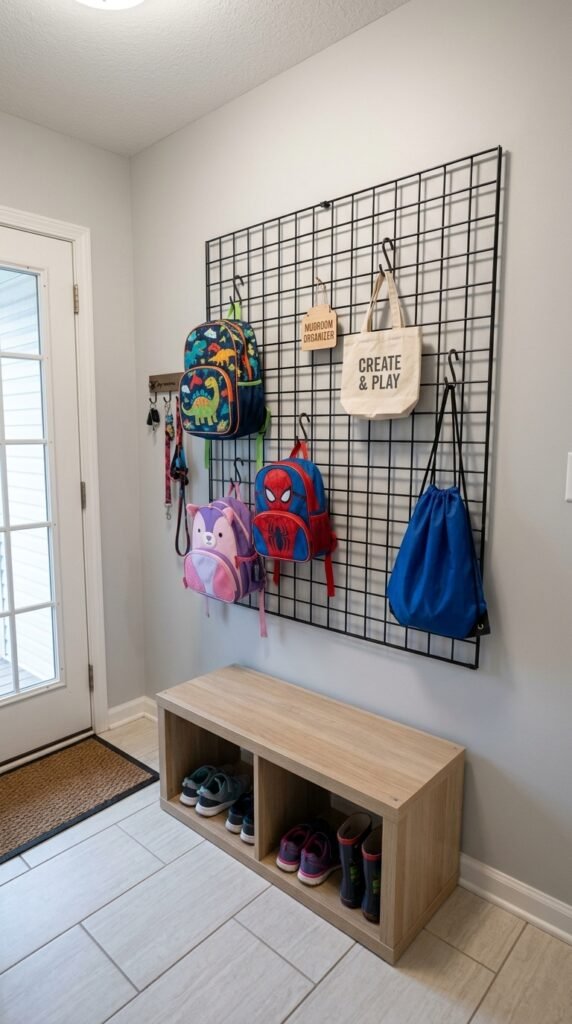
School bags, sports bags, and backpacks dumped by the door? A wall-mounted grid panel with S-hooks gives every bag its own peg. Mount one in the entryway or mudroom at kid height. Pair it with a small bench and shoe rack below. The grid costs about $15–$25 at home stores or online. Add baskets clipped to the grid for sunscreen, permission slips, or sports gear. This is less about toys and more about everyday clutter — but solving this one spot alone makes the whole home feel more organized.
21. Open Cube Shelving with Fabric Insert Bins
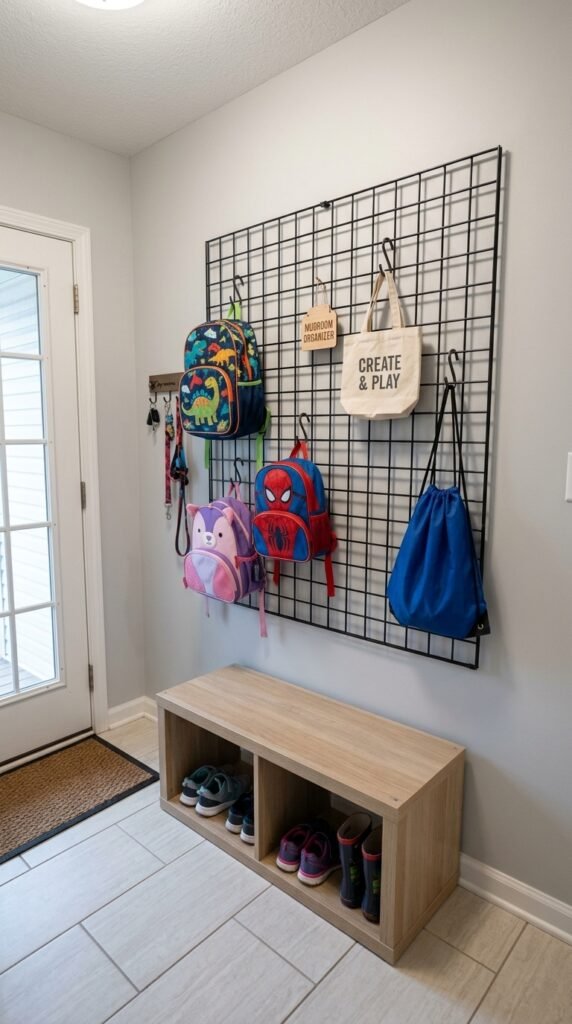
Cube shelving units (like IKEA KALLAX) are endlessly useful. Alternate open cubes for display with cubes holding fabric bins for hidden storage. Use the open sections for books, puzzles, or decorative toys. Stuff the bins with everything else. Label each bin. Fabric bins are soft, collapsible, and easy to wash. A 4×2 KALLAX unit runs about $60. Fabric bins cost $3–$8 each. This system grows with your child — just swap out the bin labels and contents as interests change. It’s one of the most flexible setups available.
22. A Simple Rope Swing Shelf for Stuffed Animals or Books
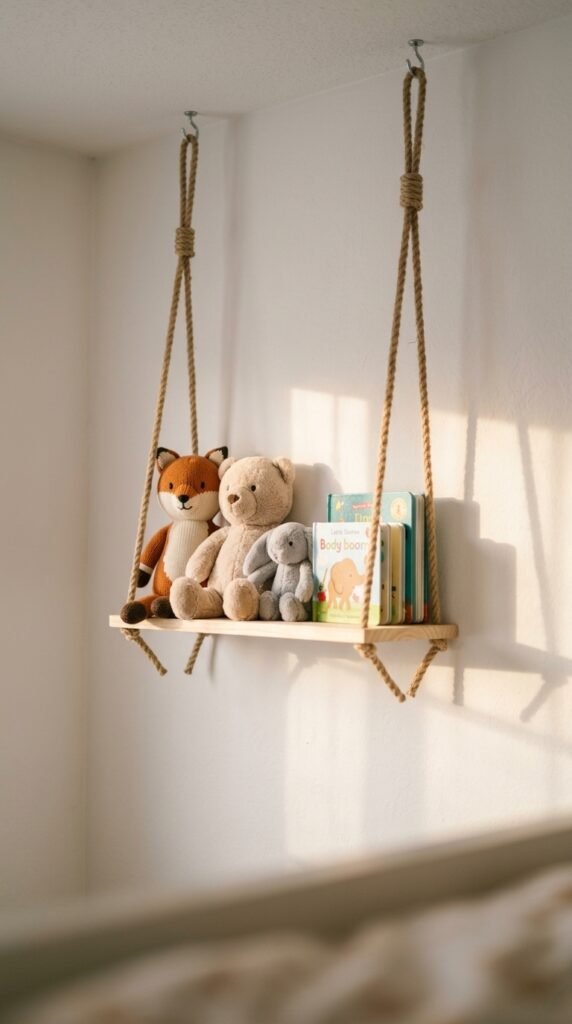
A hanging rope shelf adds character to a room while providing real storage. Use a plank of wood (12 x 6 inches works well) drilled at each corner with rope threaded through and knotted below. Hang it from two ceiling hooks at a safe height. It holds stuffed animals, books, or small décor items. Total cost: under $10 if you source wood scraps and hardware store rope. This is a great weekend DIY project. It looks intentional and handmade — exactly the kind of thing that makes a room feel personal and special.
23. Clear Shoe Boxes for Puzzle Storage
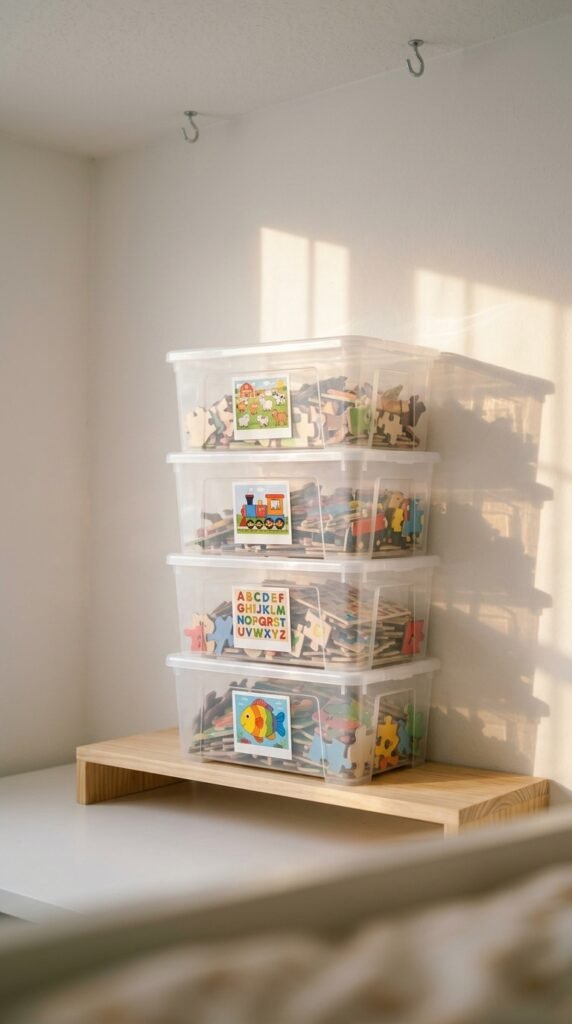
Puzzle boxes fall apart. Pieces get mixed. It’s a well-known parenting frustration. Use clear plastic shoe boxes instead. Toss all the pieces of one puzzle into one box. Tape a photo of the completed puzzle to the front so kids (and parents) know which box holds which puzzle. Stack them on a low shelf. Shoe boxes cost about $1–$2 each. This system is also great for travel — the clear box doubles as a carrying case. You’ll never spend 20 minutes hunting for the missing puzzle box lid again.
24. A Tension Rod Under the Sink for Cleaning Toy Sets
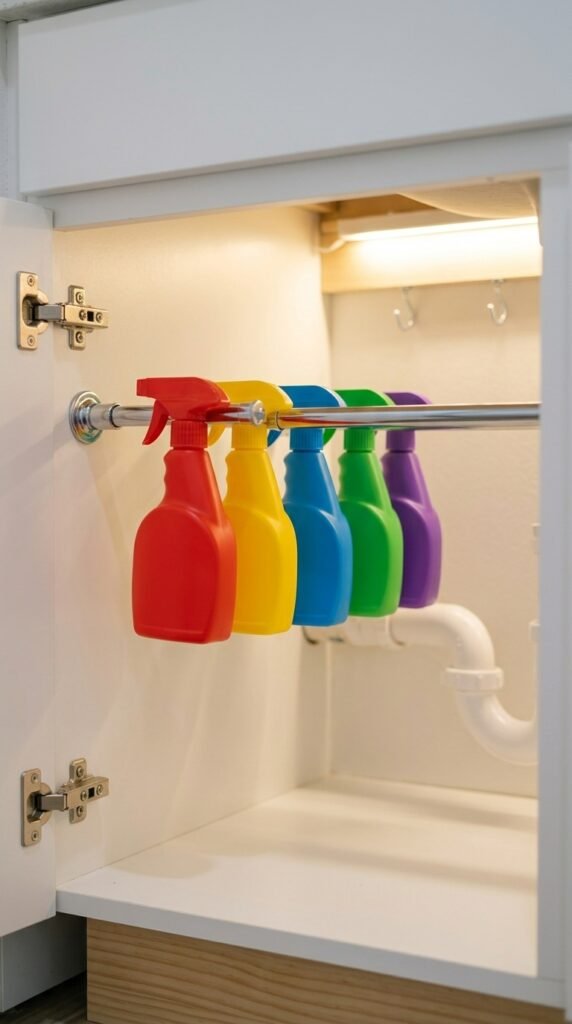
Kids’ play cleaning sets — little mops, brooms, spray bottles — fall over constantly and take up too much floor space. Install a tension rod inside a lower cabinet to hang spray bottles by their handles. Lean the mop and broom behind the rod. No drilling, no damage. This keeps the set together in one spot and off the floor. It takes about two minutes to set up and costs whatever a tension rod costs (about $5). Bonus: when kids can find their cleaning toys easily, they’re more likely to actually “clean.”
25. A Bath Toy Mesh Bag on a Suction Hook
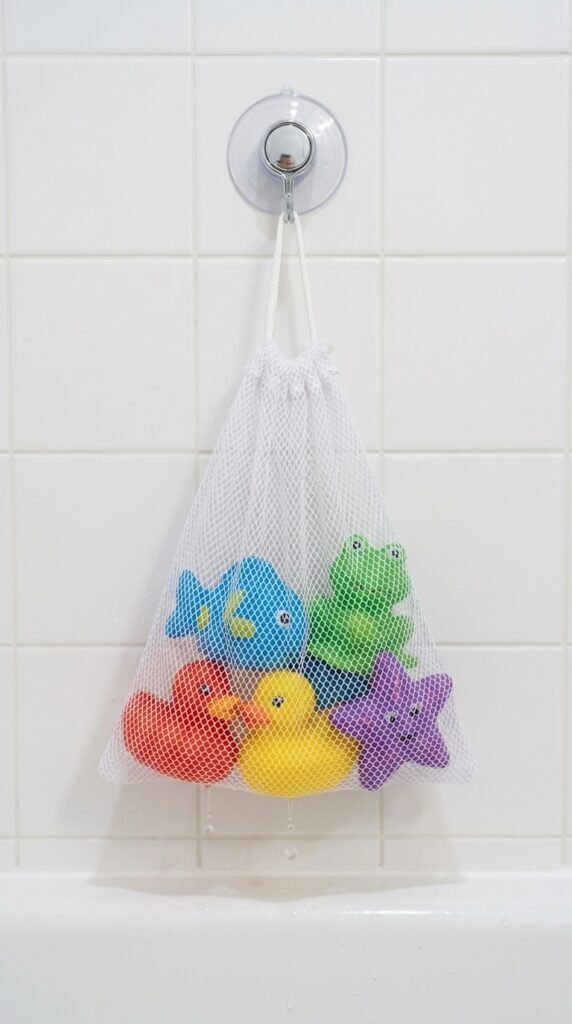
Bath toys are their own category of chaos. A mesh drawstring bag hung on a suction hook on the tub wall holds everything. After bath time, toss the toys in — water drains out, mold stays away, and the tub is clear in seconds. You can find these bags at dollar stores or online for $3–$5. The suction hooks hold firmly on tile. Replace the suction cup every six months to keep grip strong. This is a two-minute fix for a daily annoyance. It works even better than the little toy caddies that rust and fall off.
26. A Bookshelf Converted to a “Yes Shelf” for Independent Play
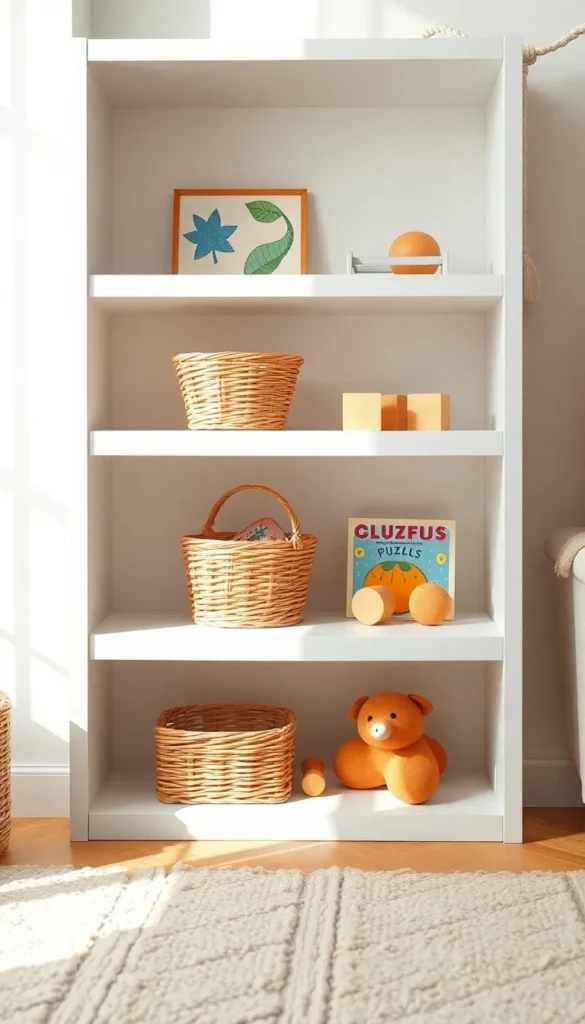
A “yes shelf” is a Montessori-inspired concept where only a few toys are available at a time — always within reach. Convert a low bookshelf into one. Put out three to five activities. Rotate them weekly. Everything else goes into storage. This approach dramatically reduces clutter and actually increases focused play. Kids engage longer with fewer choices. The shelf itself can be any low bookshelf you already own. Total setup cost: $0 if you already have one. The secret isn’t buying more storage — it’s owning less at any given moment.
27. A Hanging Organizer Inside a Closet Door for Games
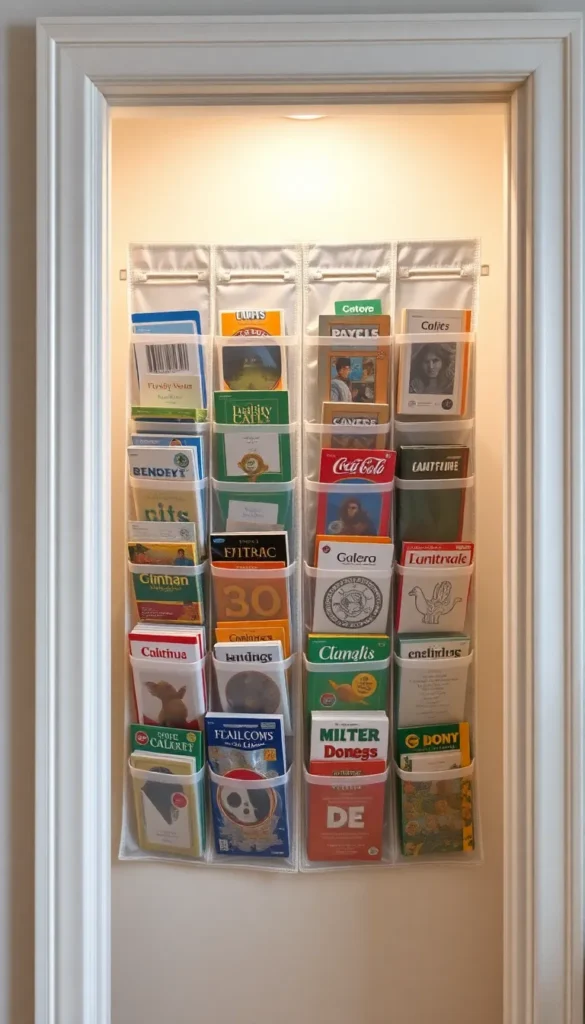
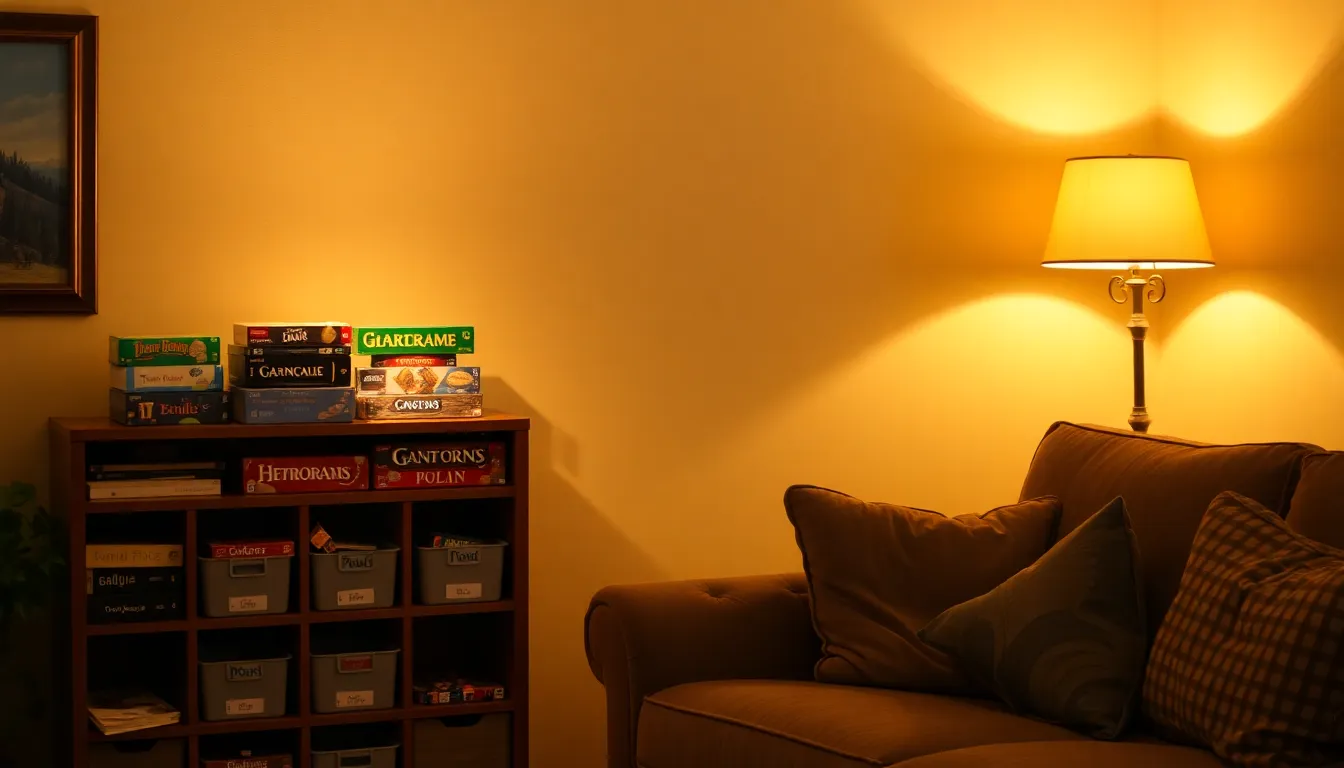
Board games and card games multiply fast. A large clear hanging organizer on the inside of a closet door holds card games, small board games, and activity books upright and visible. No more stacking boxes that avalanche when you pull one out. This works in a hallway closet, bedroom closet, or playroom cupboard. The organizer costs $10–$15. Cut-down cereal boxes can also corral loose game pieces inside the pockets. It’s especially great for families who play games often and need things accessible without creating a mess every single time.
28. A Simple “One In, One Out” Donation Box by the Door
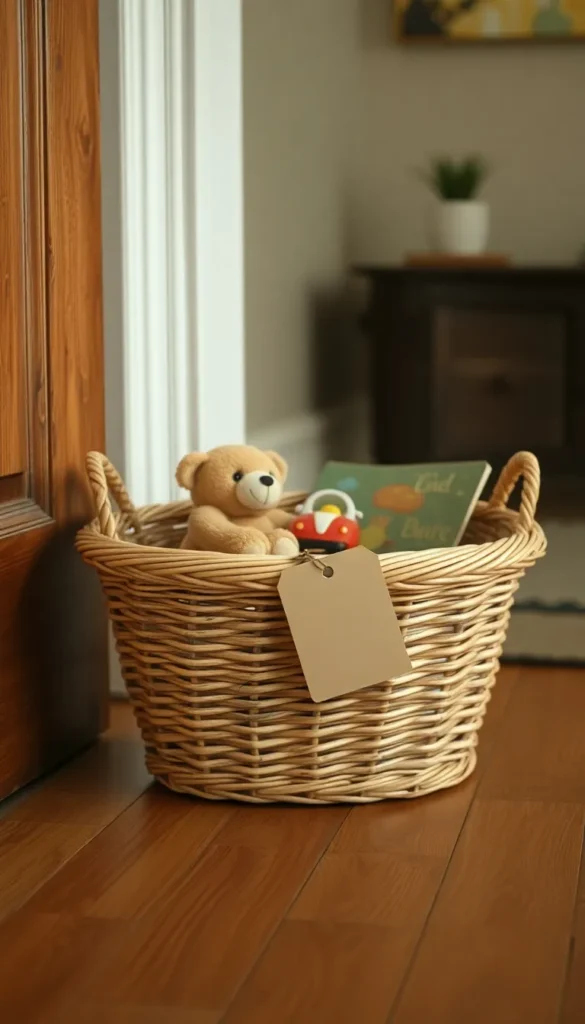
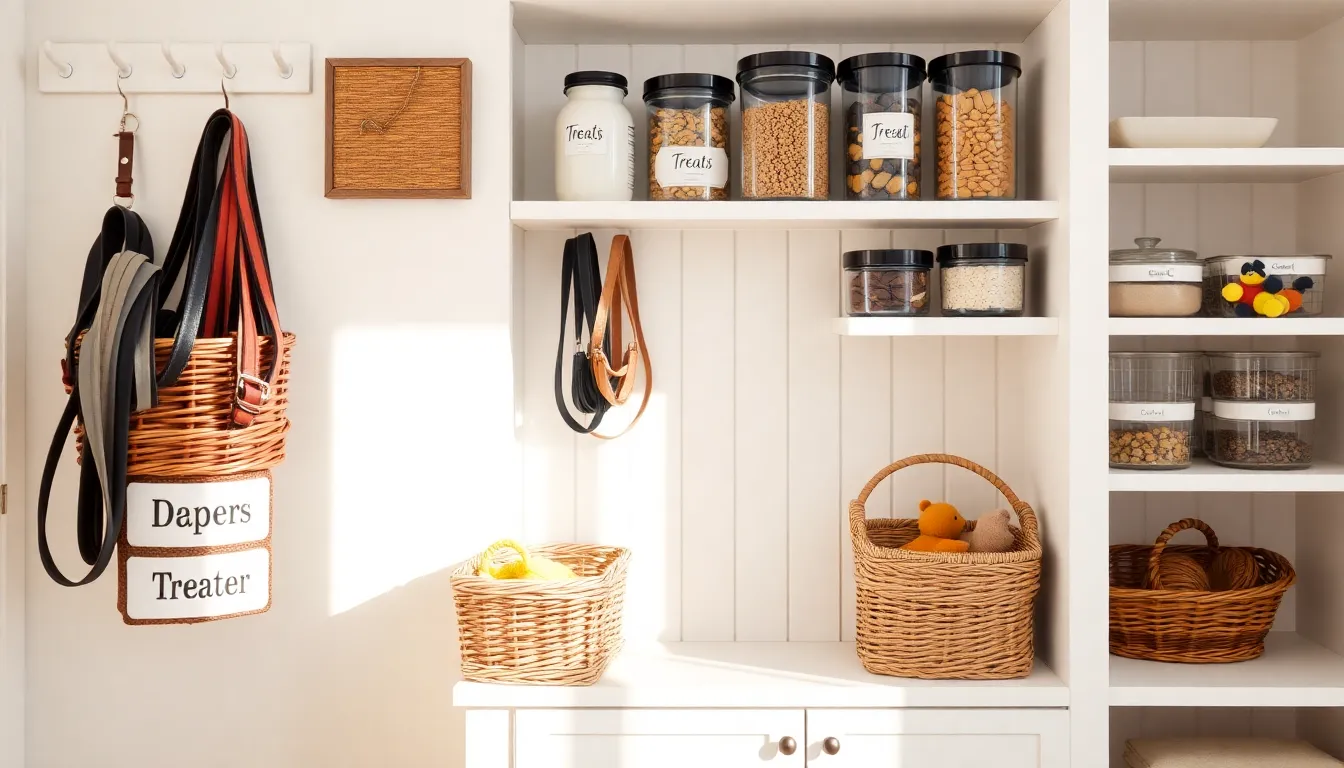
The best storage system in the world won’t work if there are just too many toys. Keep a donation basket near the door at all times. When a new toy comes in, one goes out. Make it a family habit, not a chore. Review the basket together once a month. Kids as young as three can participate in the decision. This isn’t about having less fun — it’s about keeping what’s actually loved and played with. A wicker basket costs nothing if you repurpose one you have. The habit it builds? That’s worth more than any storage bin you’ll ever buy.
Conclusion
Getting toy storage right doesn’t mean spending a fortune or overhauling your entire home in a weekend. It means finding small, smart solutions that fit your actual space and your actual kids. Start with one idea — the door organizer, the donation basket, or the stuffed animal hammock — and build from there. When storage is simple and accessible, kids are more likely to clean up on their own. And you’ll spend less time doing it for them. Pick two or three of these ideas, put them in place this week, and watch how quickly the daily chaos starts to shrink.